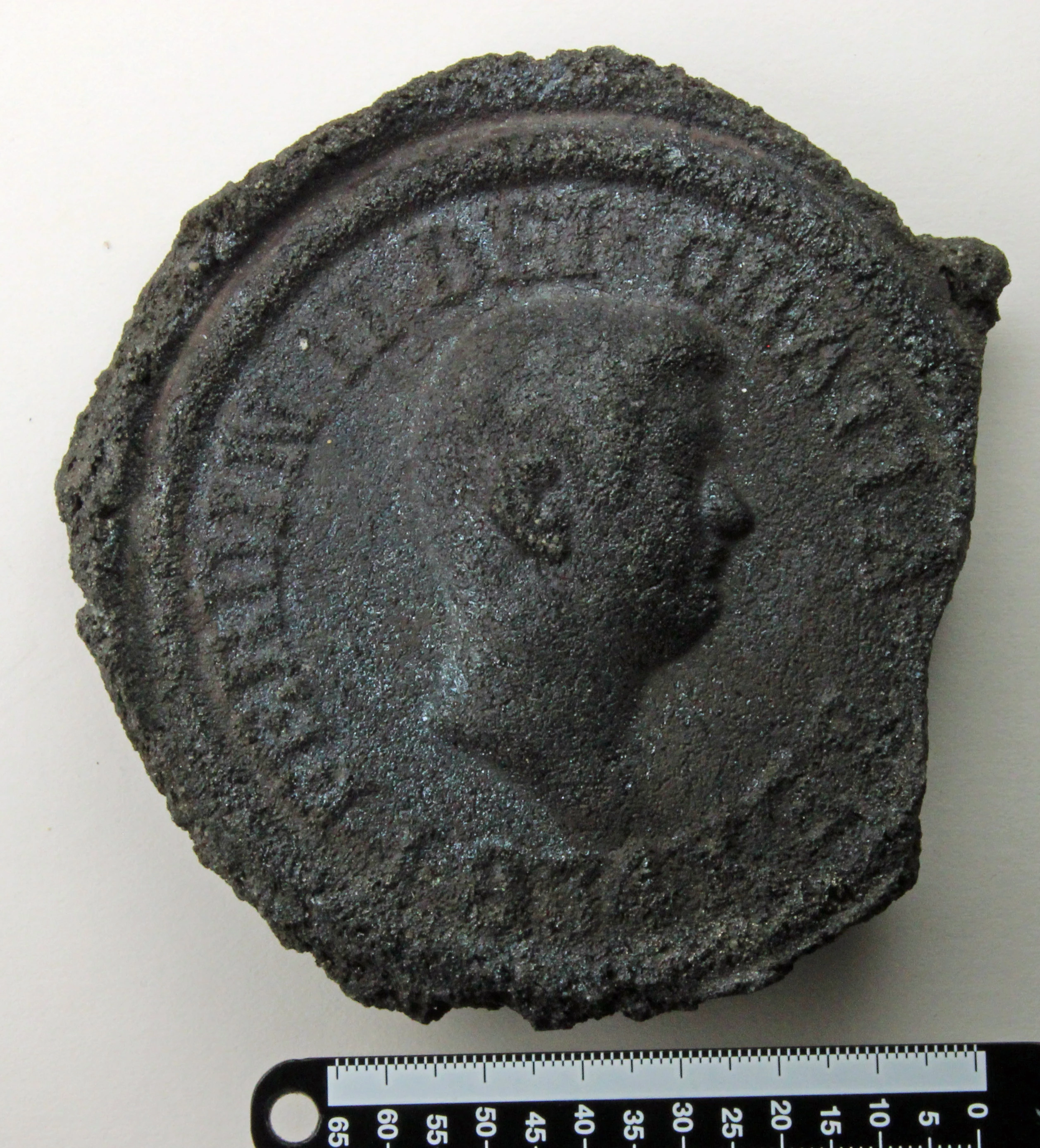
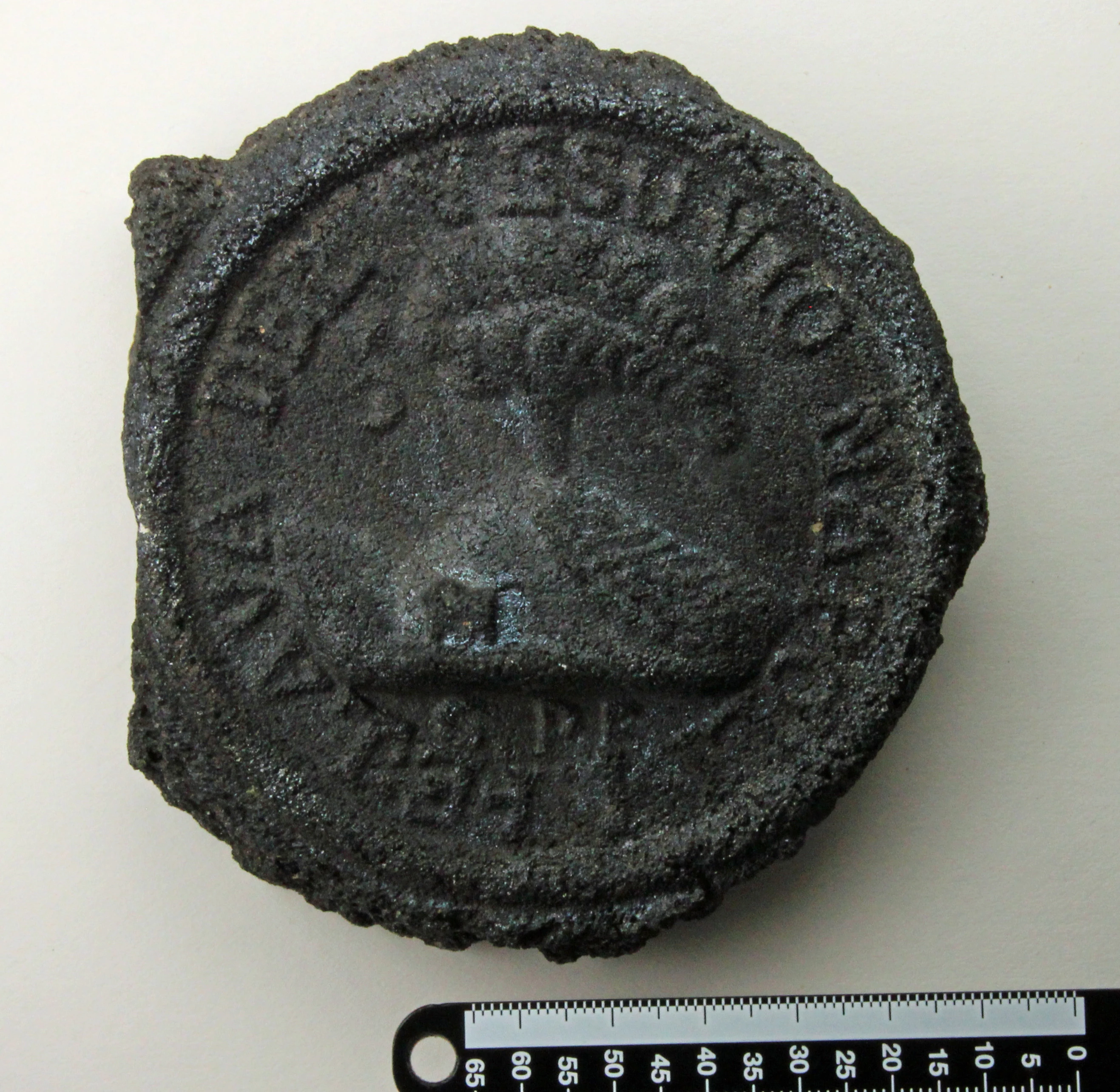
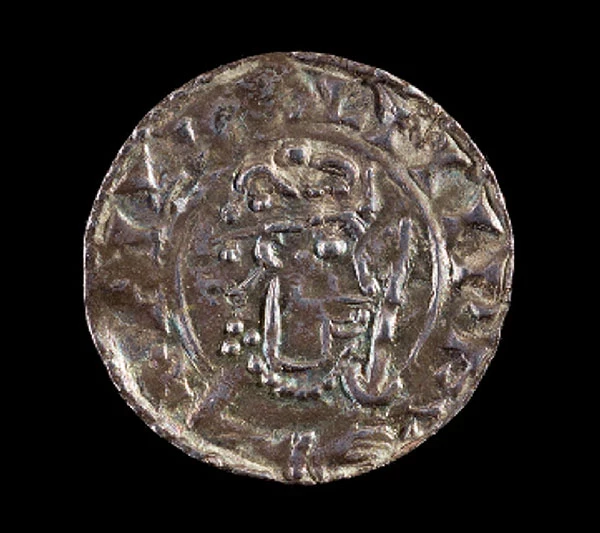
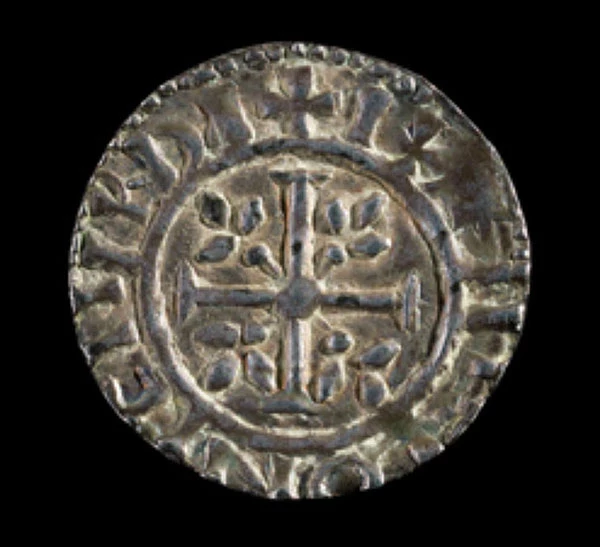
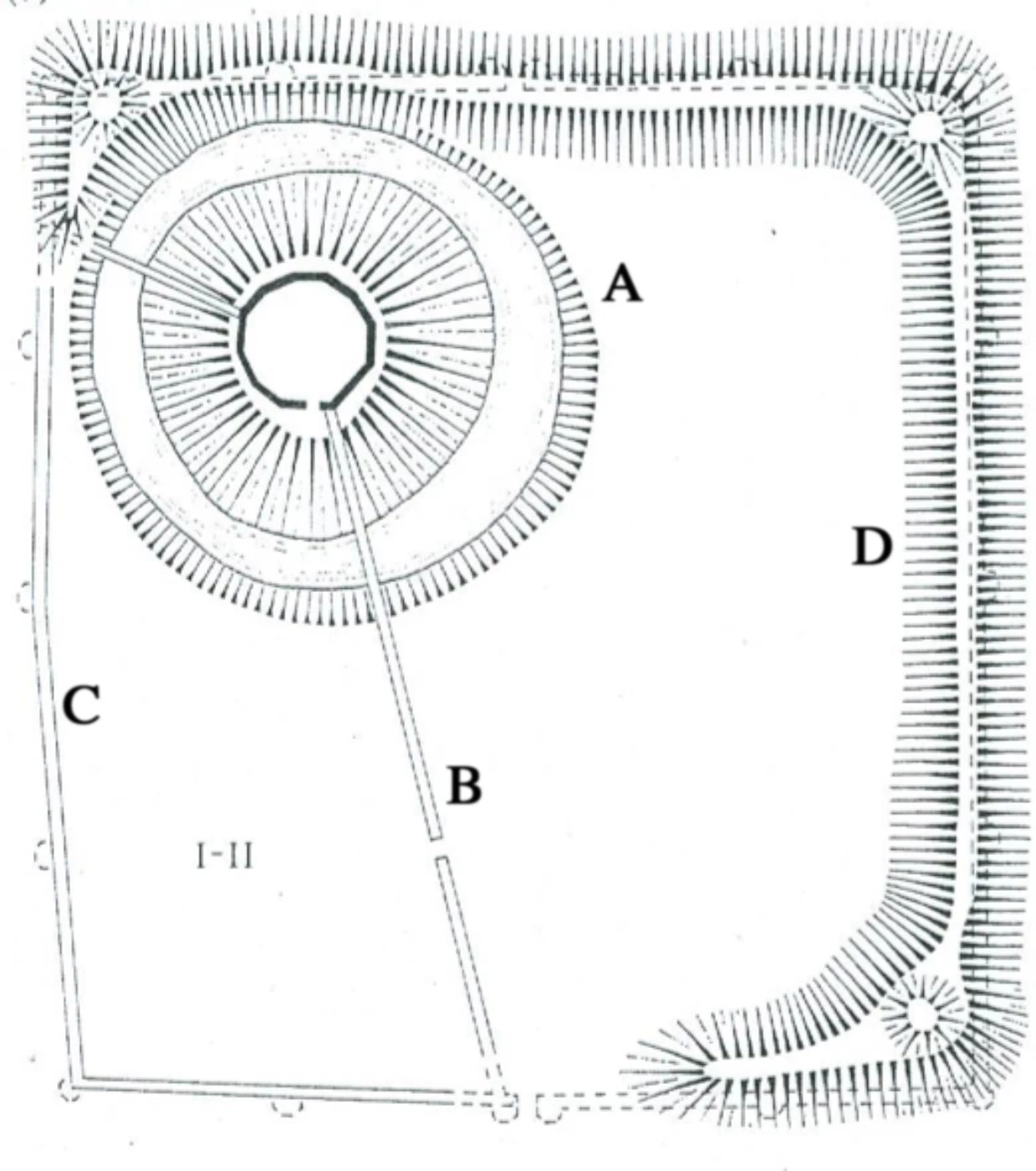
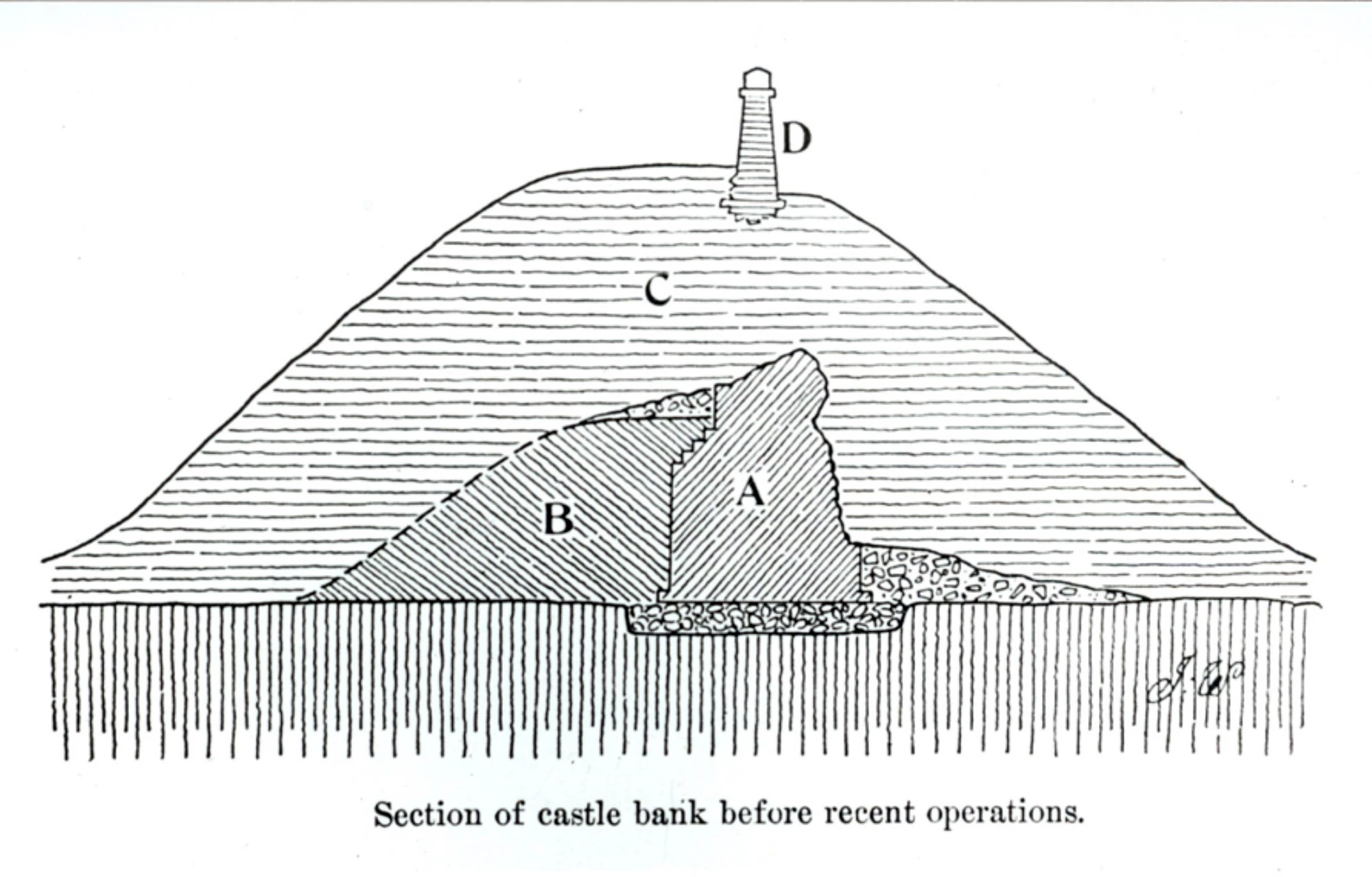
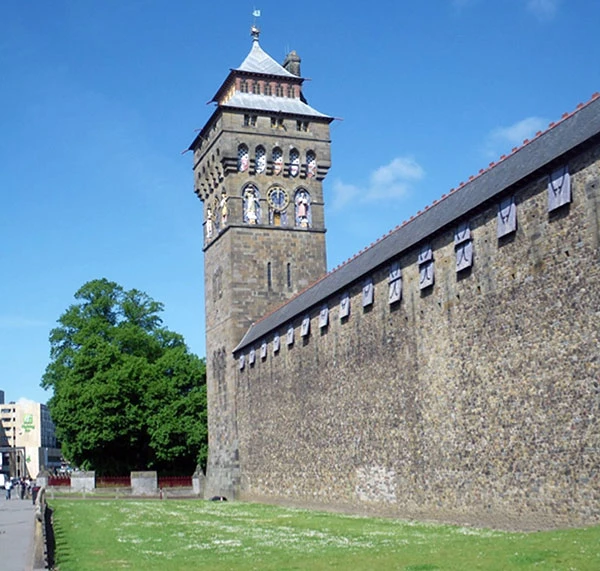
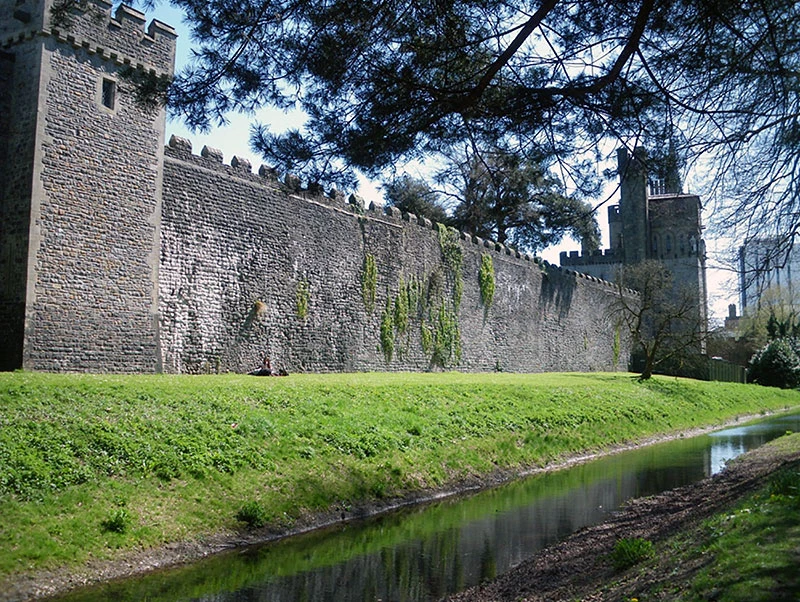
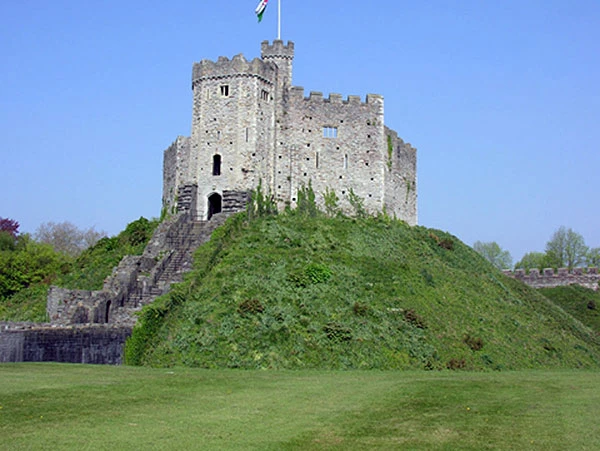
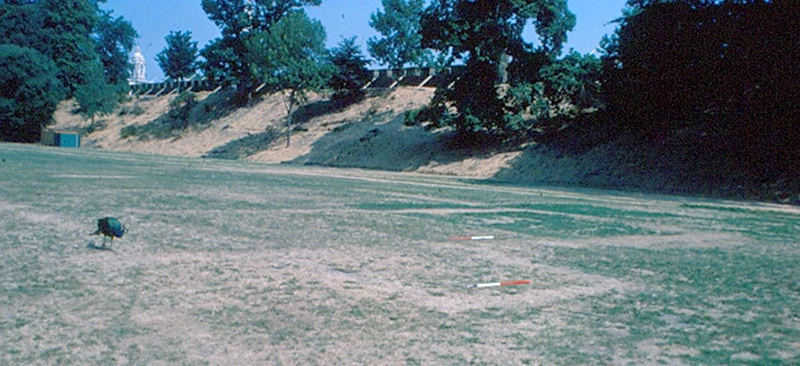
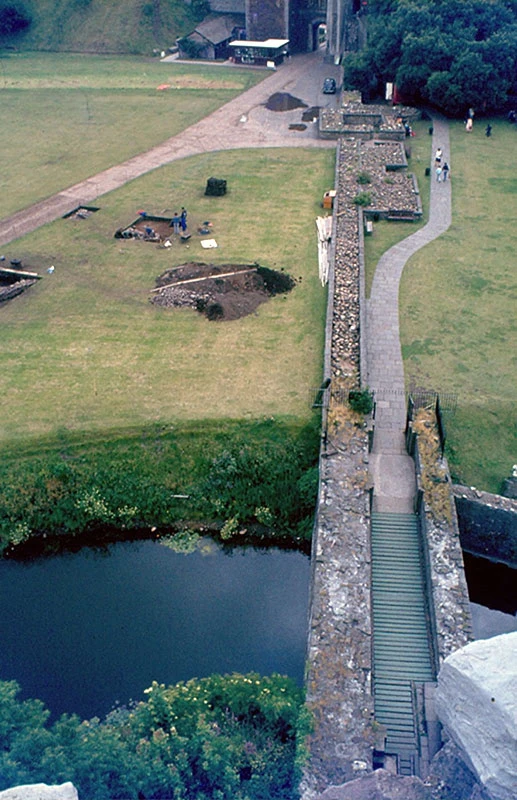
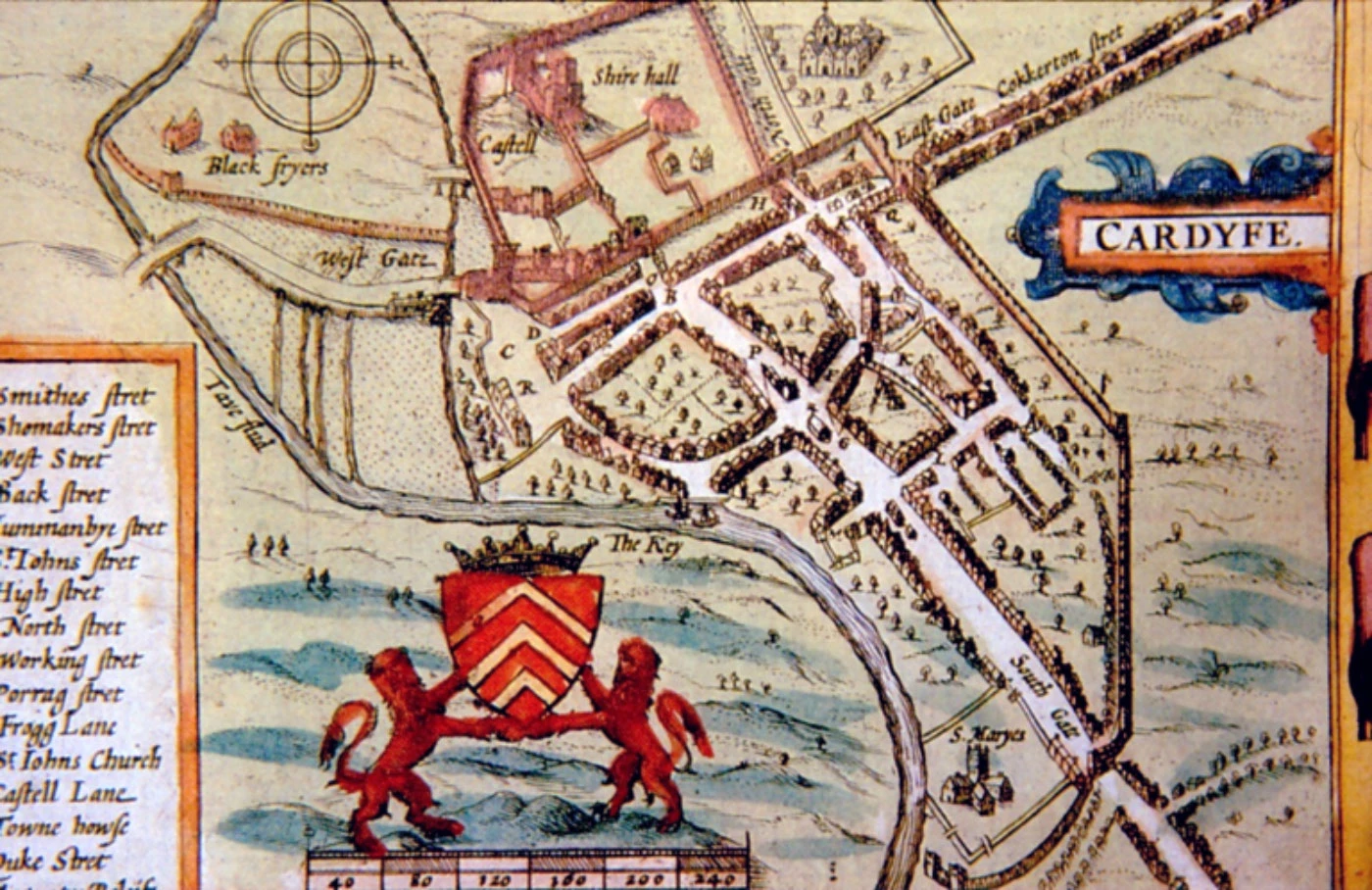
Norman Cardiff and minting coins Edward Besly and Peter Webster, 5 October 2018 Coin of William Rufus - front Coin of William Rufus - reverse Amgueddfa Cymru-National Museum Wales has just acquired a rare piece of Cardiff’s early history: a silver penny of the Norman king William II (1087-1100) made in the castle mint in the early 1090s. The newly acquired coin of William Rufus. William II, known as ‘Rufus’ (‘the Red’, perhaps from his hair colour), was the son of William the Conqueror (also known as ‘the Bastard’). During his reign the Normans made their first incursions into this part of Wales under Robert FitzHamon, a Norman baron who conquered the area and became the first lord of Glamorgan. The Normans brought with them the habit of using coinage and it seems that a mint was set up at the castle soon after its foundation in 1081. However, no coin certainly identified to be of William Rufus from the Cardiff mint had been recorded before this one showed up in 2017, within a private collection which was offered up for auction. Prior to the Norman invasion, coinage was in regular use in Anglo-Saxon England, with a network of mints and a centralised supply for the dies used to make it, but there was no tradition of minting in Wales. Early Norman Cardiff was a frontier town, and so its mint had to fend for itself: the obverse (‘heads’) die seems to have been borrowed from elsewhere and the king’s effigy was re-engraved, giving him a slightly comical appearance. The reverse (‘tails’) was made locally from scratch – it bears a clear, if crudely engraved mint signature ‘CAIRDI’ [CIVRDI or CIIIRDI], but we cannot fully read the moneyer’s name, ‘IÐHINI’ (Ð = ‘TH’) – he may have been called Æthelwine (interestingly, a Saxon rather than a Norman name). The designs of current coins were changed every few years – and the king took a cut every time a new coinage was issued. We now know of coins from four different issues in the name of ‘William’ (which could be either William the Conqueror, or his son William Rufus) and four more for Henry I (1100-35) from the Cardiff mint, but they are all incredibly rare. In the civil war of King Stephen’s reign (1135-54), Cardiff fell into the hands of the Angevin party of his enemy, the Empress Maud. In 1980, a hoard of over 100 coins, mostly previously-unknown Cardiff issues of Maud, was found at Coed-y-Wenallt, above Cardiff, and transformed our knowledge of that period. It included baronial issues from Cardiff and Swansea – which, for the latter, was the earliest evidence of that place-name. After that, however, the Cardiff mint disappears from history. Our new coin of Rufus provides another piece of the jigsaw that is the early history of Cardiff and its region. Many pieces are no doubt still missing, and who knows what may still await discovery? As for the man himself, he died on 2 August 1100, whilst hunting in the New Forest, when struck by an arrow: an unfortunate accident or was he murdered? Edward Besly, Numismatist (Coins and Medals Curator), Amgueddfa Cymru-National Museum Wales. The Norman castle as envisaged by RCAHM. The stone keep is probably later than the reign of William Rufus and would originally have been of wood. Motte surrounded by a ditch Assumed Ward wall Re-used Roman wall probably without projecting towers Earth bank with ditch outside A schematic section through the castle’s earthen defences before the 19th and 20th century removal of the outer portion of the medieval bank and the reconstruction of the Roman Fort wall. Remains of Roman fort wall Roman bank Norman bank Later Medieval castle wall Reconstructed Norman castle wall between the South Gate and the Clock Tower The west castle wall. The stretch between the towers is essentially the wall of the Norman castle. The massive Norman motte, with later medieval stone shell keep. The Medieval bank surviving on the inside of the East walls. The crop mark visible in the foreground is a late medieval building. The stone wall and gateway from the outer to the inner ward, seen here looking from the Keep to the South Gate. This wall probably has its origin in the defences of the Norman castle. Speed’s 1610 map of Cardiff. The coming of the Normans Cardiff today is largely a product of Victorian development, but at the very centre of the city is a historic core originating with the Roman military and later re-occupied by the Normans. There is little or no trace of a settlement at Cardiff between the end of the Roman period and the coming of the Normans into Wales in the 1080s, although there may have been some occupation at the point where the Roman road from Caerleon to Carmarthen crossed the River Taff. When the Normans arrived, this was the point where they chose to site the military and administrative centre for their new lordship of Glamorgan, re-using the remains of the late Roman fort for a castle enclosure and establishing a small town at its southern gate. Reconstructing the Norman castle Norman Cardiff had its focus in the castle, but the castle building we see today is very different to the original one. To get at the Norman castle we have to strip away the 19th and 20th century alterations made by the marquesses of Bute, which had in part involved the restoration of the walls of the late Roman fort. The Normans threw up a massive earth bank over the remains of the Roman fort walls, from a point near the north-west corner of the castle, round onto the sides now fronting Kingsway and Duke Street. The remaining Roman fort walling (from near the present south gate round onto the side now facing into Bute Park) was repaired, although, strangely, the projecting towers which will have formed part of the Roman defences appear to have been removed – perhaps to provide material for the repairs. This Norman wall can still be seen, albeit with a good deal of 19th century restoration, between the south gate and the Clock Tower and north of the western castle apartments. The material for the banks on the north, east and part of the south sides was taken from a massive ditch dug around the entire enclosure. This is now filled in on Kingsway and Castle/Duke Street and underlies the present western moat and northern dock feeder. This ditch can still be glimpsed occasionally when service trenches are opened around the castle, but a clearer idea of its scale can be gained from the evidence of John Ward, curator of the Cardiff Museum and Art Gallery from 1893 to 1912. Ward observed the underground toilets being dug in Kingsway and reported that, although completely below ground, they did not reach the bottom of the ditch. Ward’s schematic diagram of the castle’s earthen bank shows the result of this ditch digging – the sizeable bank still present on the inner side of the castle walls (to the left of the diagram) repeated on the outside. Inside these outer defences, the Normans constructed a massive motte – a mound rather like an inverted pudding basin, surrounded by a large moat. This can still be seen, although the mound received some landscaping by Capability Brown in the late 18th century and the moat (which Brown filled in) was re-excavated in the 19th century and may be more regular than it once was. We can assume that there was some sort of structure on the top of the mound, probably a wooden palisade and tower, likely to have been replaced by the present stone ‘shell-keep’ in the 1240s. The remainder of the castle interior was probably divided as seen now by some sort of wall between the keep and the south gate. A stone wall seems likely but is uncertain. We can expect buildings (probably of wood) within the two ‘wards’ thus created but, to date, no certain structures have been discovered within the limited area excavated. The Norman town. South of the castle lay the small town of Cardiff. The classic view of the medieval town is that created in 1610 by John Speed, which shows a walled enclosure extending south from just east of the south-east corner of the castle to the bottom of what is now St Mary’s Street. This, however, depicts the late medieval town. It is likely that the first Norman town was smaller, probably bordered by the present day Womanby Street, Quay Street, Church Street and St Johns Street (the semi-circle of streets at the northern end of the town as seen on the Speed map). This layout can still be seen in the streets of Cardiff and it is noticeable that the junctions of High Street and St Mary’s Street, and of St John’s Street and Working Street, lie on the suggested early boundary. This, along with much else of the documentary history of Norman and Angevin Cardiff, is discussed by David Crouch (2006). Crouch’s hope that archaeology will add to this picture has so far not been fulfilled. The only excavations within the suggested first town (in Womanby Street and Castle Street), although they confirm Norman occupation, have not yielded structures of such an early date. Indeed, the assiduous digging of cellars by the Victorian residents of Cardiff has unfortunately removed a good deal of the potential evidence. Peter Webster, Honorary Research Fellow, Amgueddfa Cymru – National Museum Wales (former lecturer, Cardiff University) Further Reading Cardiff Castle The medieval castle is treated extensively in RCAHMW, An inventory of the ancient monuments in Glamorgan, Vol. III, Part 1a, Medieval Secular Monuments, the early castles from the Norman conquest to 1217, London 1991, 162-211, which, despite the title, takes the castle story up to the 20th century. Further background to the restoration of the Marquesses of Bute is provided by J. P. Grant, architect to the 4th Marquess (Cardiff Castle, its history and architecture, Cardiff 1923). The Town The best discussion of Norman Cardiff is David Crouch. ‘Cardiff before 1300’ pp.34-41 in J.R.Kenyon, D.M.Williams (Eds.), Cardiff. Architecture and Archaeology in the Medieval Diocese of Llandaff, British Archaeological Association Conference Transactions 29, London 2006. This includes references to earlier work by W.Rees (1962) and D.Walker (1978).
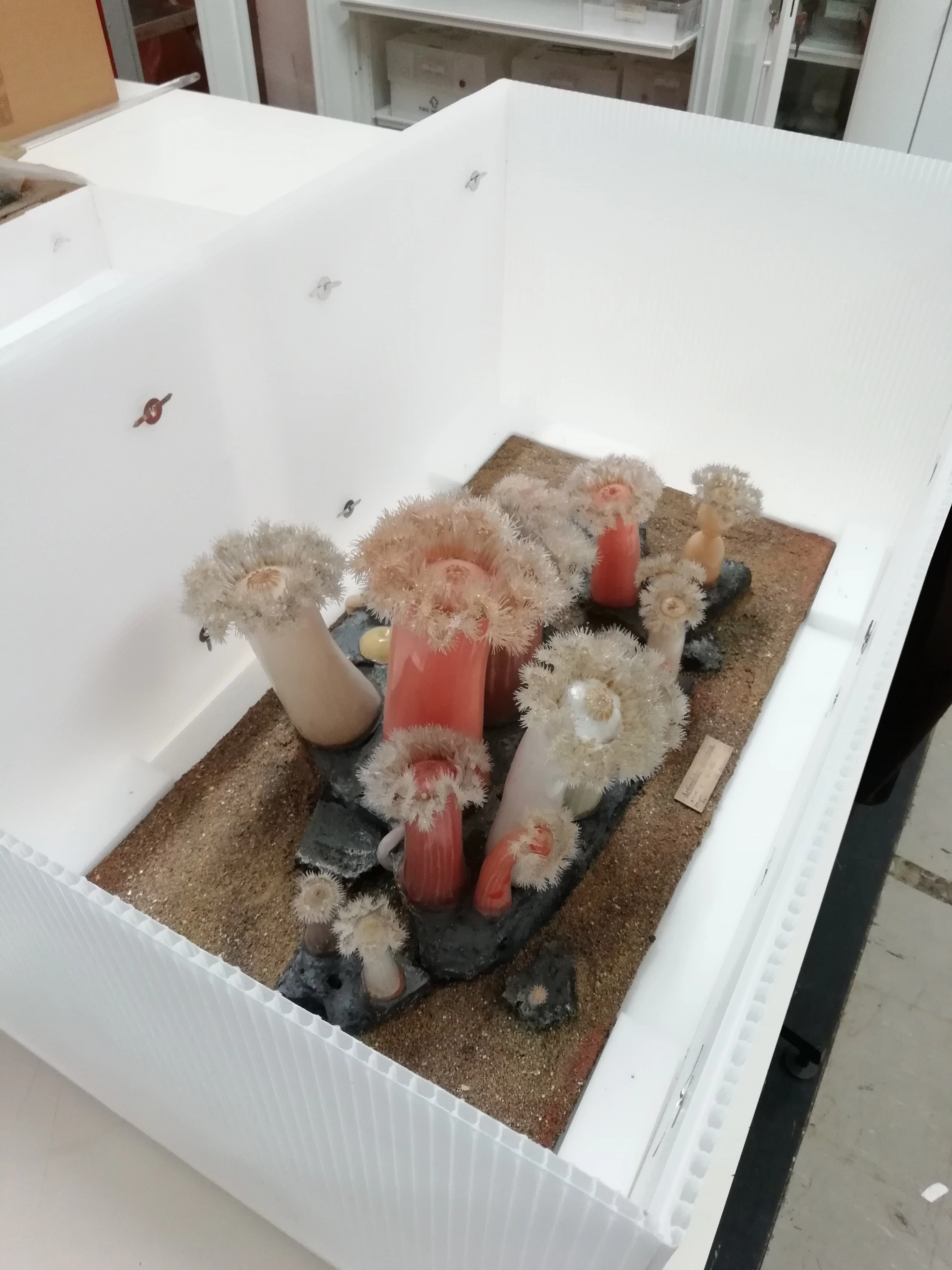
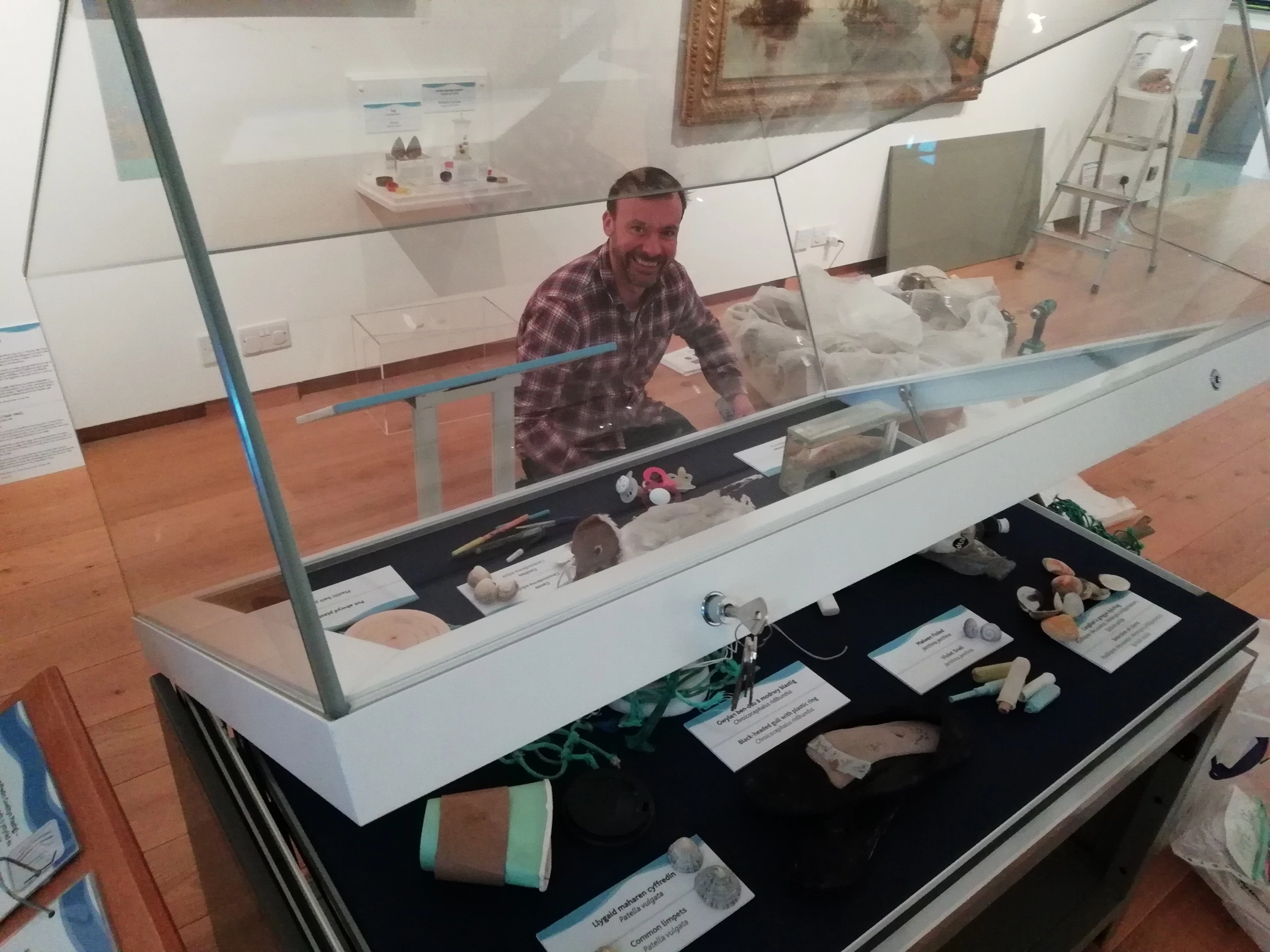
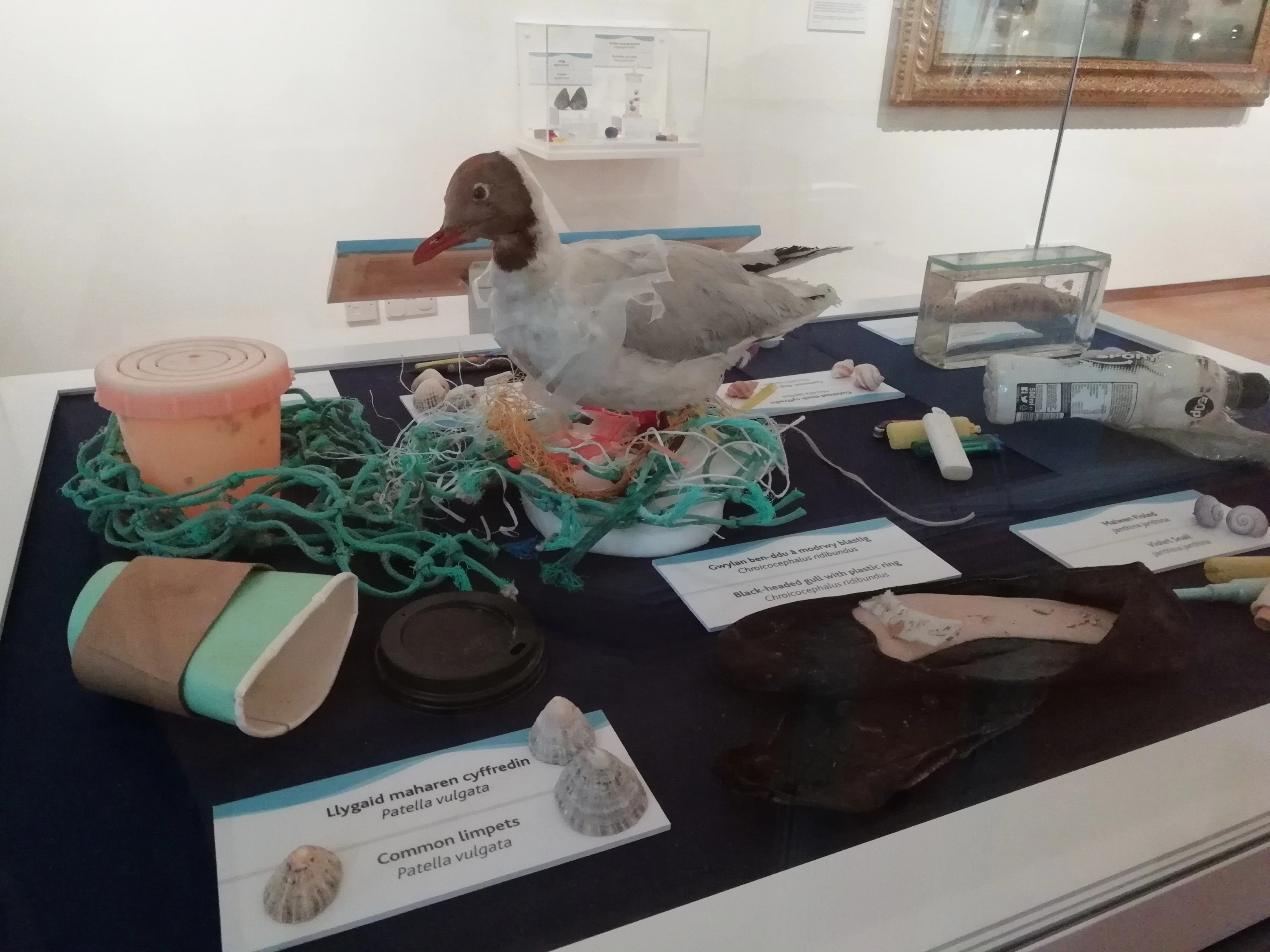
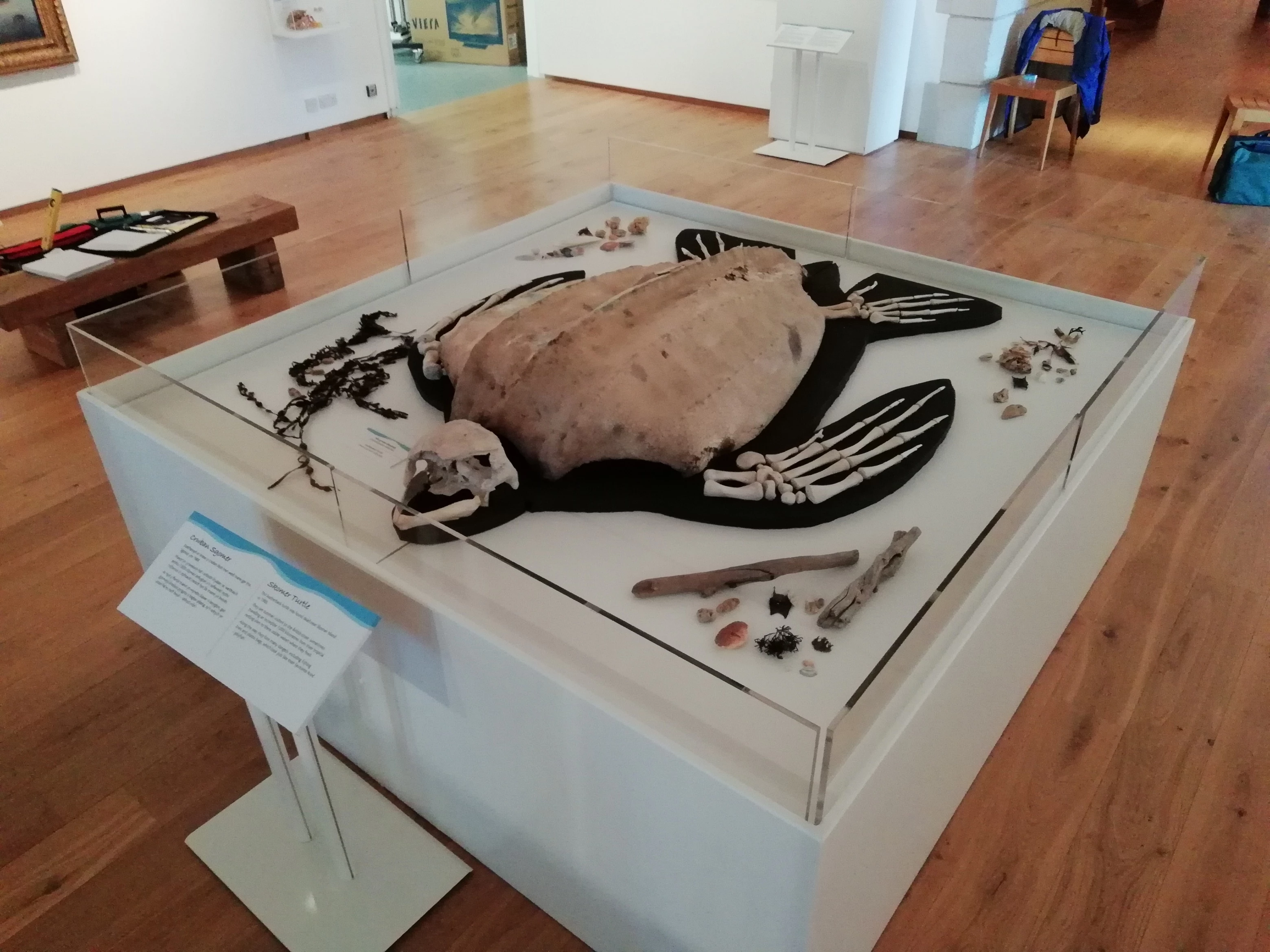
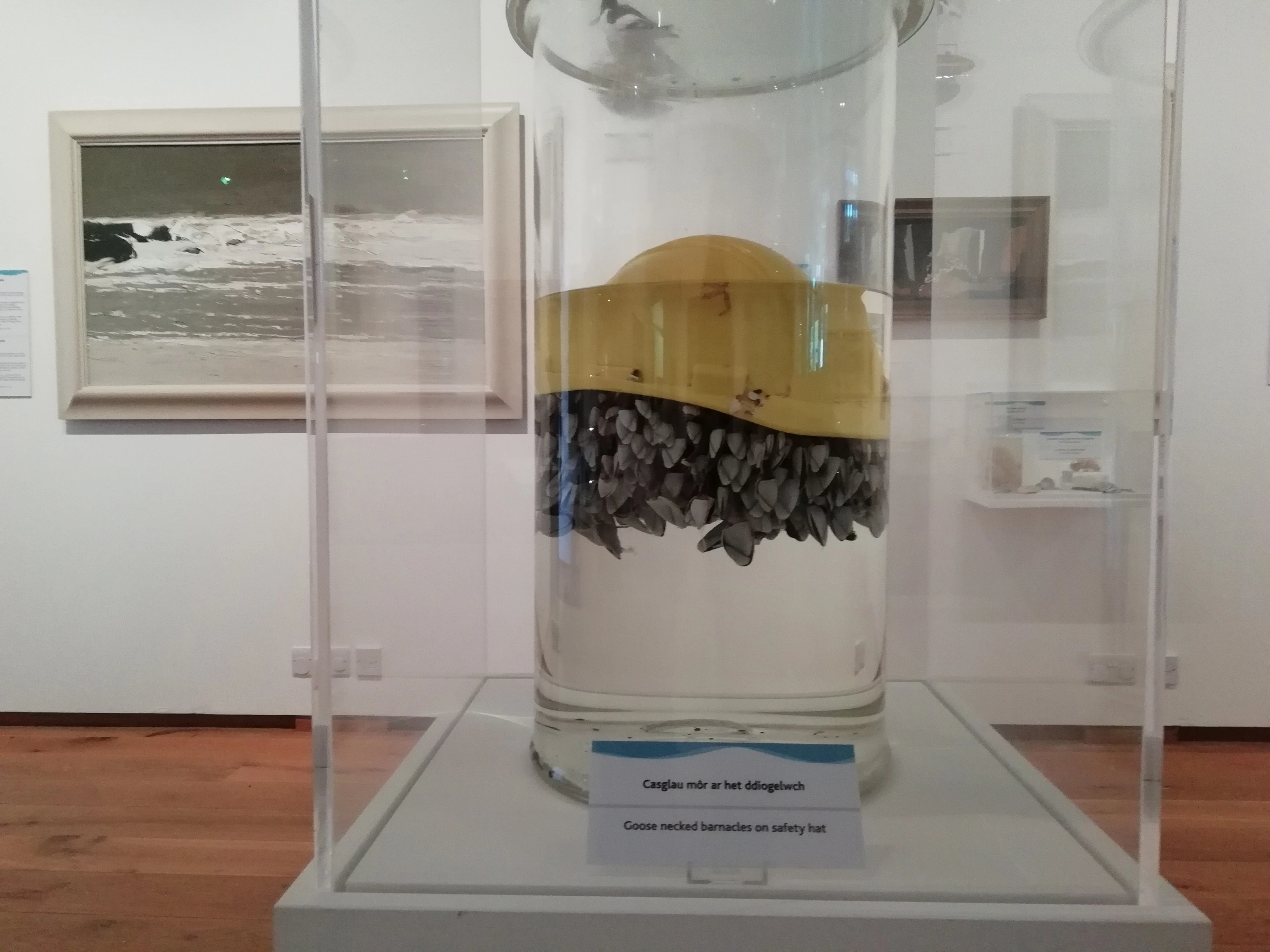
Coast – an exhibition fusing art, science and museum activism Julian Carter, 5 October 2018 Over the past few months the museum has been working closely with colleagues at the beautiful Oriel y Parc gallery in St Davids to bring together an exhibition celebrating Wales ‘Year of the Sea’ called ‘Coast’.The exhibition fuses artworks and natural science specimens specially selected by the Oriel y Parc team from Amgueddfa Cymru’s collections, and displays these alongside some of the recent museum activisim work of Amgueddfa Cymru’s 'Youth Forum Group' highlighting the issues of plastic pollution.The multidisciplinary nature of the display explores how the sea has inspired artists for centuries, highlights the biodiversity of the Pembrokeshire coast, and how plastic now impacts on the environment and our everyday life.Centre piece to the art works is Jan van de Cappelle’s masterpiece ‘A Calm’, surrounded by sea and coast inspired paintings from a selection of other artists including Cedric Morris and John Kyffin Williams. Amongst these works are specimens from the natural science collections capturing the richness of Pembrokeshire's wildlife, including the skeleton of a leatherback turtle found dead on Skomer Island in 1988.The turtle had in the past been on display at the visitor centre on Skomer, but was removed a number of years back when the buildings on the Island underwent redevelopment. In need of some repairs and cleaning, the specimen became an excellent project for one of our conservation student placements at the museum, Owen Lazzari. The end result has enabled us to bring the specimen back to Pembrokeshire to form one of the centrepieces of the exhibition.Other highlights from the natural science collections include one of our historic Blaschka glass models dating from the late 1800s, and a Goose barnacle covered builder's helmet found off the Welsh Coast.Further information can be found on Oriel y Parc's website: https://www.pembrokeshirecoast.wales
Who Decides? - what you had to say Guest Blog: Thea Green, 20 August 2018 Hi, I’m Thea, a sixth form student from Shropshire who decided to create this short video as part of my work experience at the National Museum Cardiff.I had heard about Who Decides? before I became involved in the exhibition, so I was very eager to find out more. After working with the public opinion cards, speaking to the people involved in the museum and doing some short interviews, I created an animation that I thought would best reflect the aims of exhibition and the feedback it had received.I am passionate about art and against the idea that art and museums are ‘elitist’ or should be for the ‘privileged’ rather than the majority, so I wanted to focus on this issue in the video.Working with the WallichThe exhibition itself was incredibly eye opening for me; the museum had decided to work with the charity The Wallich to involve people with experience of homlessness in the process of designing and creating the exhibit and gives the public the chance to choose some of the artwork on display. I haven't seen an exhibition that has ever taken this kind of approach, so I found it intriguing to see how others reacted to the idea.I hope this refreshing approach to curation will be an archetype for future exhibits and museums because it challenges what we usually connote with galleries and exhibits and hopefully encourages more people to visit exhibitions and museums.Who Decides? is on show at National Museum Cardiff until 2 September 2018. You can also contribute to Who Decides? by voting for your favourite work to be ‘released’ from the store and placed on public display.
The Cardiff Eisteddfod Chair: Inspired by St Fagans Sioned Williams, 9 August 2018 The Cardiff 2018 National Eisteddfod Chair is sponsored by Amgueddfa Cymru – National Museum Wales to the celebrate 70th birthday of St Fagans National Museum of History.St Fagans has championed crafts in Wales since it opened in 1948, and sponsoring the chair for the National Eisteddfod in 2018 is a fitting celebration, which continues the Museum’s tradition of supporting Welsh craft and makers.Chris Williams had the honour of designing and making the 2018 Chair. He lives in Pentre and has a workshop and gallery in Ynyshir, Rhondda - he works as a sculptor and is a member of the Royal British Society of Sculptors.Elements of the chair were made at St Fagans National History Museum in a purpose built building, Gweithdy. This is a brand new sustainable building celebrating the skills of makers past and present - where visitors of all ages can experience traditional craft skills first-hand.At Gweithdy, Chris demonstrated and shared the process of making the chair with visitors – a first in the history of making the National Eisteddfod chair.Swipe, or tap the circles below as Chris explains the process of making the iconic Eisteddfod chair: From the Hearth to the StageThe 2018 Eisteddfod Chair, through the eyes of its maker The InspirationThe 2018 Eisteddfod Chair is inspired by Welsh stick chairs like this one, pictured at Cilewent Farmhouse at St Fagans. Celebrating Welsh MakersThis Welsh carthen, or blanket, was chosen for its beautiful repeating pattern - becoming the main motif for the chair The rough materials - elm and ash - arriving at the workshop in Pentre I designed the chair in Rhino 3D, so I could have an accurate model. This enabled me to take dimensions, to create jigs and templates for shaping the arms, spindles and legs The seat and back are made from the same elm tree. Sanding the wood reveals the grain, and reveals any defects in the timber that need to be sanded away I shaped the seat with a scorp and cabinet scraper at Gweithdy workshop at St Fagans. It was nice to share this experience of making the chair with the public The seat and back were then engraved using a Co2 laser engraver - thank you to Caerphilly council for letting me use the engraver! The elaborate pattern was inspired by a blanket woven at Esgair Moel woollen mill in the 1960s. The mill (and the blanket) is now at St Fagans museum. The clamping operation was complex and required a number of sash clamps to control the pressure The text on the arms was also engraved with the laser engraver. This was done on a flat piece of ash which was laminated to the curved arms with many, many G clamps Gluing the legs into place Getting closer... The back is mortised into the seat The arms are cut around the back to create a unique join, and glued into place. Then, the spindles are fitted with wedges, to be cleaned when the glue has dried And here's the finished article - the 2018 Eisteddfod chair. Good luck to all the competitors!
Lleisiau coll Cymraeg Caerdydd Blog Gwadd: Dylan Foster Evans, 6 August 2018 Sut beth oedd Cymraeg Caerdydd yn y gorffennol? Dylan Foster Evans sy'n trafod lleisiau coll ein prifddinas: Wrth bori mewn papurau newydd o ddiwedd y bedwaredd ganrif ar bymtheg, fe welwch fod trafod o dro i dro ar ddiflaniad Cymry Cymraeg ‘brodorol’ Caerdydd.Roedd gan y dref yr adeg honno ei ffurf ei hun ar y Wenhwyseg, y dafodiaith leol draddodiadol. Ond er bod niferoedd siaradwyr Cymraeg Caerdydd ar gynnydd, llai a llai a siaradai hen dafodiaith Gymraeg Caerdydd. Mae’n destun rhyfeddod, felly, ein bod ni heddiw yn gallu gwrando ar leisiau’r to olaf o unigolion a fagwyd yn siarad y Wenhwyseg leol yn y Gaerdydd bresennol neu’n agos iawn ati. Mae gwrando arnynt yn brofiad sy’n gofyn am ychydig o ymdrech ar ein rhan. Ar adegau, waeth cyfaddef ddim, mae rhyw afrwyddineb yn nodweddu geiriau rhai o’r siaradwyr olaf hyn. Nid niwsans mo hynny, chwaith, ond rhywbeth sy’n gwbl, gwbl greiddiol i’r profiad. Hen bobl yw’r rhain ac mae olion y degawdau i’w clywed ar eu lleisiau.Ac yn achos sawl un, nhw yw siaradwyr Cymraeg olaf y llinach. Mae eu perthynas â’r iaith wedi breuo o flwyddyn i flwyddyn ac o ddegawd i ddegawd.Ond yn yr afrwyddineb hwnnw — ac yn wir yn eu Saesneg — y daw eu profiadau’n fyw.Dyna lle clywn ôl addysg a anwybyddai’r Gymraeg; dyna lle clywn effaith diffyg trosglwyddo rhwng cenedlaethau; a dyna lle’r ymdeimlwn â realiti shifft ieithyddol. Ond er gwaethaf hynny oll, mae yma wir brydferthwch. Enwau'r ddinas - o Blwyf Mair i LanetarnY cynharaf ohonynt yw Edward Watts (1840–1935) o Landdunwyd ym Mro Morgannwg. Fe’i recordiwyd pan oedd yn hynafgwr dros ei ddeg a phedwar ugain.Cofiai ymweld â Chaerdydd tua chanol y bedwaredd ganrif ar bymtheg ac wrth sôn am safle hen neuadd y dref yn ‘Plwyf Mair’ mae’n cofnodi elfen o ddaearyddiaeth Gymraeg Caerdydd sydd bellach wedi ei cholli. A dyna chi Tom Lewis y ‘trychwr’ o ‘Rwbina’ (nid ‘o Riwbeina’ fel y dywedai llawer ohonom heddiw). A’r Husbands — cynnyrch cymuned amaethyddol Llanishan, Llys-fæ̂n a Llanetarn, chwedl hwythau (ond Llanisien, Llys-faen a Llanedern i ni, debyg iawn). Caerdydd wahanol iawn oedd Caerdydd llawer o’r lleisiau hyn. Ond hebddyn nhw a’u tebyg, gwahanol iawn fyddai ein Caerdydd ninnau. Gyda diolch i Beth Thomas, Meinwen Ruddock-Jones a Pascal Lafargue. Am ragor o hanes y Gymraeg yng Nghaerdydd, dilynwch @CymraegCaerdydd a @diferionDFE - ac am ragor o Archif Sain Ffagan, dilynwch @ArchifSFArchive Bydd arddangosfa o hanes Trebiwt, y Bae a Chaerdydd i'w gweld yn Y Lle Hanes trwy gydol yr Eisteddfod.