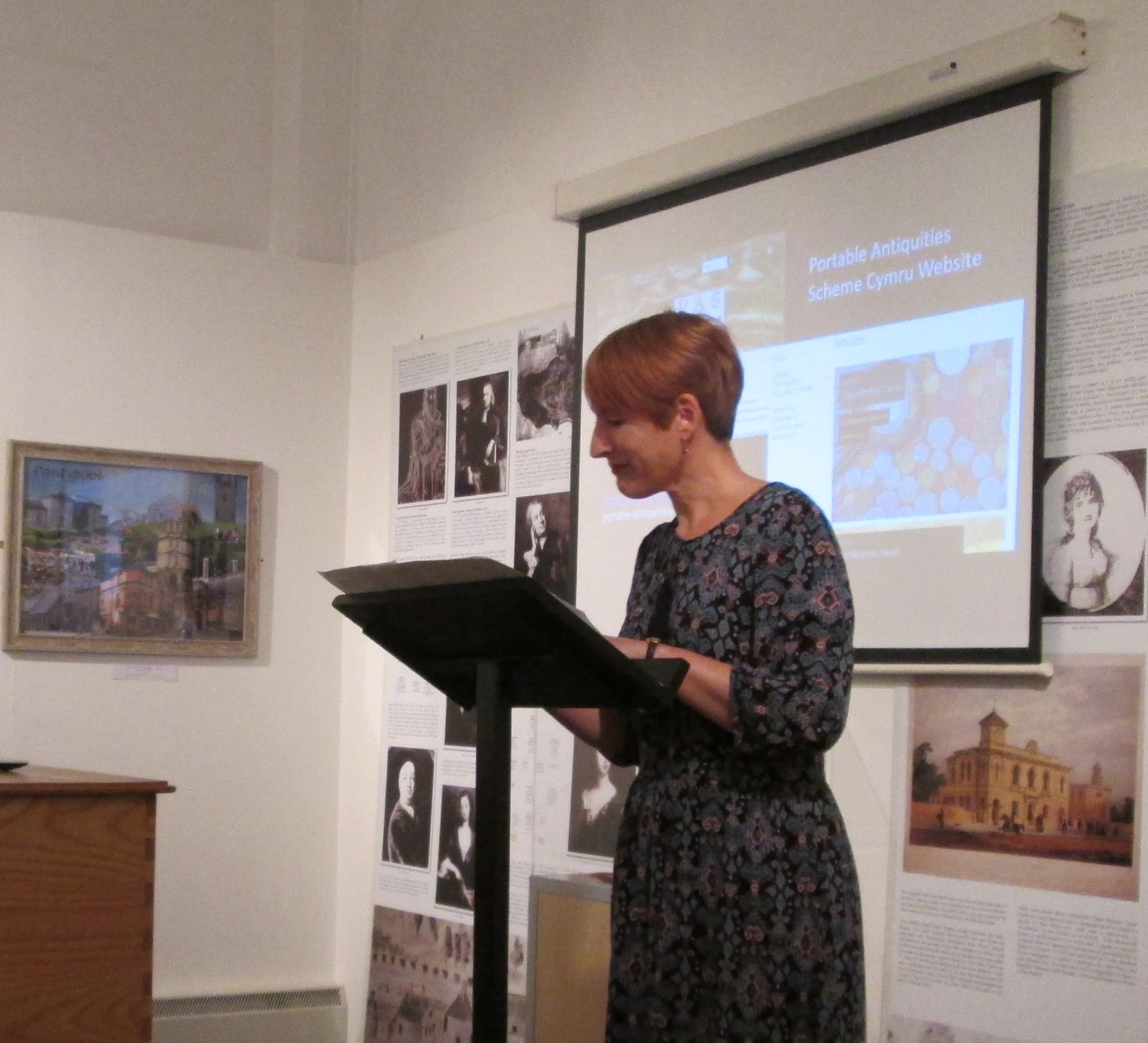
Torfaen Treasure day Stacey Owen, 12 April 2017 Last Friday we attended the Torfaen Treasure Day at Pontypool Museum, where the latest treasure finds from the Trevethin and Henllys area were presented.The treasure included a decorative gold finger-ring from the late 16th or early 17th century, as well as Bronze Age artefacts, which date back 3,000 years. The Bronze Age hoard consists of five Bronze Age artefacts, including three socketed axes and two spearheads and these will be the first Bronze Age items to be displayed at Pontypool Museum. Adam Gwilt, Principal Curator (Prehistory) at Amgueddfa Cymru, presenting the Trevethin Hoard. Rt Hon. Lord Paul Murphy of Torfaen, President of the Torfaen Museum Trust, welcomed in the event warming up the audience before presentations from Adam Gwilt and Rhianydd Biebrach from Amgueddfa Cymru and local MP Mr Nick Thomas-Symonds followed.The newly declared treasure was presented to the museum by Adam Gwilt, the Principal Curator of Prehistory in the History & Archaeology Department. Adam talked about the history of the treasure and provided background information so the audience could gain a further understanding of the items. Since the items were acquired by Pontypool Museum with grant funding from the Saving Treasures;Telling Stories Project Dr Rhianydd Biebrach, the Saving Treasures; Telling Stories Project Officer discussed the key messages and aims behind the project. Rhianydd Biebrach, project officer for Saving Treasures Telling Stories at Amgueddfa Cymru, giving a presentation about the project. The Saving Treasures; Telling Stories project is currently working with the University of South Wales assisting student journalists for a two-week work placement where they can use their journalistic writing and interviewing skills to help tell the stories behind items. We thought it would be a good idea to send them up to Pontypool Museum before the event to talk to the curators at the museum and the finders of the treasure.They spoke to Gareth Wileman, a metal detectorist in the Pontypool area who found the hoard back in November 2014, and asked him how he felt about his discovery being exhibited. While we would have loved to hear from Simon Harrison, the finder of the gold finger-ring, he wasn’t available at the time so a potential phone interview looks likely for the next batch of students.The students are still currently working on this project and will provide us with written and video content of their interview - so keep your eyes peeled on our Twitter and Facebook account for more content and videos coming your way!The hoard is being acquired by Pontypool Museum with grant funding from the Saving Treasures;Telling Stories Project. This project, funded via the Collecting Cultures programme of the Heritage Lottery Fund, is acquiring archaeological objects discovered by members of the public for public museum collections across Wales. The project is also encouraging communities to engage with their pasts and portable archaeological heritage, by funding a programme of community archaeology projects led by staff in museums throughout Wales.
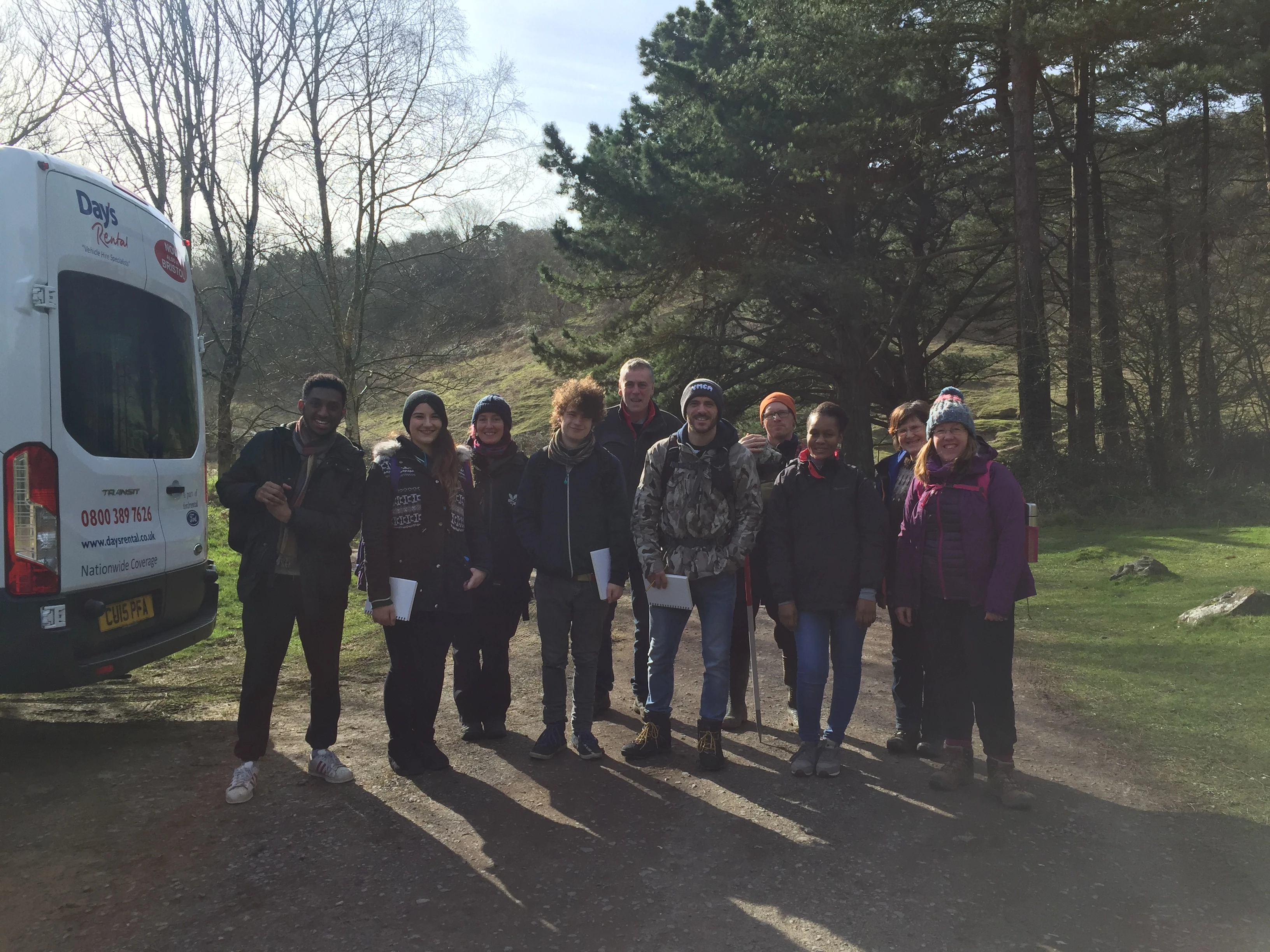
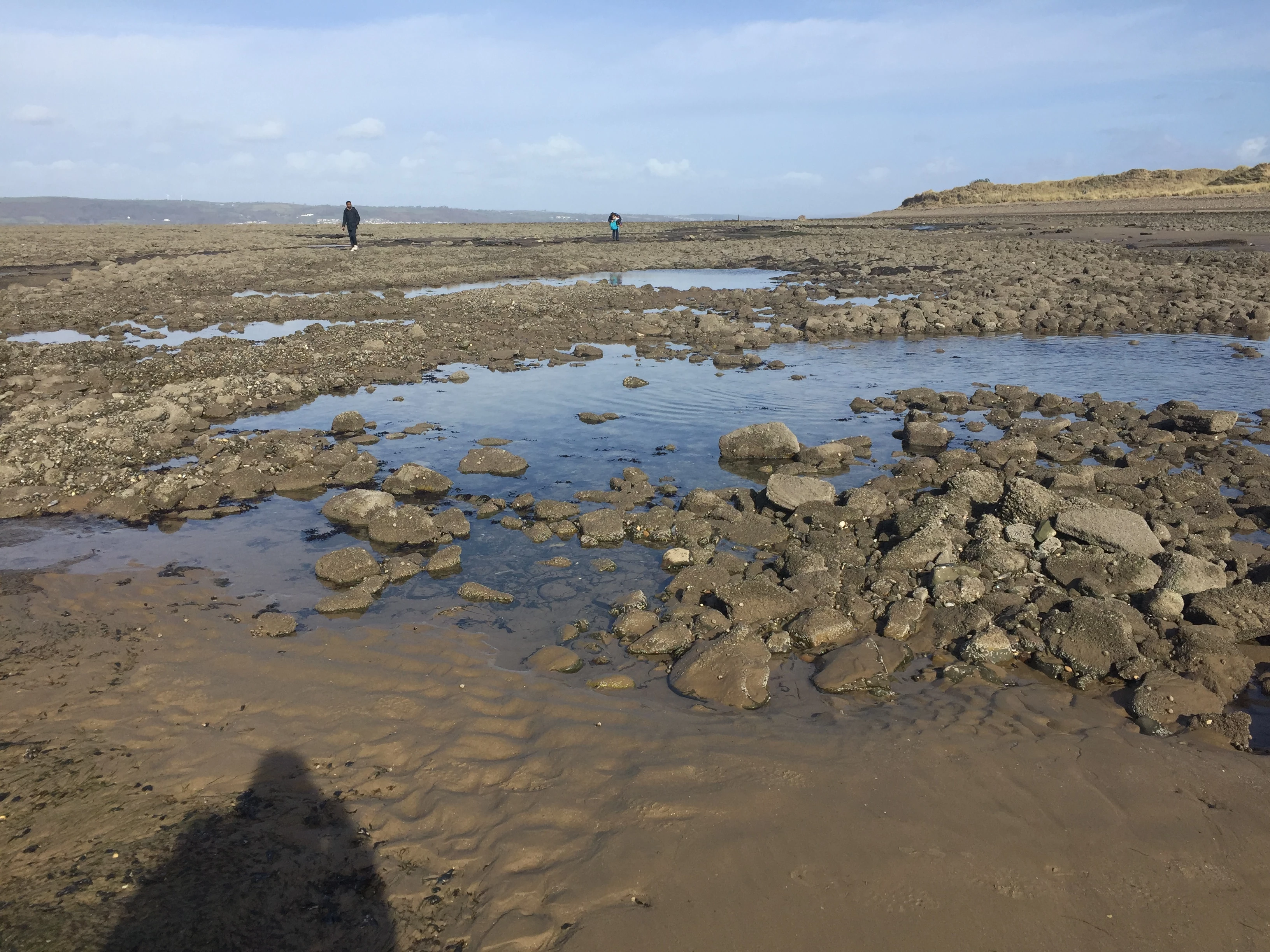
The Changing Landscape of Swansea Bay Stacey Owen, 21 March 2017 Standing on what felt like the top of the world and slowly regaining our breaths back, they were soon taken away again when looking at the awe inspiring landscape of Whiteford Sands in Swansea Bay.Swansea Museum is working on a project called ‘The Lost Treasures of Swansea Bay’, which is funded by the help of the ‘Saving Treasures; Telling Stories’ project. Saving Treasures is funded by the Heritage Lottery Fund which is acquiring archaeological objects for local and national collections, providing training for heritage professionals and volunteers and engaging local communities with their pasts.Last week the museum teamed up with young people from Swansea YMCA, The National Trust and The Glamorgan Gwent Archaeology Trust to hike around Whiteford Sands in the Gower area of Swansea Bay. This walk was intended to give us an understanding of the changing landscape of Swansea Bay since the Bronze Age. Young people from Swansea YMCA, The National Trust and The Glamorgan Gwent Archaeology Trust members are gearing up for a hike in the Whiteford sands area in Swansea. The LandscapeCorinne Benbow is a National Trust Ranger and she led the first half of the walk up a very steep hill in order to get the best viewpoints overlooking the beach and woodland areas.Corinne explained that what we could see was quite unspoiled, she said: “You’re looking at quite an ancient landscape and it wouldn’t have changed that much since the Bronze Age.”Pointing over towards the coastline, Corinne spoke about how the landscape has slightly changed over the years.“This piece of land is actually brand new and doesn’t belong to anyone as it has only appeared over the last twenty-five years; that’s because of the sand being washed in and building up. The new dunes get washed away and are then re-built back up; so it’s always shifting, but is basically the same as it’s been for thousands of years.” The view of the Bay from above Hidden SecretsAfter a lunch break and water painting session of the landscape, we continued our walks through the woods, over the sand dunes and onto the pebbly beach. It was here where Paul Huckfield, an archaeologist from the Glamorgan Gwent Archaeology Trust, revealed some hidden treasures found on the beach.Paul said: “We are currently stood on a prehistoric ground surface which was originally a forest. This dates back to the late Mesolithic, early Neolithic age at around 5000-4000 BC. As you can see the remains of the trees around you are still here.”At a first glance you would assume the trees were drift wood washed ashore, but they were in fact, alder trees almost 7000 years old. Paul explained how the landscape which is currently a sandy beach area would have actually been a woodland area similar to the one we walked through. Why were they a secret?Nobody knew these 7000 year old trees even existed until they were found between 2010- 2012 when the beach lost some of its sand and the trees came to light. Standing on Prehistoric ground surface. The Saving Treasures; Telling Stories Project is a partnership project between Amgueddfa Cymru – National Museum Wales, The Federation of Museums and Art Galleries of Wales (The FED) and the Portable Antiquities Scheme in Wales (PAS Cymru) promoting the portable archaeological heritage of Wales through acquiring finds made by the public. The project secured Heritage Lottery Grant funding in October 2014 through the Collecting Cultures programme and runs for five years.It will help Swansea Museum to acquire and safeguard items of portable heritage with special significance to Swansea Bay for the people of Swansea. It will also enable the museum to work with local communities to engage with and explore these treasures and to find out more about Swansea Bay
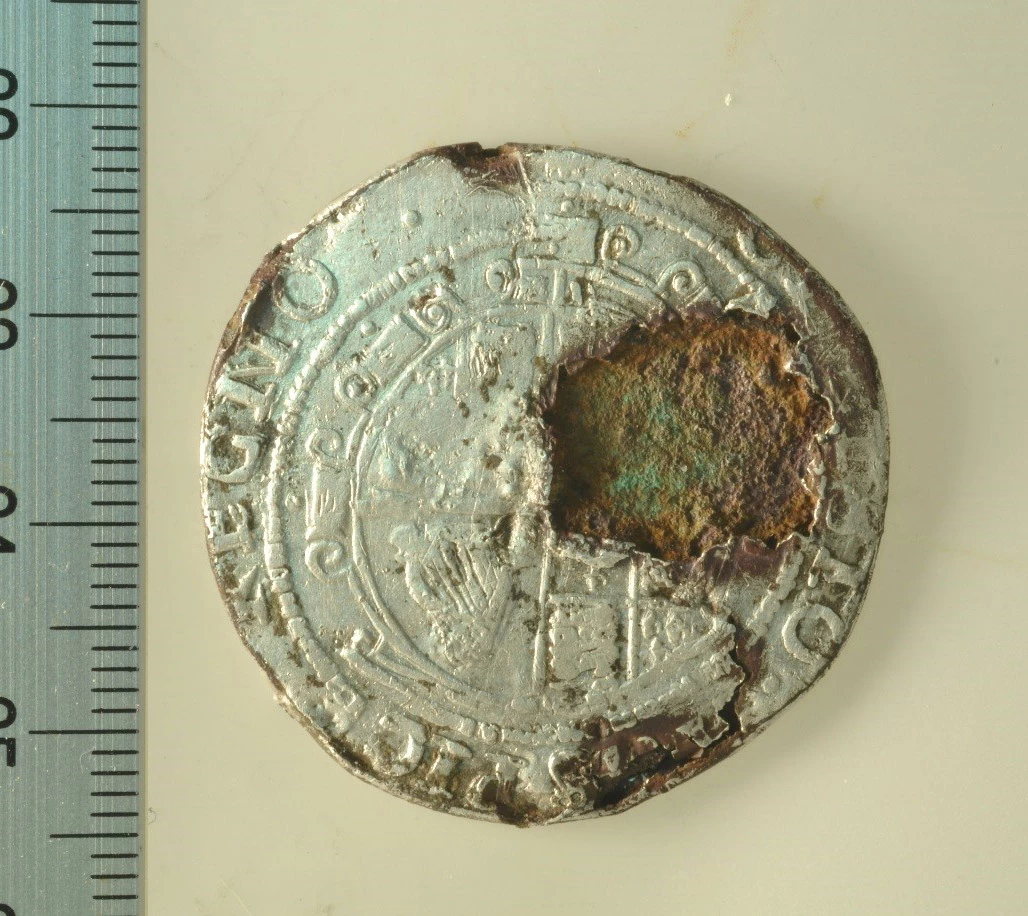
Counterfeit Coins Rhianydd Biebrach, 16 March 2017 The last execution for forgery took place in 1830 and Victorian forgers were punished by transportation, imprisonment and hard labour. The punishment for counterfeiting today is several years’ imprisonment. Have you ever been guilty of passing fake coins? A forged Charles I half-crown. The corroded base metal core can clearly be seen through the thin silver plating. Your answer will hopefully be, “no, of course not!”, but would you be able to spot one if you saw one? According to the Royal Mint, just over 2.5% of the £1 coins circulating in 2015 were counterfeit, so how many of us have unwittingly broken the law by handling fake money? But far from being a modern problem, you may be surprised to learn that counterfeit coins have been causing headaches for the authorities for thousands of years – for as long as we have been using money, in fact. Occasionally, metal detectorists who unearth coins and report them to the Portable Antiquities Scheme in Wales (PAS Cymru), are told that what they have found is not what it seems to be – it is in fact a fake. In 2015, out of 679 coins reported, seven were judged by experts at Amgueddfa Cymru-National Museum Wales to be contemporary counterfeits. Many more were described as ‘irregular’ and therefore also produced under suspicious circumstances. One of the fakes was a Charles I half crown, discovered by Mr Nick Mensikov at Miskin, Rhondda Cynon Taf. A half crown is a silver coin, but Mr Mensikov’s example gave itself away as a fake because corrosion revealed it to have only a thin coating of silver over a copper alloy core. In ‘mint’ condition it would have looked sound enough to the untrained eye, but its real value would have been well below the two shillings and sixpence (or one-eighth of a pound) that the half crown represented. Twelve fake coins from the reign of Charles I found in Wales have been reported to PAS Cymru since 2009, far outweighing those of any other monarch, but the great majority are much older than this and date from the period of Roman occupation, from the first to the early fifth century AD. One of these Charles I half-crowns is also a fake. Can you tell which one? Who made counterfeits, and why? Counterfeit coins were made for several reasons in the past. Sometimes, when supplies of the smaller denomination coins were inadequate, unofficial production took place to make up the shortfall. In Roman Britain this happened to such an extent that at some periods there may have been as many fake coins in circulation as real ones. After Claudius’s invasion in AD 43 the Roman army itself may have been responsible for much of this ‘irregular’ coinage, which was sometimes tolerated by governments as being something of a necessary evil. In other cases, people forged coins purely and simply for monetary gain. Of course, this was not an easy process. It required access to supplies of metals, a furnace or crucible, and various other bits and pieces of equipment, including dies or moulds on which had been engraved a passable copy of the coin to be reproduced. This meant that forgery operations generally involved more than one person, as well as some initial financial outlay, and so they were not the last resort of a poor man or woman with no other way of getting cash. Some ‘coiners’, as forgers were sometimes called, were already wealthy individuals. In 1603 a coining operation was uncovered at Duncannon Fort in Ireland. Moulds, pieces of brass, crucibles, as well as chemicals and charcoal, were discovered in the desk of the fort’s commander, Sir John Brockett. Sir John had been producing counterfeit English and Spanish coins, for which he was put on trial for treason. Some forgeries were never intended for use as cash, however. As early as the sixteenth century antiquaries and collectors began to be interested in old coins, and consequently some unscrupulous individuals went into business supplying fakes to tempt the unsuspecting or naïve. In early Victorian London, one Edward Emery was responsible for passing a possible 5-700 fake medieval and Tudor coins onto the collectors’ market. Roman coins were also highly collectable, and a modern era replica of one was found by a Mr Rogers in Usk in 2007. Made of a white base metal alloy designed to look like silver, was it thrown away in disgust by its owner when he realised what he had bought? How were counterfeit coins made? There were two main methods of producing fake coins – striking them from stolen or forged dies, or casting them in moulds. A coining operation in Ireland in 1601 used metal and chalk dies to strike the coins, which were made of an alloy which included enough tin to create the necessary silver colour, although the coins, of course, contained no precious metal. This was obviously a noisy activity and so coining dens were often located either in busy areas such as town centres where the noise and activity would be masked by the hustle and bustle of the streets, or in out-of-the-way places where people were unlikely to go. The latter option was chosen by the Roman forgers at work in the lead mine at Draethen, near Caerphilly. Discovered here were coins, the ‘flans’, or blanks, from which the false coins were struck, as well as the metal rods from which the flans were cut. These items were found around a hearth, and we can only guess at the hot, unpleasant and dangerous atmosphere that this subterranean forging operation would have created. Casting was a different process, but it still required access to a powerful heat source as molten metal was required. An impression of both sides of a genuine coin was made in clay, wax or ashes. The hardened moulds were then fixed together and filled with molten metal alloy. Some cast coins are given away by the tell-tale remains of the channel through which the metal was poured and which wasn’t properly broken off or filed down. There has been plenty of evidence for this forging method from Roman London, consisting of both the cast coins themselves (often in a silvery-looking alloy of bronze and tin) as well as hundreds of moulds. The appearance of precious metal necessary to pass off a fake coin was not only achieved by cunning uses of alloys (some of which included arsenic for a whitening effect!). Some coins – like the Charles I half-crown mentioned earlier – were made from base metals which were then plated with a thin coating of silver or gold to achieve the desired effect. Medieval forgeries often used a technique called fire gilding. A base metal blank was rubbed with a mixture of gold and mercury which was then heated. The mercury was evaporated and the gold was bonded to the surface. The coin could then be struck between the dies. This process obviously required some technical skill, and there is evidence that forgers were experimenting with methods that would later be used for more legitimate purposes. A counterfeit coin of William III (1689–1702) was found to have been made by an early example of the Sheffield plating technique. A copper plate was rolled or hammered between two thin sheets of silver from which blank coins were then cut out. The edges were covered with a copper and silver alloy and the blanks were then struck with official dies smuggled out of the London mint. The gold and silver necessary for the plating were sourced by clipping real coins (an offence in itself) as well as melting down pieces of plate or other coins. Punishments The severity of the punishments for counterfeiting have reflected both the seriousness of the crime but also the difficulty of detecting those responsible. Like many penalties of the pre-modern era, they were physical in nature. In ancient Rome it was a capital offence, equated with treason, and could be punished by banishment or slavery if you were lucky, or crucifixion if you weren’t. In the early 4th century, Emperor Constantine – who is more famous for making Christianity the official religion of the Roman Empire – introduced burning for forgers. In 10th-century England, under King Athelstan (927–939), the forger would lose a hand, but one of his Norman successors, Henry I (1100–1135), went one better. Suspecting his official mint workers of producing irregular coinage on the side and unhappy with the standard of the regular issues, he summoned them to a Christmas gathering at Winchester where he took the right hand and both testicles from each of them. Under Edward I and later kings, death by hanging was the usual punishment for men, with burning and strangulation reserved for women. Three unfortunate 16th century Edinburgh women suffered this appalling punishment, while in 1560 Robert Jacke, a Dundee merchant, was hanged and quartered merely for importing forgeries. Nineteen executions for counterfeiting took place in 1697 when Sir Isaac Newton was Warden of the Royal Mint.

Work experience at Amgueddfa Cymru — National Museum Wales Abigail Dickinson & Roqib Monsur, 3 March 2017 Amgueddfa Cymru - National Museum Wales and The Saving Treasures; Telling Stories Project have teamed up with the University of South Wales and students on the journalism course.Working in the Archaeology and Communications departments, using their media and journalistic knowledge, the students will be bringing to life significant archaeological discoveries and telling the stories behind the items and the people who found them. There will be a series of two week work placements from a variety of students.Here’s what our most recent students had to say about their time working on Saving Treasures; Telling Stories:Our experience working on Saving Treasures; Telling Stories ProjectComing from a journalism background we were anticipating our placement with the Saving Treasures; Telling Stories project and had a lot of questions of what to expect.What is Archaeology?What do Archaeologists do?And what is the Saving Treasures Project?On our first day Rhianydd, Mark, Adam and the rest of the team were more than welcoming which is always reassuring when on a work placement. They spent the day showing us some mesmerising objects found during archaeological excavations or by metal detectorists and then teaching us everything we needed to know (which wasn’t easy as there are a lot to remember!) It was fascinating for us to begin to understand objects dating back thousands of years ago and their significance to our lives at present.Here is where the fun started.What we didThe rest of our first week we travelled around South Wales to places such as Swansea and Brecon to start recording our interviews about some of the most recently discovered objects.It was a gloomy and rainy Tuesday but nevertheless we travelled to Brecon to meet with Nigel Blackamore and the team at Brecknock Museum (they even gave us biscuits!) who let us spend the day interviewing in their library.We interviewed a local metal detectorist as well as a married couple who, over forty years ago, found a dagger in Swansea Bay and have kept it ever since for good luck and as a symbol of their relationship. An earlier blog about the Swansea Bay dagger can be found here.We also spoke to Nigel about the Portable Antiquities Scheme and the future of museums; as a journalist it’s all about telling stories and getting important information to the public.Roqib also had the chance of fulfilling a lifetime dream of holding a metal detector. (He was really excited). Our student journalist, Roqib, is happy to give metal detecting a go. Putting our journalism skills to workOn the Wednesday we went to Swansea Museum to meet with Emma Williams and Phil Treseder about Swansea’s involvement with the Saving Treasures Project and what their aims are for the future of Swansea Museum. We also interviewed collector Geoff Archer, who recently found a very rare Bronze Age mould for making axe heads.To spend the week interviewing people who are so passionate about preserving the archaeology and heritage of South Wales for future generations, in whatever form they can, was an honour and a privilege and certainly put our journalistic interview techniques to the test.Over the following week we were able to edit the interviews and write our articles with the overlooking expertise of Catrin Taylor and the Communications department; again linking in our journalism skills to help tell the stories of the people and objects.A thank you from usWe’ve had a wonderful and insightful two weeks and we’ve met some incredible people during this time. The support we’ve received to create the best possible content has been outstanding and we now know what archaeology is, what an archaeologist does and what the Saving Treasures Project is!We can’t wait to continue to work closely with the Saving Treasures, Telling Stories project and follow its success until 2019. Thank you to everyone who we have met and worked with!@A_Dickinson_@MonsurMedia
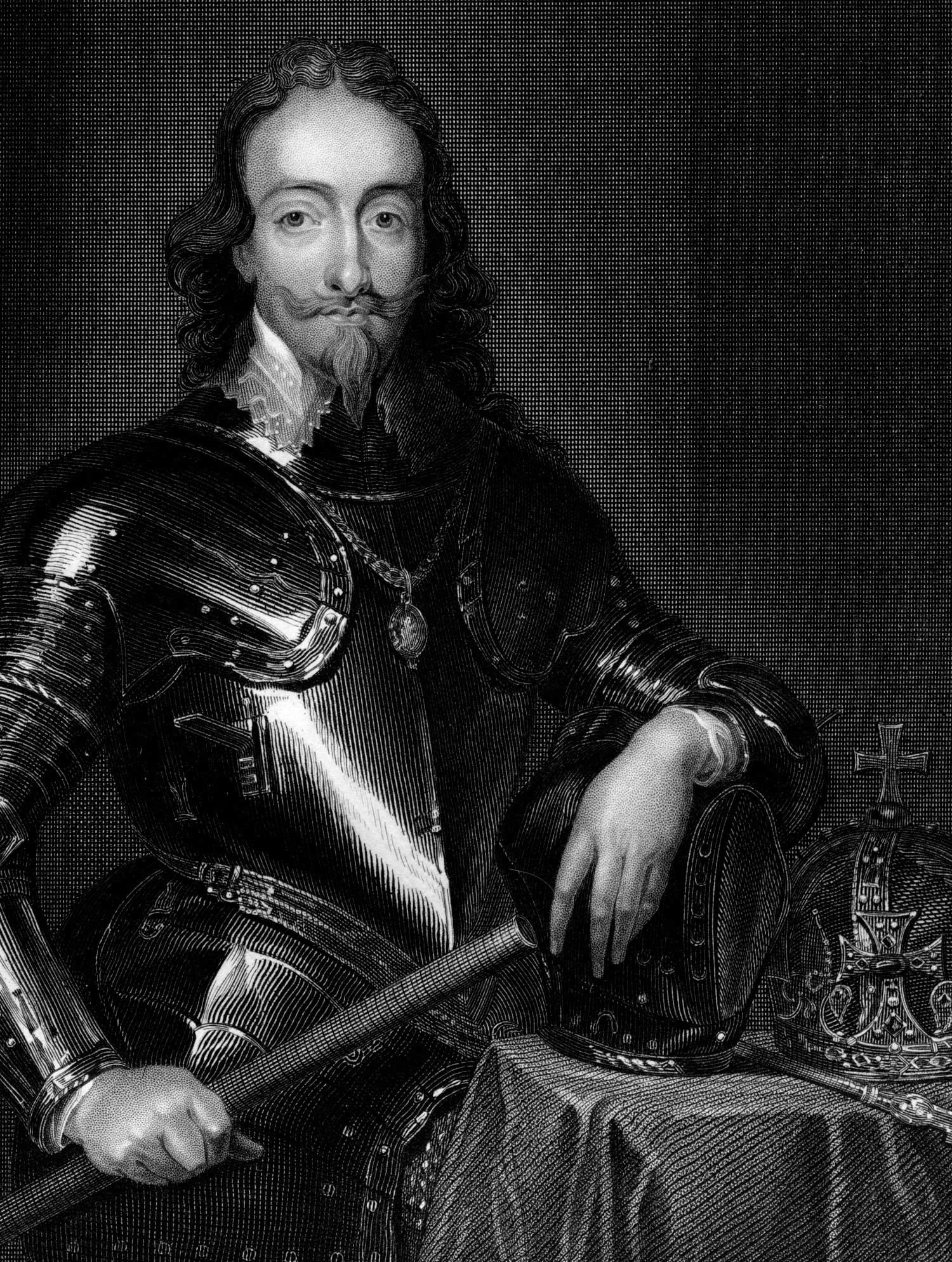
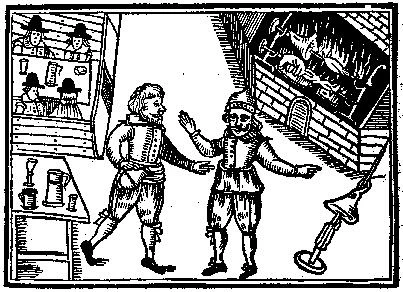
Off With His Head! The Story of Commonwealth Coins Rhianydd Biebrach, 16 December 2016 Portrait of King Charles I On the bitterly cold morning of 30 January 1649, following a long and brutal civil war between Crown and Parliament, King Charles I was beheaded in London and the monarchy was abolished. Three years earlier, in 1646, Parliament had rid the Church of England of its bishops, and when the House of Lords was also abolished in March 1649, virtually the entire, centuries-old, basis of government in Britain had disappeared, seemingly for good. Little wonder people living at the time called it ‘a world turned upside down.’ In the end this uncertain Commonwealth period was to last only eleven years as the monarchy was restored in 1660, but the highly distinctive coins minted during this short stretch of time are sometimes unearthed by metal detectorists in Wales and reported via the Portable Antiquities Scheme . They have been found in small numbers all over Wales, from Manorbier in Pembrokeshire to Cwm in Flintshire, and in various states of wear including one or two which were later reused for other purposes. So what makes them worth talking about? Coins for the Commonwealth It is not surprising that the radically new form of government ushered in so bloodily with the end of the monarchy in 1649 should have caused an upheaval in another enduring aspect of national identity – the coinage. Prior to this all coins had been issued in the monarch’s name and contained his or her image. Even during the Civil Wars (1642-48), Parliament – which was in control of London and therefore also of the Tower Mint - had continued to strike coins in the traditional style as long as the outcome of the war was uncertain. But now that Britain was a republic the centuries-old design of coins with the monarch’s head and Latin legend was clearly inappropriate. A new design, emphasising the legitimacy of the new republican regime, was needed. Why do they look different? Commonwealth half groat (twopence) found by R. W. Bevans in Manorbier, Pembrokeshire, 2009. The smaller denomination coins did not have a legend or date. You don’t need to be a coin expert to notice the obvious difference between the new coins and those we are all more familiar with - there is no king’s head! Of course, when the real king’s head was removed from his shoulders, its likeness also had to be removed from the coinage. With the king gone, the House of Commons claimed that it now exercised sovereign power on behalf of the people, and that God had given his approval to this new state of affairs by allowing Parliament to defeat the king in battle. This bold claim was bolstered by the imagery and lettering used on the new coinage. On the obverse (heads) side, replacing the traditional monarch’s crowned head, there now appeared a shield containing the cross of St George, representing England. This was surrounded by a wreath of laurel and palm, symbolising Parliament’s victory and the peace it claimed it had brought. On the reverse (tails) side were the conjoined shields of England and Ireland, the latter represented by an Irish harp, along with the date of issue and denomination. Scotland, then a separate nation with its own coinage, was not represented, nor was Wales, which was thought of as part of the kingdom of England and so covered by the cross of St George – as is still the case in the modern Union Jack. There were also changes to the legends, or lettering, appearing around the edge of the coin’s faces. Traditionally these would have been in Latin, giving the name of the monarch and an abbreviated list of their titles (including a claim to France!) as well as a Latin motto, but this was now replaced with ‘THE COMMONWEALTH OF ENGLAND’ on the obverse and ‘GOD WITH US’ on the reverse. These simple statements not only did away with all references to royal power, they also replaced Catholic-sounding Latin with good Protestant English, and in true Puritan style laid claim to God’s favour and support. Royalist reaction and the ‘Rump Parliament’ A seventeenth-century woodcut showing two men in a tavern, wearing the breeches said to resemble the conjoined shields of the Commonwealth coins. (Source: http://www.godecookery.com/mirth/mirth008.html) Although Charles had been defeated and the monarchy abolished, there were still many people who had been against his execution and were fierce critics of the new republican regime, led by the so-called ‘Rump Parliament’ until 1653. Even the coins came in for ridicule, the royalists finding ways to attack the government by poking fun at the new designs. The wording of the legends on either side of the coins, for example, led royalists to observe that ‘God’ and ‘the Commonwealth’ were on opposite sides. The appearance of the conjoined shields of England and Ireland also caused amusement as they bore an uncanny resemblance to a pair of breeches, and were referred to in royalist circles as ‘breeches for the rump’, ‘rump’, being not only the name of the parliament but also a common term for someone’s backside. Interestingly, in 1658 the government made an attempt to return to a more familiar design harking back to the royalist period. This featured the profile of the new head of state, Protector Oliver Cromwell, crowned with a laurel wreath on the obverse, and a coat of arms surmounted by – of all things – a crown on the reverse. Cromwell had earlier been offered the crown, but had refused it, so was it included in the new design in an attempt by the shaky government of the day to present an image of stability using the more familiar symbolism of times gone by? Cromwell died soon after this and the coins were never circulated so are not likely to be found by detectorists. The Restoration and beyond Worn commonwealth half groat reused as a love token, found by Gwyn Rees near Wenvoe, South Glamorgan, in 2012. Commonwealth half groat found by Gwyn Rees near Wenvoe in 2015. The piercing may have been to take it out of circulation. The republican experiment ultimately failed and the monarchy was restored under Charles II in 1660. Those who had signed his father’s death warrant, known as the regicides, were rounded up and executed; even the corpse of Oliver Cromwell was exhumed and hung in chains. A similar lack of mercy was shown to the Commonwealth coinage. It was suppressed and called in for recoining between 1661 and 1663, with an estimated two-thirds out of the total minted since 1649 being recovered. But what happened to the rest? Most will have been taken abroad and some was hoarded, although the coins recovered by detectorists in Wales, which are all of the smaller denominations of penny and half-groat, suggest that some were accidentally lost. The wear and tear suffered by most of these finds may be a result of use or of subsequent damage while in the ground, although one found by Gwyn Rees near Wenvoe, South Glamorgan, in 2012, which has been bent and pierced with a hole at the top, seems to have been reused as a love token, possibly to have been suspended from a chain or ribbon. Was this discarded coin an accidental loss, or is it evidence of a failed relationship? Another Commonwealth half groat, also found near Wenvoe by Mr Rees in 2015, has been pierced in the centre, probably to demonetise it and take it out of circulation in the early 1660s. It is possible that the Restoration government did not bother to recall all the smaller denomination coins, which may therefore have continued in circulation beyond the early 1660s. Historical significance Commonwealth of England, half crown (2s 6d), 1649 Although collectors see them as relatively uninteresting because of the plainness of the design and its uniformity across the denominations, Commonwealth coins are fascinating from a historical and archaeological point of view. In circulation for such a short period of time they are survivors of a troubled period in British history, when a bloody and divisive war was followed first by the shock of the king’s execution and then by years of political and religious upheaval as the country tried to find an acceptable alternative to monarchical rule. Just as all the political alternatives failed in turn, the new coins’ design was also shortlived – Charles II reverting to the familiar, centuries-old monarch’s head format, which continues in use today. The radical changes in design show how the new republican government tried to heal the ruptures of the Civil Wars and bolster its legitimacy in the absence of the king. Are they best seen as signs of life continuing much as it always had, or relics of a world turned upside down? Oliver Cromwell, pattern half crown, 1658