Ancient Wales

The decorated floor tiles from Raglan Castle

6 September 2007

Raglan Castle.

Raglan Castle. The castle's fortifications, including the Great Tower shown at the centre of this view, were established in the 15th century. Image: Cadw (Crown copyright).

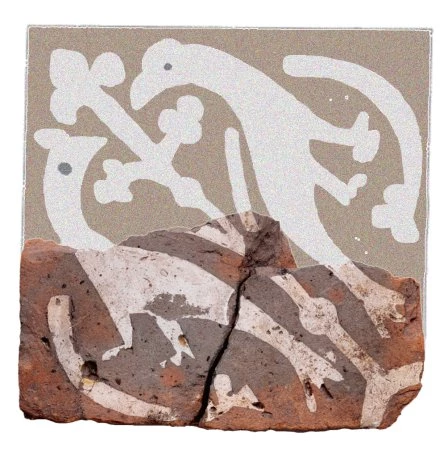
Late 13th to early 14th-century tile of the Wessex School from the chapel at Raglan.

Late 13th to early 14th-century tile of the Wessex School from the chapel at Raglan.

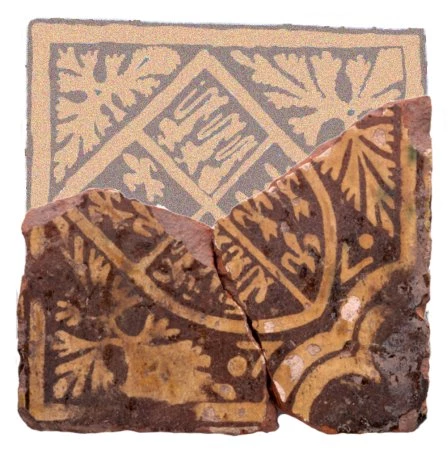
15th-century Malvern-school tile used at Raglan.

15th-century Malvern-school tile used at Raglan.

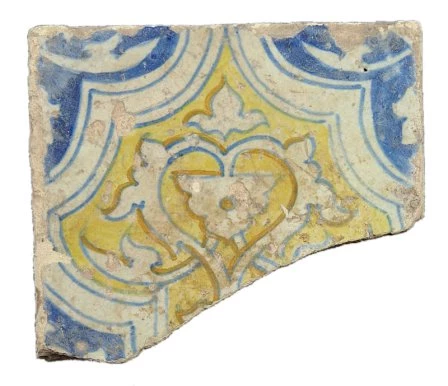
16th-century maiolica tile from the chapel floor laid by Earl William, probably before 1572.

16th-century maiolica tile from the chapel floor laid by Earl William, probably before 1572.

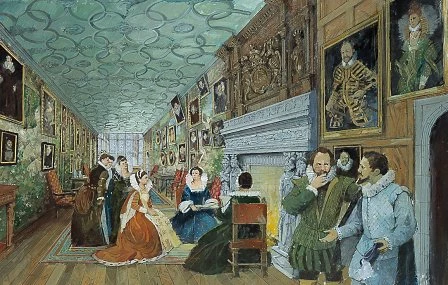
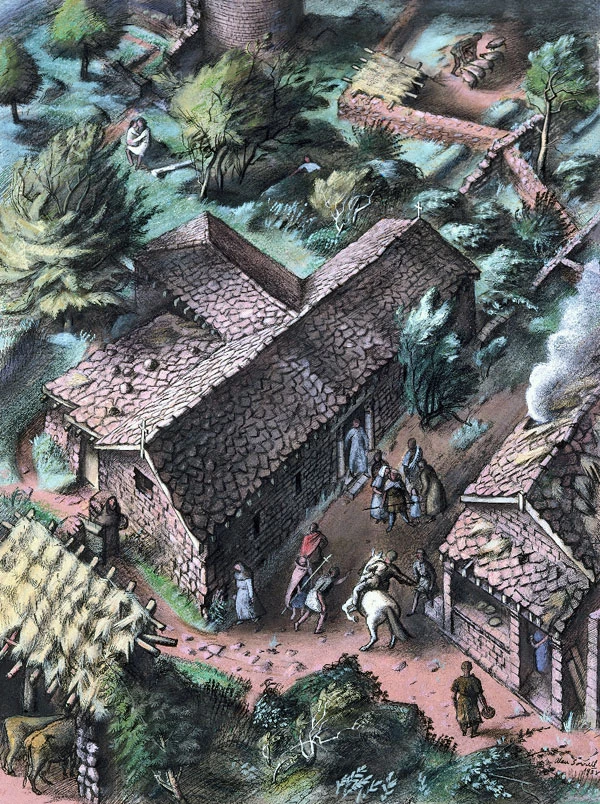
Reconstruction of life at Raglan Castle in the 16th century, at the time of the Third Earl of Worcester. Image: Cadw (Crown copyright).

Reconstruction of life at Raglan Castle in the 16th century, at the time of the Third Earl of Worcester. Image: Cadw (Crown copyright).

Three centuries of fashion and design can be seen in a collection of decorated floor tiles found during building works at Raglan Castle in 1947.

In 1549 William Somerset (1526-1589) succeeded to his father's position as third Earl of Worcester and owner of Raglan Castle. From this base in south-east Wales he launched a career that was to see him thrive at the courts of Edward VI (1547-53), Mary (1553-58) and then Elizabeth I (1558-1603). He is buried in Raglan parish church.

Such a prominent figure lived a lifestyle that suited his high social standing, and we can see this aspiration in the extensive remodelling that he undertook of the fortress-mansion he had inherited.

He set about an extensive programme of modernisation that affected all parts of the castle and its grounds: the hall and accommodation were improved, kitchen and service areas upgraded, a long gallery was introduced and gardens created in Renaissance style.

The Castle's furnishings were also updated with items that reflected contemporary European fashion. This is illustrated in the chapel at Raglan.

Raglan Chapel

The chapel at Raglan dates from at least the 13th century. It had a floor of thick red earthenware tiles with decoration inlaid into its surface using a contrasting colour. Such two-colour tiles often had designs of shields and monograms, over which a clear glaze would be fired. These tiles were the height of fashion in the mid-14th century.

About 1460, these tiles were replaced with two-colour tiles of bright yellows and golden browns. This must have provided a rich backcloth for the treasures of the chapel.

However, these designs were not to the taste of Earl William. He preferred the fashionable products of the Spanish Netherlands, and used his considerable wealth to purchase tin-glazed earthenware tiles painted in a polychrome style that was popular in the Renaissance period.

The result was a dramatic transformation of the chapel, lightening its interior and adding delicacy to its decoration.

Sadly, the abandonment of Raglan in the wake of the English Civil War has left few traces of the other changes that Earl William made to the interior furnishings of his castle. We are left instead to speculate on the luxury he must have brought to it, and to reflect on the transient nature of that wealth, surviving as it does in a small collection of painted floor tiles and a handful of other items.

Guide to the Tiles

  • Late 13th- to early 14th-century tile of the Wessex School from the chapel at Raglan. It shows two birds feeding from a central tree. Tiles with this design were also used at nearby Tintern Abbey and White Castle.
  • 15th-century Malvern-school tile used at Raglan. The Latin text reads 'May the peace of Christ be amongst us always. Amen'.
  • 16th-century maiolica tile from the chapel floor laid by Earl William, probably before 1572. These tiles were probably imported from the Spanish Netherlands, perhaps Antwerp, where maiolica production had been established in the early 16th century.

Background Reading

Raglan Castle by J. R. Kenyon. Cadw (2003).

'The chapel at Raglan Castle and its paving tiles' by J. M. Lewis. In Castles in Wales and the Marches by J. R. Kenyon and R. Avent, pp.143-60. University of Wales Press (1987).

The medieval tiles of Wales by J. M. Lewis. Amgueddfa Cymru (1999).

Wooden crucifix originally sparkled with gold

4 September 2007

The crucifix figure from Kenys Inferiour, Monmouthshire

The crucifix figure from Kenys Inferiour, Monmouthshire

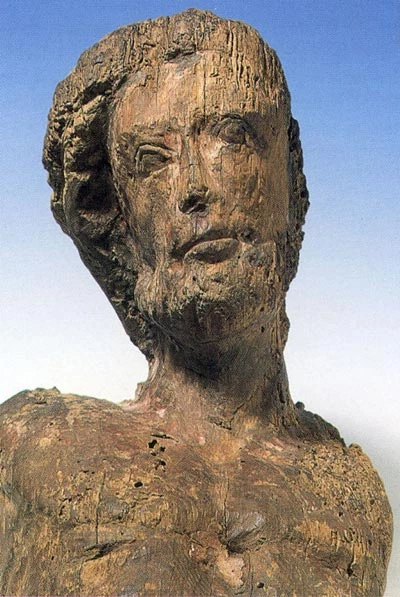
Detail of the head of the crucifix figure.

Detail of the head of the crucifix figure.

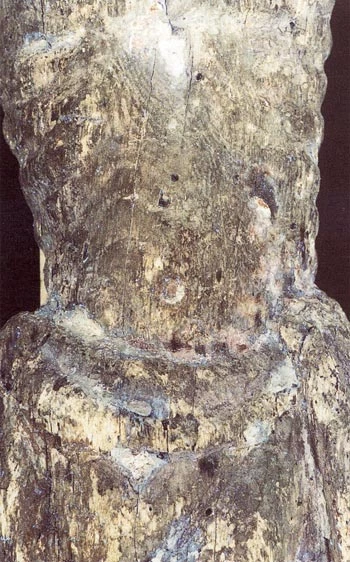
Detail of the torso and loin-cloth in UV light.

Detail of the torso and loin-cloth in UV light.

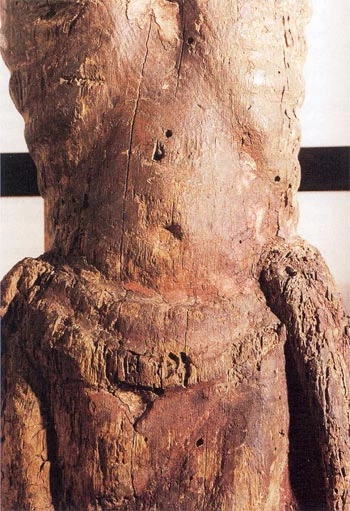
Detail of the torso and loin-cloth in reflected light.

Detail of the torso and loin-cloth in reflected light.

Scientific examination of a crucifix of the Middle Ages from Kemeys Inferior, south Wales reveals that the wooden object seen today was once richly decorated in vibrant colours and magnificent gold leaf.

In 1850, the remains of a carved wooden figure of Christ were discovered in the church of Kemeys Inferior, a few kilometres east of Caerleon, south Wales.

An object of exceptional importance

Before the Reformation of the 16th century (when England and Wales officially turned from being a Catholic nation to a Protestant one), such figures of Christ were common throughout England and Wales and the Kemeys Christ is the most complete example of only a handful of medieval fragments to survive in Britain, and so is of exceptional importance.

Fragments of the Kemeys Inferior figure were found, 'together with skulls and bones', in 'the blocked up rood-staircase' during repairs and alterations to the church in about 1886. It was transferred in 1930 to Amgueddfa Cymru.

Although the figure was thought to be from the 14th century, arguments supporting this have never been set out in detail. Dating the figure relies on comparing other sculptures, and it is now thought to be from the late 13th century.

Made in Wales

Owing to the rarity of surviving figures in Britain from this period it is necessary to study objects from the continent for further clues. For example, late 13th-century crucifix figures from Sweden share several similar characteristics, whereas the 14th-century Christ from Mochdre, Denbighshire, the only comparable wooden figure from Wales, is quite different. The Kemeys Christ was more than likely to have been made in England or Wales.

Investigation and analysis of the crucifix

Very little of the colour that once covered the wooden figure can be seen today, but routine work done by Amgueddfa Cymru in 1999 led to in-depth investigation of the surface of the object.

The figure was X-rayed and viewed under ultra violet (UV) and infra-red (IR) light before being examined under the microscope. This revealed the original colour scheme, with differences between the torso and the arms, previously considered to have been later additions.

Vivid and rich colours

In contrast to its present condition, the Kemeys Christ originally boasted a vivid and richly coloured appearance as was popular throughout the Middle Ages. Great care was taken in decorating the figure. When new, it would have shone with gold leaf.

Examination of the figure has revealed considerable evidence of polychromy (use of many colours), and, like other examples of medieval sculpture, over-painting. Although little colour survives on the arms, the right arm does have two layers, which may suggest replacement of the left arm either during the first half of the 16th century or even earlier.

At least three layers of painting have been detected, though the dating of each is problematic. The secondary colour scheme appears to have included gilding on the hair; gold, red and blue on the inside of the loin-cloth; dark brown and black details on the face; a green crown of thorns; and flesh tones in pale pink, with red emphasising the wounds.

Stunning polychrome work like this would have been standard on such an important sculpture. The Kemeys figure clearly represents Christ on the cross, who is portrayed alive, with his eyes still open.

The Kemeys Christ is a rare survival of pre-Reformation devotional figures once common in the British Isles. With the original height of about 94 cm, this powerful image of Christ's suffering would have been widely seen and prayed to, and formed a purposeful part of everyday life.

Re-creating life in early Wales

2 August 2007

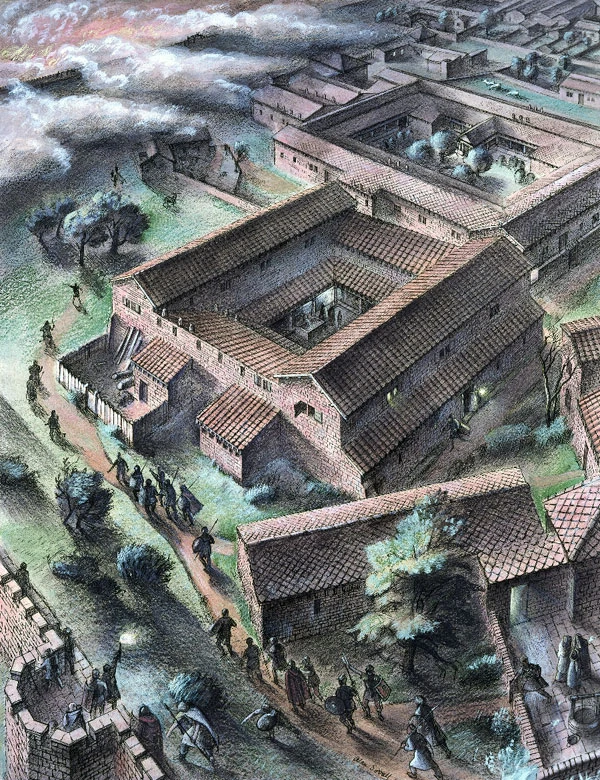
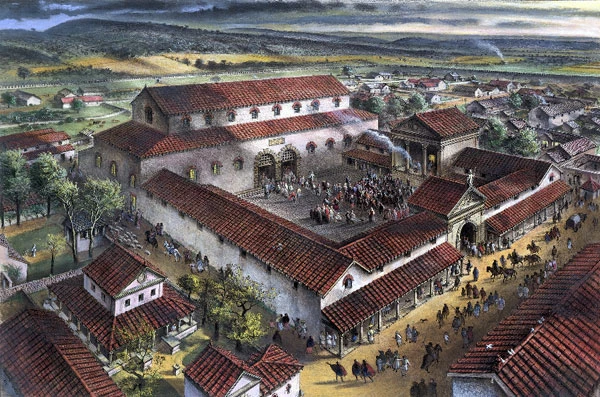
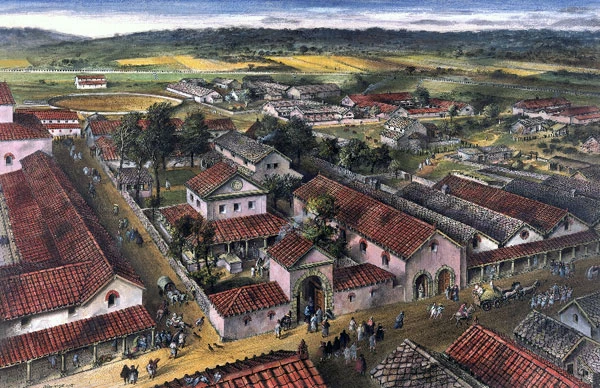
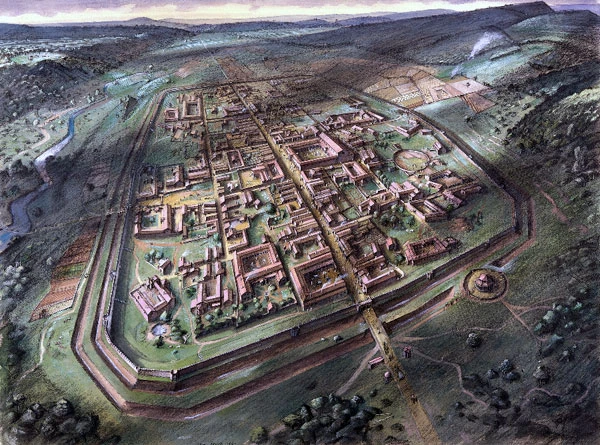
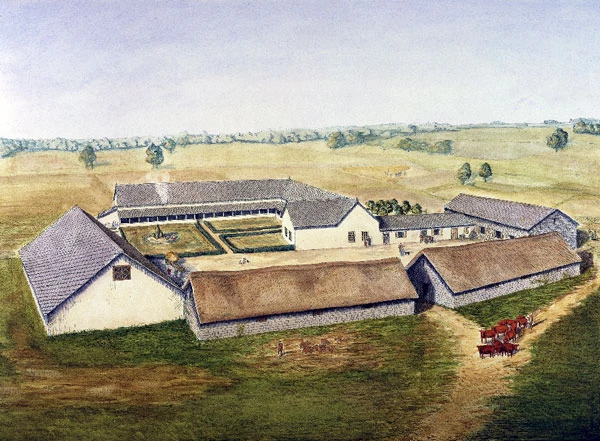
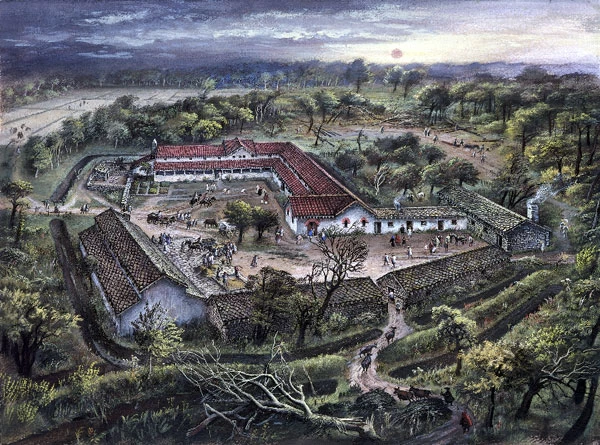
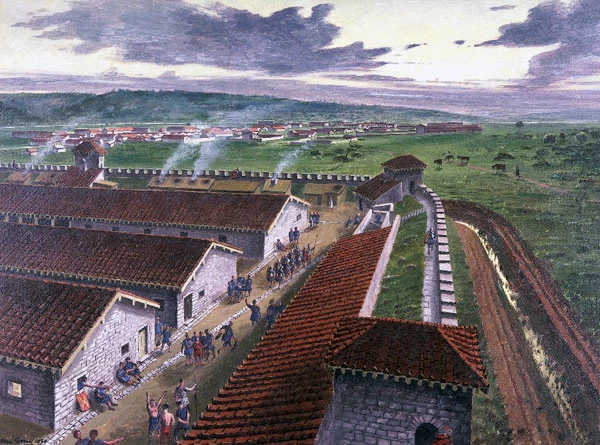
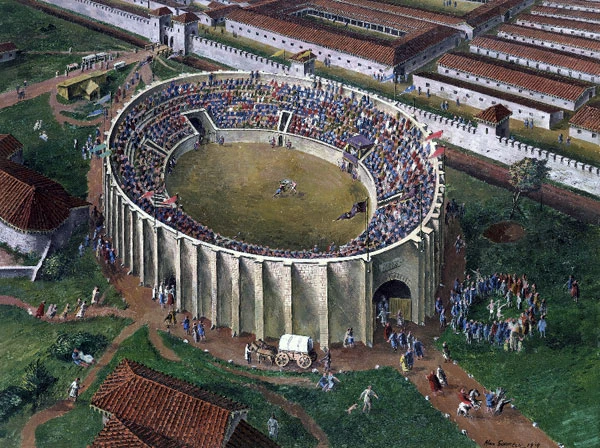
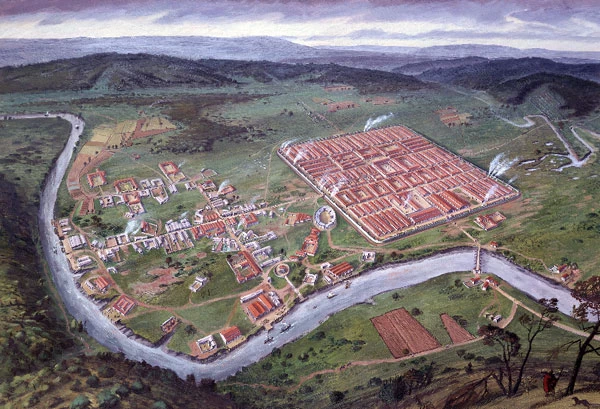
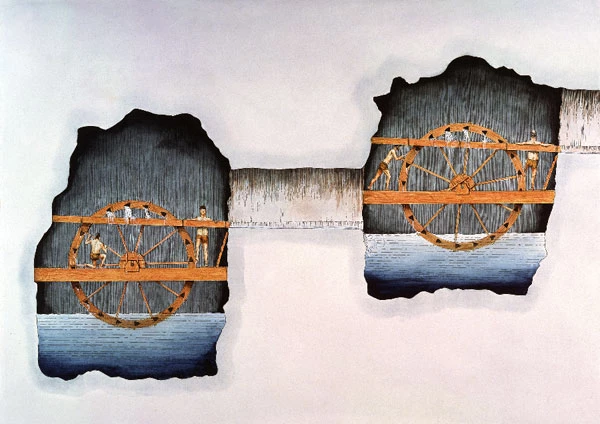
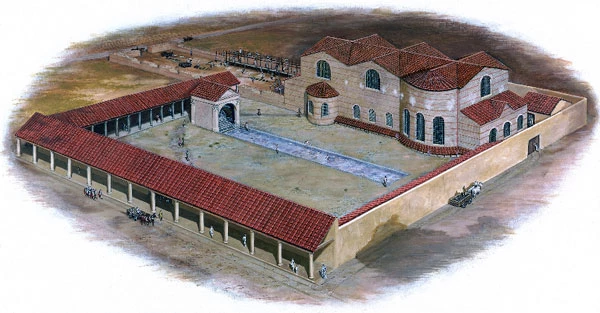
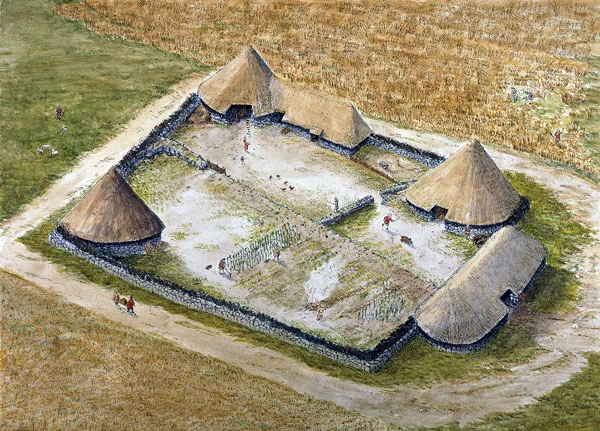
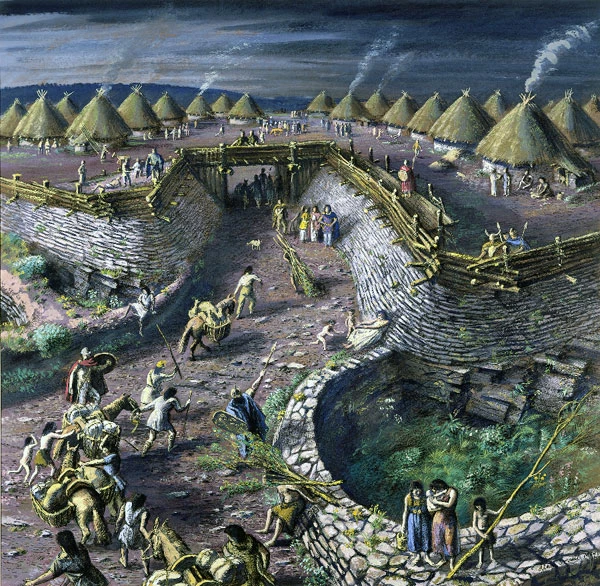
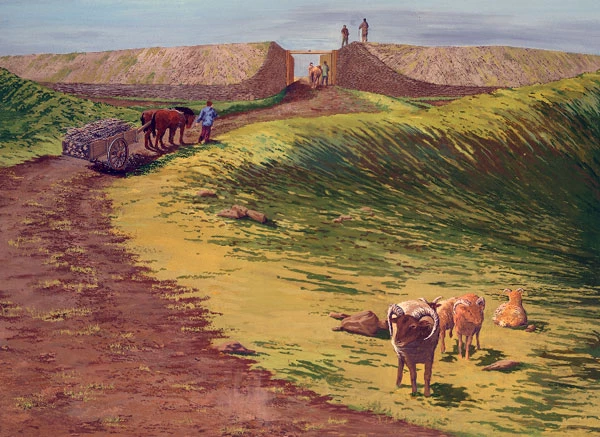
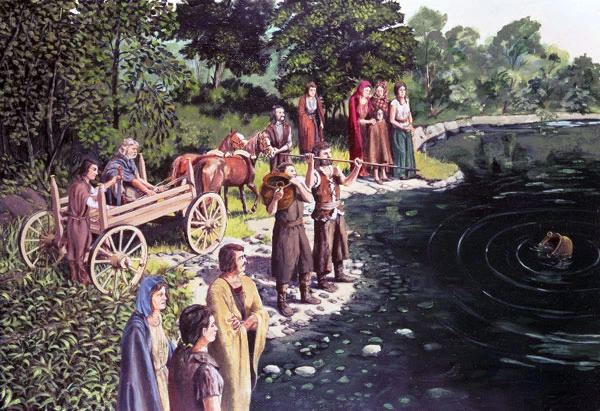
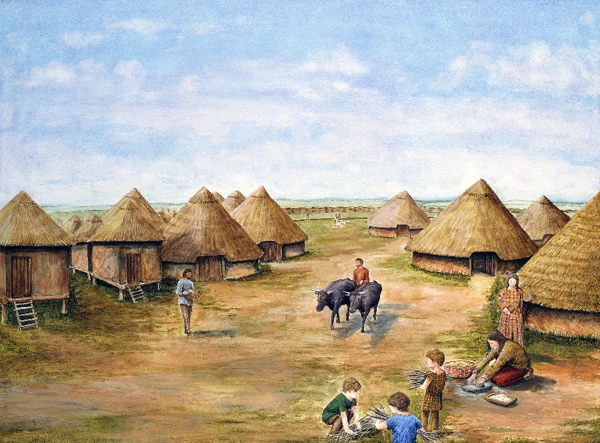
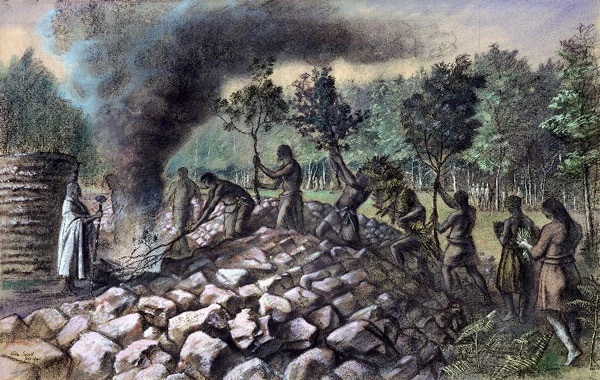
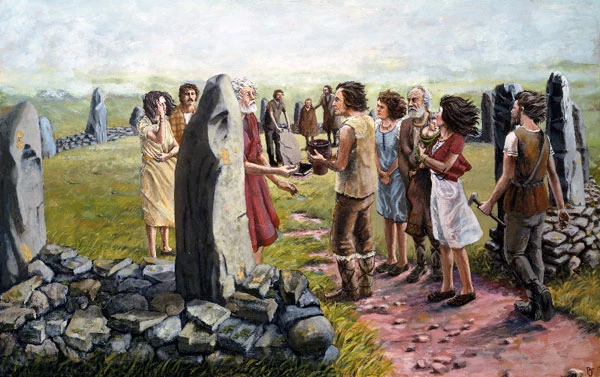
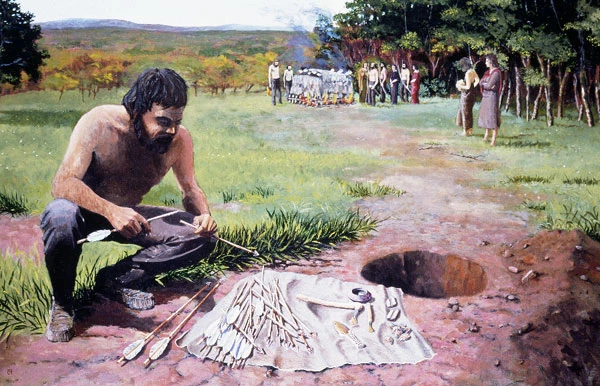
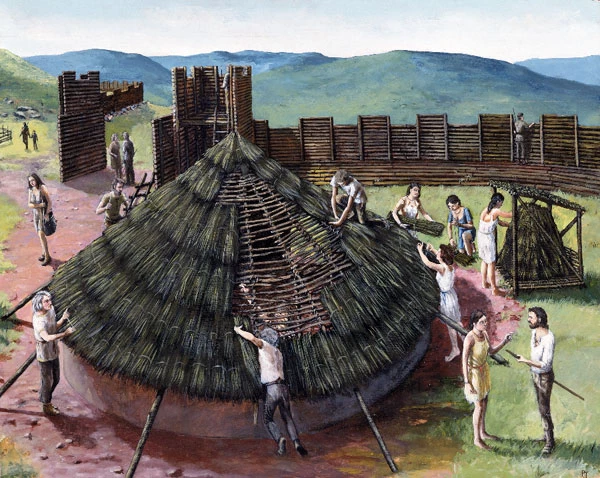
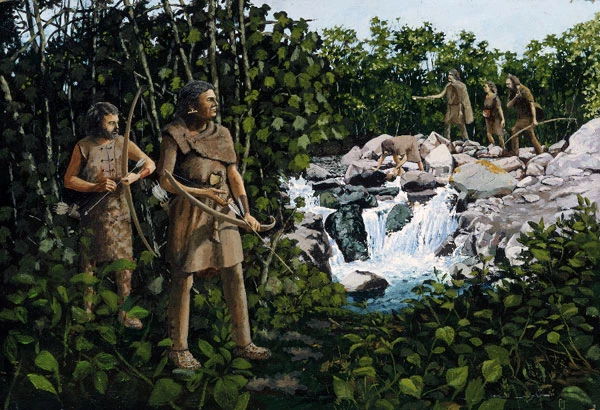
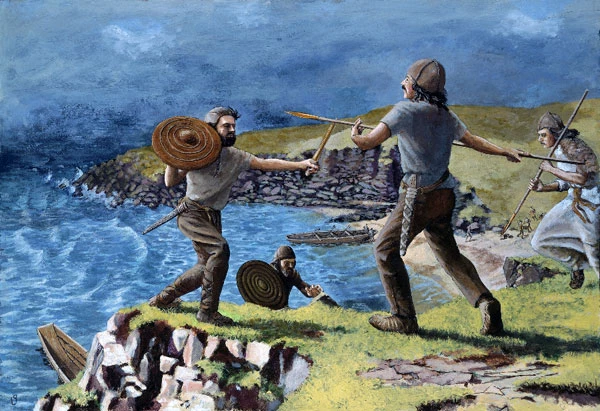
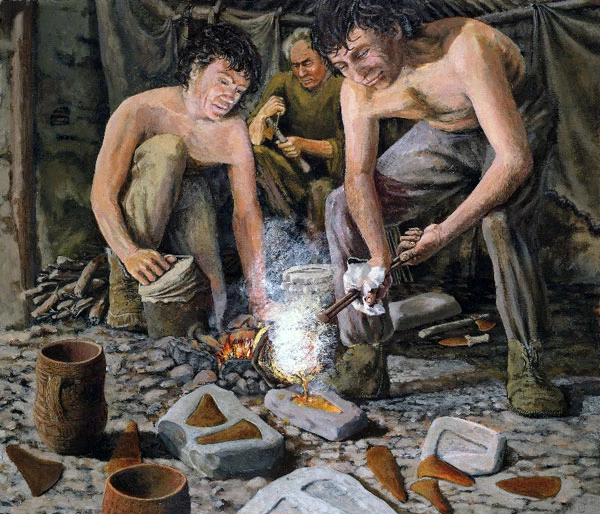
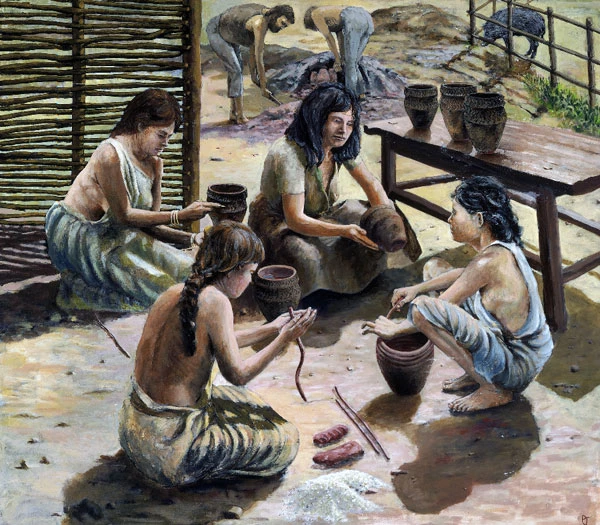
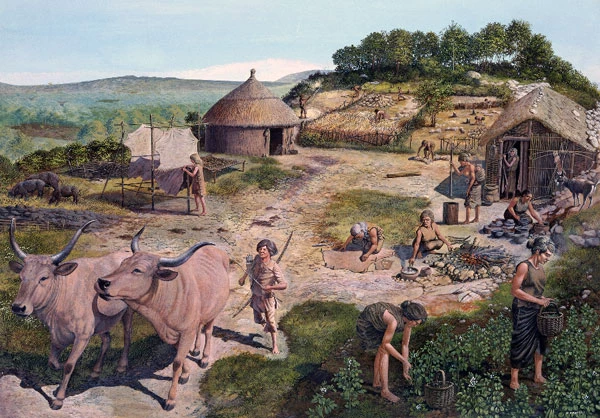
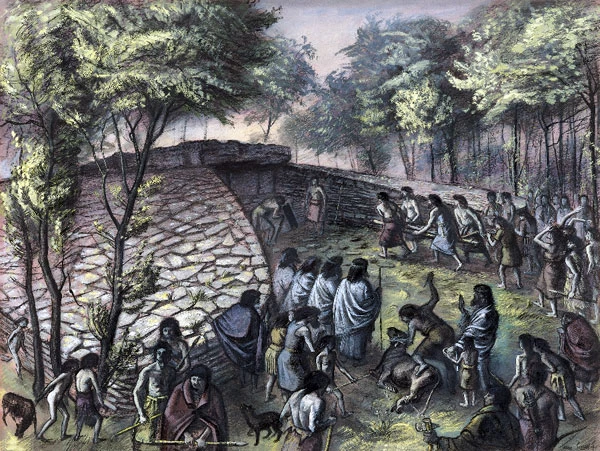
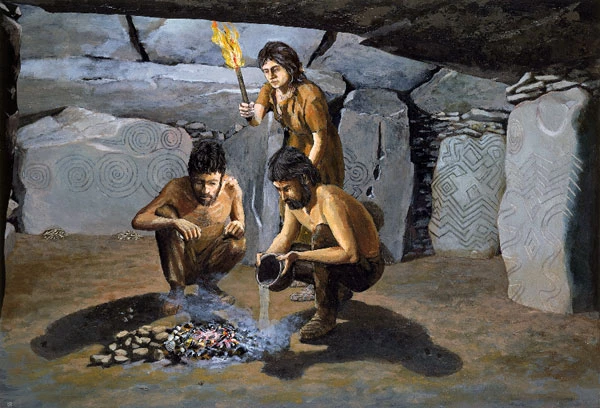
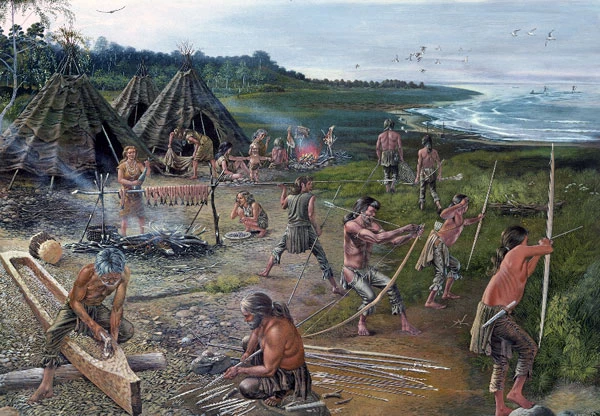
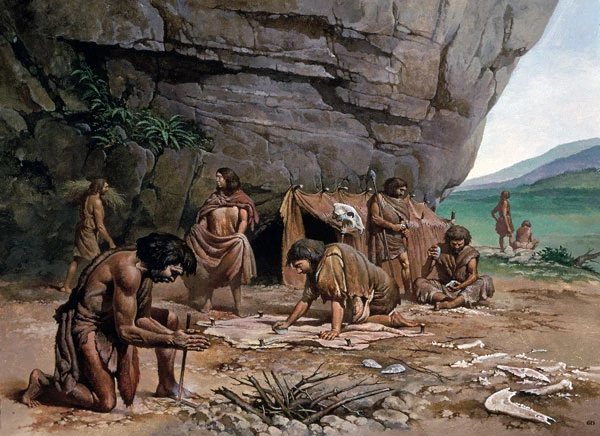
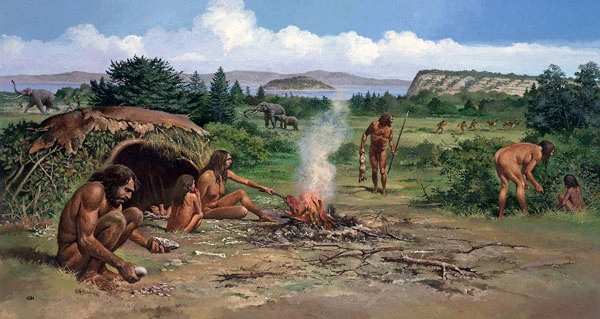
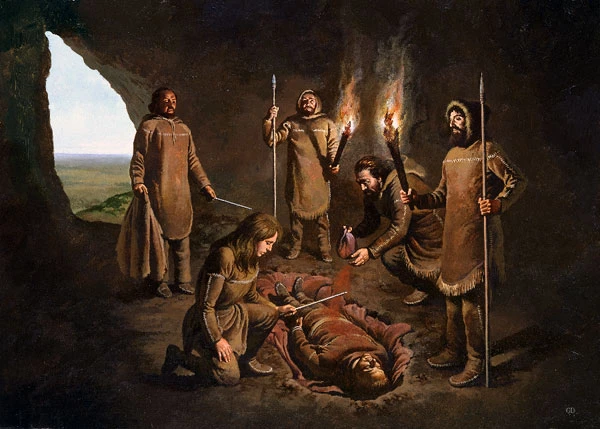
Below is a selection of artists impressions showing scenes of everyday life in Wales. Images range from the Palaeolithic, when humans first set foot in Wales, through to the Roman Conquest. Click on the images below for more detail.

Tuesday 10th July

Chris Owen, 10 July 2007

Contributed by CAROLINE

Today we were blessed with yet more sunshine- perhaps summer is here afterall!

Here’s an update from the trenches…

Trench 1: The largest trench

The Eastern half of trench one has been behaving itself quite well and a series of features have been revealed and their function is often evident. The majority of the features are postholes, some are shallow, while others are quite deep and have in some instances post packing intact. Some of these postholes and pits have had prehistoric pottery within them and are therefore prehistoric in date. However, not all contained dating evidence (pottery or coins etc) and so their date is unknown. It is difficult at present to determine what postholes are likely to be contemporary to each other, but hopefully when we have drawn a full plan of the trench we will see if the postholes form a pattern- rectangular, circular or otherwise. However, there are so many postholes that the pattern is so far highly confused as they seem to be from a series of structures dating from very different periods. As one person has commented, its like trying to do a puzzle without a picture. There is also quite a large curvilinear gulley which seems to have both been cut by a ditch on the one side, while the other appears to have cut an earlier ditch. While in the Western half of the trench the features are slightly more complicated. Again we seem to have two, maybe three gullies, one of which is very shallow. Two of these gullies may be at right angles to each other and one of which is cut by a later post hole. There is also a large rubble-filled ditch and another potential rubble-filled ditch about 2m away.

Trench 2: the L shaped trench

This trench is quite confusing. An extremely deep feature appears to be a natural geological hollow filled in with dumps of occupation debris from the settlement. A slot was dug down through the feature to the natural base and there appears to be a very substantial glacial fill at the base of this hollow. In one area this pit/natural hollow appears to have been cut by a later shallow pit, which was filled with a high concentration of ash and iron objects. There are also a series of postholes, but these do not seem to make up any discernable structures.

Trench 3

This trench was intended for exposing and excavating a sample of the enclosure ditch which appears to have been cut during the middle-late Iron Age. The ditch is approximately 1.3m deep and encloses a sizeable area – creating such a feature would have taken a lot of effort, manpower and time. The ditch appears to have then become naturally filled in with soil, washed or blown in from elsewhere. Then in the 2nd or 3rd century AD, it was recut, this time much shallower than before and therefore less substantial and not so impressive but again this may have formed a defensive function or possibly demonstrating the resources of the inhabitants. Alongside there was a large area of rubble which was initially believed to be the remnants of a bank( banks quite often accompany ditches), but has since proved to be otherwise. This rubble is instead derived from a series of rubble-filled features, a number of which have now been exposed. There are also 2 pit like features which are similar in character to each other. The southern most of these ditches has clearly been cut by the ditch, we can therefore say that the pit is earlier than the ditch.

Monday 9th July

Chris Owen, 9 July 2007

Contributed by CAROLINE and pupils from LLANTWIT MAJOR COMPREHENSIVE SCHOOL

Today good fortune was with us again with amazing sunshine. We had a visit from 14 year 7 school children and their teacher from Llantwit Major Comprehensive, the site visit took place between 9 until 1pm. The fieldtrip was not compulsory, instead the children volunteered to visit Llanmaes, I asked Kirsty whether her reasons for visiting Llanmaes was to skip lessons but instead Kirsty seemed genuinely interested in visiting the site and is very interested in history. Kirsty has visited the site before and so it is very encouraging that she wished to visit again, perhaps we have a budding archaeologis? Another student- Yegor seemed to be enjoying his first visit to the site.

The students were taught how to use a dumpy level, and using angles and height measurements helped us position canes to plot out the outline of the enclosure surrounding the site. This helps us and the school children to visually see its shape and grand scale. Again these students were from geography class and following their visit are expected to write up a small report about their visit, about what they enjoyed and learnt. Photographs and video footage accompany the students visit today. The children were expected to use the dumpy level to lay out correct angles and to determine the height of the staff and using tape measures.

One student Becky has had previous experience with archaeology having once been a member of a Young Archaeologists Club in Shetland, she was a member of the club for 2 years and made many new friends. Found pottery and recreated the pot where possible. Becky learnt about prehistory, and the work of an archaeologist. Two years a member. Made new friends at the club. Becky has very much enjoyed learning about archaeology at Llanmaes and at the club in Shetland which was held during school time. When at the club Becky considered becoming an archaeologist, but its been two years now since she left the archaeology club (because she moved house) and Becky has changed her career choice to being hopefully a beautician with her own business.

3 groups of year seven geography students have now visited us at Llanmaes, 2 in one day previously and today just one group, this is however the last. Next week follow up activities are planned at their school. These activities include art, poetry, music and creative writing. An afternoon of creative writing is planned following their visit to the site. The children are expected to write about what life may have been like for the inhabitants during the prehistoric and roman era. The Welsh poet of the year is coming in to help the children create poetry and a musician (a drummer) is visiting to carry out music workshops. These visits to the site are intended as a way of archaeology forging links with the community and giving the children an insight as to what it is like to be an archaeology student. The site visit has been very much cross curricular in nature, particularly for history and geography. This was intended mainly as a geography fieldtrip as the children are learning to appreciate why the inhabitants would have chosen to occupy this site. They will also look at aerial photographs to understand how archaeologists often find sites through cropmarks as well as see the settlement in its wider landscape setting in terms of nearby features such as brroks and drainage of the soil, relief, temperature and climate.