: Natural History

One collection - 786,000 shells - Cataloguing and curating the Melvill-Tomlin shell collection

12 June 2007

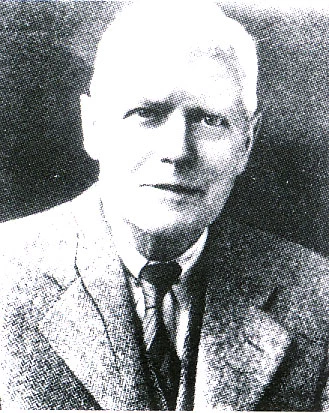
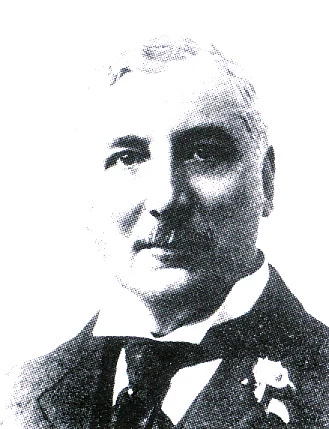
James Cosmo Melvill.

James Cosmo Melvill.

John Read le Brockton Tomlin.

John Read le Brockton Tomlin.

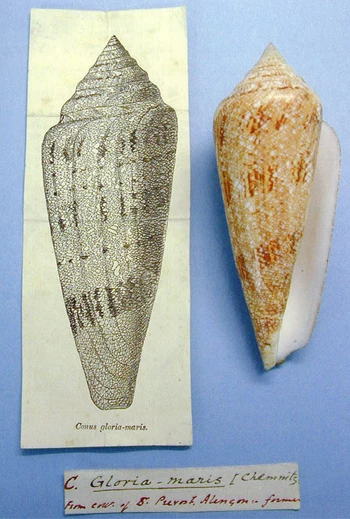
Conus gloriamaris.

Melvill's greatest prize specimen of Conus gloriamaris.

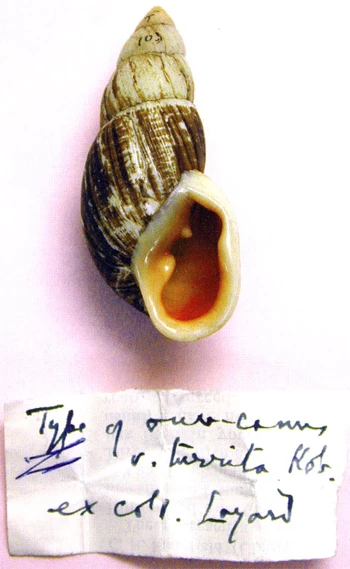
Placostylus from Layard.
Placostylus

from Layard.

When the Melvill-Tomlin collection of molluscs was received by Amgueddfa Cymru in 1955, it was the second largest shell collection in private hands in the world.

The collection, begun by James Melvill in 1853 and passed to John Tomlin in 1919, represented all regions of the world and contained nearly half of all mollusc species known.

Melvill described and named over 1000 species new to science. Tomlin continued to add important specimens from across the world until his death in 1954.

On Tomlin's death in 1954, the Museum received the entire collection, his library and papers. Tomlin's allegiance with Amgueddfa Cymru is thought to have developed whilst teaching at Llandaff Cathedral School in Cardiff.

Housing the collection

The collection arrived in mahogany cabinets, but is today housed in a mobile storage racking system allowing the whole collection to be organised in a standard, systematic sequence, providing easy access to any taxonomic researcher working on the collection.

Long and slow curation

Modern documentation is achieved by entering information into a computer database, but in the past information was hand-written into large registers. Between 1978 and 1994, museum staff and volunteers verified, labelled, and secured specimens in the collection.

The information on the collections was then published for taxonomists around the world for further study. If the process had continued in such a way, then a full inventory would have taken another thirty years.

Computer databases completes the 'first' inventory

In 1995, a computer database was purchased allowing many people to enter data at the same time. Over twenty staff and volunteers have since been involved in making an inventory of the collection.

Since work begun in 1978, the first inventory has now been completed and any enquiries can now be answered accurately in minutes, rather than days or weeks.

The first inventory has been completed and any enquiries can now be answered accurately in minutes, rather than days or weeks. Over 786,000 shells have been added to the database.

New to science

Within this collection, there are thousands of very important specimens that are referred to as 'types'. These are the specimens that were new discoveries to science when collected, and were usually described, illustrated and named by the collector.

With many older collections, it is only the detective work of museum curators and taxonomists around the world that can help to verify this information. An electronic inventory makes this task much easier by making the entire database of a collection available to taxonomists worldwide.
Moth Balls and Arsenic, Booklice and Silverfish - Hazards of the Museum Herbarium

12 June 2007

Specimen showing attack by biscuit beetle.

Specimen showing attack by biscuit beetle.

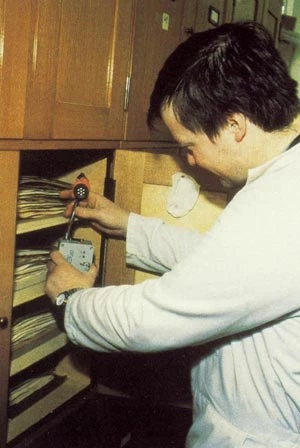
Testing for mercury vapour levels inside the herbarium cupboards.

Testing for mercury vapour levels inside the herbarium cupboards.

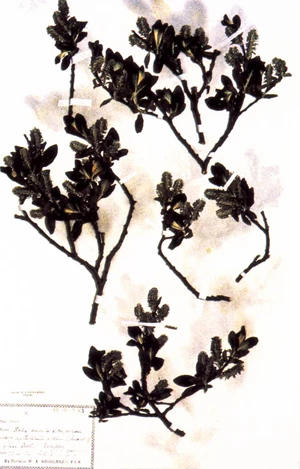
An example of pesticide discolouring.

An example of pesticide discolouring. Research showed that this specimen had been treated with arsenic, mercury and barium - substances harmful to both specimen and health.

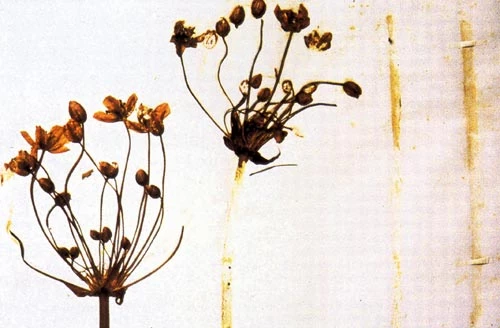
Amgueddfa Cymru house over quarter of a million dried plant specimens from all over the world, some dating back to the 18th century. Toxic pesticides applied to these specimens over the years can cause damage to the specimens and be a risk to those working with them.

Pesticides are applied to the specimens to overcome pests such as booklice, biscuit beetle and silver fish. Natural history specimens have always been vulnerable to attack from pests, which can be devastating to a botanical collection, as important details, or even whole specimens, can be lost.

Some types of pesticides used in the past are now known to be harmful and toxic. Handling the collections could present a health risk, especially as the quantity and nature of chemicals used in the pesticide were unknown.

Small samples of the Museum's herbarium sheets were analysed to detect the chemicals present within one sample. For example, if mercury and arsenic had been applied to a herbarium sheet then this would identify the two metals in one test.

It was discovered that the most frequently used chemicals were carbon disulphide, mercuric chloride, methyl bromide, naphthalene, paradi-chlorobenzene and pyrethroids.

Mercury

High levels of mercury were found within the paper samples and immediate precautions were taken for handling specimens. Mercury can be absorbed through inhalation, absorption and ingestion and its effects can result in reduced fertility, possible genetic mutations, shakes, reduced vision, serious personality changes and even brain damage.

The herbarium air quality was monitored for mercury vapour and each site tested had readings well below the recommended health and safety standard. Individuals were monitored by attaching the monitoring instruments directly to their clothing.

Moth Balls and Arsenic

Although it is difficult to measure arsenic accurately, it was discovered on most of the specimens tested. The presence of naphthalene was detected on all samples, which was as expected. Moth balls, made from naphthalene, were only removed from herbarium cupboards in the 1980s.

The project successfully identified the hazardous chemicals and metals present within the pesticide residues and through continued monitoring of air quality and staff, work can now continue within the herbarium without risk.

Following the tests, a database was generated detailing specimens, pesticide, contaminants and risks to both health and the specimens, which has since been used to help identify hazards in herbariums from other botanical institutions.

Wales's tropical rainforests

12 June 2007

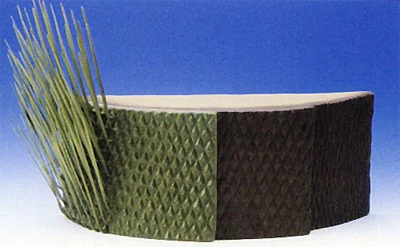
Wax model of a cone from the Late Carboniferous giant club mosses.

Wax model of a cone from the Late Carboniferous giant club mosses.

Wax model of a section of trunk from the Late Carboniferous giant club mosses.

Wax model of a section of trunk from the Late Carboniferous giant club mosses.

Coal Forest

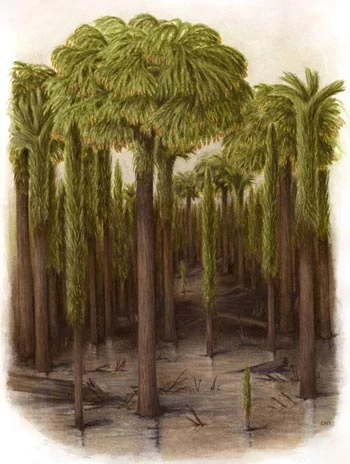
View over the late Carboniferous coal forests, showing the giant club mosses of the backswamp.

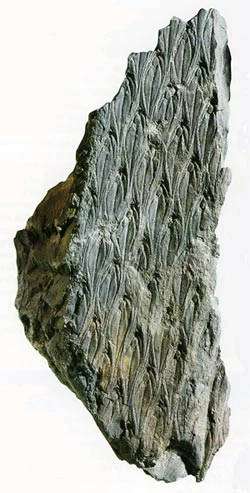
Lepidodentron aculaetum fossil.
Lepidodentron aculaetum

fossil.

Today, rainforests cover much of the tropics and there are large icecaps at the poles. An essentially similar arrangement has existed for the last 3 or 4 million years, but back in time, conditions were quite different to what we find today.

3-4 million years may seem a long time but, in the context of the 4700 million years of Earth's total history, it is not. If we look deeper into geological time, such as when dinosaurs roamed the Earth, conditions were quite different to what we find today.

In only one other time in our geological past have conditions been similar to today's, with extensive polar ice and tropical rainforests &mdsh; what geologists refer to as Late Carboniferous, 300 years ago.

We are of course no longer in the tropics, having drifted north to temperate latitudes. However, 300 millions years ago Wales was positioned right on the equator and was largely covered in lowland tropical swamp-forests.

The dominant plants of these ancient swamps were giant club mosses. Club mosses still live today, as very small plants (hence the 'moss' part of their name), but these ancient forms were up to 40 metres high.

Despite their size, they were not strictly trees, as their trunks were made up of soft cork-like tissue, not wood. This allowed the plants to grow extremely quickly, growing to their full size in as little as 10 years.

The club mosses were not long-lived plants: they would grow to their mature size, reproduce (by spores, not by seeds as in most of today's trees) and then die.

The colossal amount of dead plant-debris produced meant that the mud and silt in which they grew became very acidic, hindered the rotting of the plant tissue. The result was the build-up of thick peat deposits, which subsequently changed into the coal that has been mined in the coalfields of both north and south Wales.

The Carboniferous tropical forests were one of the most powerful terrestrial 'sponges' in geological history for drawing carbon out of the atmosphere and burying it underground.

By looking at how these forests changed in size (and thus how much carbon they extracted from the atmosphere) and comparing it with changes in the size of the polar icecaps, we can get a much better idea of how atmospheric carbon and global temperatures match up.

One particular marked reduction in the size of the forests appears to have coincided with a shrinking of the icecap.

To understand these global changes properly, we need to understand the causes and exact timing of the changes to the forests. To do this, we need to look carefully the changes in the composition of the vegetation as preserved in the fossil record and the changes in the geographical extent of the forests.

The pioneering 19th century geologist Charles Lyell coined the expression, 'the present is the key to the past'. However, the message that the Late Carboniferous geological record is telling us is that the past may in fact be the key to understanding the present.

Frozen in time: the National Bird Collection at Amgueddfa Cymru

12 June 2007

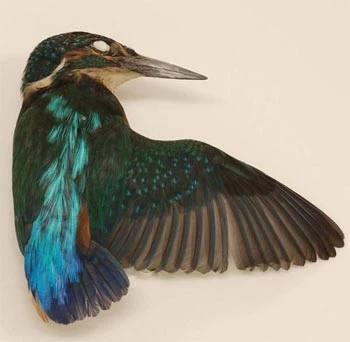
Kingfisher: one of the new freeze-dried bird specimens

Kingfisher: one of the new freeze-dried bird specimens

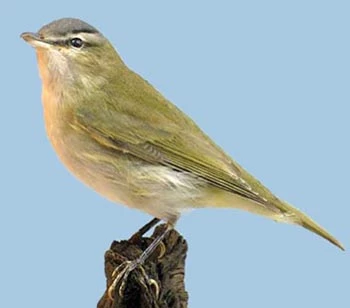
Red-eyed Vireo: a rare migrant from North America killed at Bardsey lighthouse

Red-eyed Vireo: a rare migrant from North America killed at Bardsey lighthouse

Dotterel: a scarce migrant in Wale, killed at Bardsey Lighthouse

Dotterel: a scarce migrant in Wale, killed at Bardsey Lighthouse

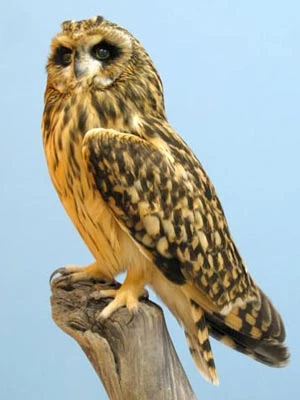
Short-eared Owl: a scarce breeding bird and winter visitor to Wales, killed by a car

Short-eared Owl: a scarce breeding bird and winter visitor to Wales, killed by a car

One of the founding collections of Amgueddfa Cymru back in 1915 was the Cardiff Museum's collection of birds. These were displayed in cases, along with their nests and eggs in small dioramas of their habitat.

This collection continued to form a major part of the Museum's galleries until as recently as 1992. Over the years, the Museum has become a centre for many bird studies, such as the Red Kite — in conjunction with the Royal Society for the Protection of Birds (R.S.P.B.) and the Countryside Council for Wales (C.C.W.)

Deep freeze

Today, Amgueddfa Cymru has large-capacity freeze drying facilities in order to preserve new additions to the collections. Specimens are frozen in a vacuum chamber at about -20°C.

Under these conditions the frozen water in the specimen is forced out as a vapour rather than becoming a liquid. This leaves the specimen completely dried out and, importantly, its shape and size are more or less unchanged from when it was living.

Freeze-drying is also a much simpler procedure than skinning - the traditional method of preserving most museum specimens.

The birds are arranged to allow the plumage detail on the wings and tail to be examined. This determines the age and sex of specimens. The collection is aimed at field ornithologists and artists alike and adds to the existing skin collections at the Museum.

Bardsey Island

The primary source of specimens for this collection is Bardsey Island, off the Lleyn Peninsular, North Wales.

Birds migrating at night need clear skies to find their way, should it become cloudy or foggy they can become disorientated and under these conditions are attracted by the light from the lighthouse on the island.

They circle or fly down the beams of light and are killed hitting the tower. The island warden checks the base of the tower every morning and any casualties are picked up and frozen before being transferred to the Museum in Cardiff.

The focus is on British birds but also includes some rare species from around the world.

These and other casualties received from the public are used for display and education, encouraging a deeper interest in birds and making people look harder at their surroundings.

The collection is used to highlight current biodiversity and environmental issues, including raising awareness of the effects climate change and loss of habitat can have on birds migrating between Britain and Africa.

Portuguese Man-of-War Navigator

21 May 2007

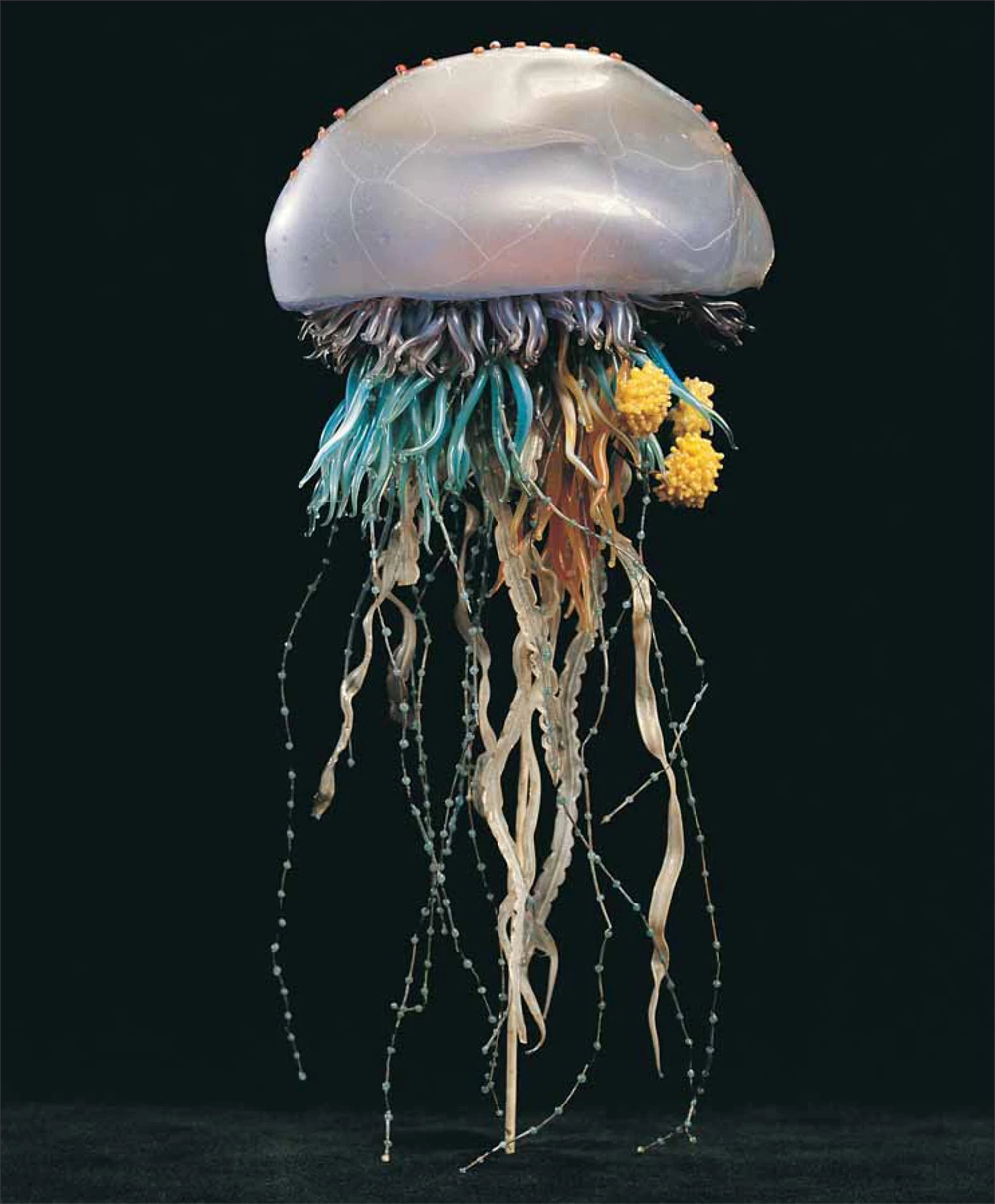
Portuguese Man-of-War sea creature - Physalia arethusa.

A colourful model of the Portuguese Man-of-War sea creature - Physalia arethusa.