
From Blitz to Prefab - How the Second World War altered housing in Wales
26 April 2007

The living room.
The living room.
The Llandaff Beaker.
In 1992, renovations at a house in the Llandaf area of Cardiff uncovered an unusual stone slab buried by river sands and silts. Beneath the slab was a long bone and clay pot.
The pot turned out to be a beaker - a decorated clay vessel, fashionable in western Europe some 4,000 years ago, during what is known as 'the Beaker Period'. The beaker may originally have contained mead, beer or some other special brew. The stone slab marked the position of a grave.
With the cooperation and encouragement of the owners, the Department of Archaeology and Numismatics conducted an excavation in the driveway to their house, to re-expose the grave and fully excavate its contents. The enclosing cist, constructed of slabs of the local Radyr Stone, was unusual in that it was the form of a lean-to, its capstone resting at an angle of 30° contrasting with more conventional box-like, beaker cists.
Little of the skeleton remained. The expectation had been to find a crouched skeleton typical of the Beaker period, but only fragments of the cranium (the top of the skull) and limb bones survived. Additional grave-goods were unearthed, a bronze awl (a pointed tool for making holes, as in wood or leather) and a flint flake - objects that would have been buried alongside the person to be used in the 'next world'. Awls are usually associated with female burials.
Analysis of the sediment filling the grave may explain the unusual form of the cist and why only part of the skeleton was preserved. The presence of graded water-lain sediments within the grave suggests disturbance and erosion of the burial by flood water. Today the river Taff flows close by and property where the grave was discovered is built on the former floodplain of the river.
Webbing cloths moth — Tineola bisselliella
Moth damage.
Moth larvae on piano felt.
The humble clothes moth - Tineola bisselliella - is thought to be the number one insect pest in museums throughout the world. It is capable of destroying huge amounts of animal-based material. Amgueddfa Cymru is in the forefront of developing new methods in controlling this pest.
In the past, museums fumigated collections regularly with large amounts of highly toxic insecticides to stop attacks. Modern methods of control try to recognise any problems early before any damage is caused - The key to good pest management is knowing your enemy.
The common, or webbing clothes moth, is a small shiny golden-coloured insect 6-8mm. long, often seen scuttling over infested material or fluttering around rooms somewhat aimlessly. The sole purpose of the males is to mate with the females (who do not fly), before dying.
The females then lay tiny eggs pushed in between fibres and hairs. It is the larvae that hatch from these eggs that cause the damage. They are able to digest keratin, which is found in fur, wool, feathers, hair, finger nails etc. As this is rather a sparse diet on its own, the clothes moth larvae prefer food that is stained or dirty, meaning that dirty woollen clothing is usually attacked as are the edges of carpets where a vacuum cleaner may not reach.
The larvae protect themselves by weaving silky tubes where they live and feed. These silky cases give it the name webbing clothes moth. When the larvae are fully grown they will pupate inside these cases and after a few weeks the adult moths emerge.
The adults do not eat or cause damage themselves, but mate and start the life cycle all over again. On dirty wool in warm, moist conditions, two or three generations in a year are possible. With the humid climate of the UK and the centrally heated stores and galleries of museums, it is easy to see why the clothes moth is such a major pest.
Formerly in the Museum, the practice was to react after damage was found. Now the aim is to prevent the insects entering the Museum in the first place and to make it as uninviting as possible. Store rooms have well sealed doors and windows along with filtered air conditioning systems. As museums are public buildings, then some moths, be it as adults, larvae or eggs will inevitably be brought in.
Keeping an eye out for insects and insect damage is part of the conservator's routine work which includes carefully inspecting for signs of damage, and using traps. The Museum is in the forefront of developing a new generation of insect traps designed to catch specific species such as the common clothes moth.
These new traps are based on the power of sex. Females give off a scent, or pheromone - which can attract males from many metres away. This proves very effective for the moths in small areas such as cupboards and small rooms.
Traps are lined with a sticky adhesive along with a synthetic version of the clothes moth pheromone.
If, despite all these precautions, moths still manage to attack material, we only use insecticides as a last resort. A major form of pest control at the Museum is to put the object in a plastic bag and place it in a deep freeze for two to three days, killing the insects, eggs and larvae without any damage to the object or toxic residues.
Through the combination of vigilance, good housekeeping and expertise, outbreaks of insect pests such as the common clothes moth are these days thankfully rare and dealt with rapidly.
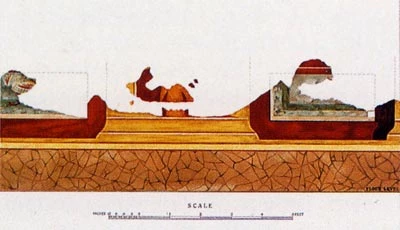
Watercolour by F.G. Newton, 1905
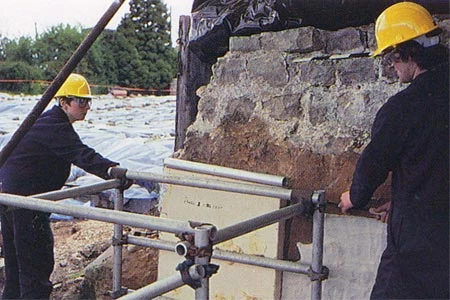
Removing one of the panels
In 1988, archaeological excavations of the council chamber in the basilica (assembly hall) of the Roman town at Caerwent revealed a fine wall painting that has since been removed for conservation and display.
The painted plaster or fresco, 5m long and 1m high, was still attached to the south wall of the chamber. It had been previously recorded in watercolour by F. G. Newton in 1905, and had been covered over again.
The fresco shows an architectural perspective, with yellow pillars above a brown veined pink dado. A dark brown area in the central pillar may be part of a decorated panel, possibly containing the torso of a man.
It was decided to remove the fresco to prevent further deterioration as the plaster was extremely fragile.
After carefully covering the delicate artwork with muslin and glue, the painting was cut into five panels. Each enclosed in specially-designed boxes.
A variety of saws and chisels were used to separate the painted plaster from the wall. Since access to the back of each panel was restricted to its top edge and one side, this process was difficult, needing extreme patience and ingenuity.
It took a total of nine days to remove the painting, with the subsequent conservation and rebacking taking several years, the fresco is now conserved and stored at the National Museum, Cardiff.
Caerwent Roman Town by R.J. Brewer. Published by Cadw (2006).
An unique collection of photographs from the turn of last century, rescued from decay and neglect, give an rare insight into life in rural Cardiganshire.
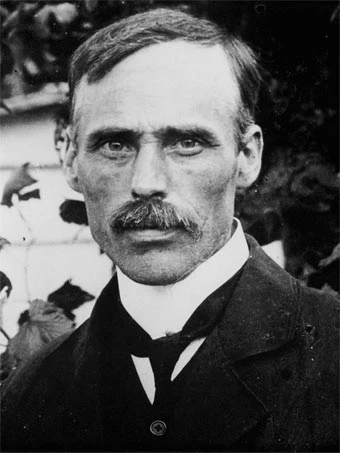
Tom Mathias (1866–1940)
Luck often plays a big part in uncovering many important museum acquisitions, and this was certainly the case in the discovery of a fine collection of historic photographs, discovered in 1990 and obtained by Amgueddfa Cymru.
Only good luck could explain the fact that Maxi Davis, an experienced professional photographer, was told of the existence of boxes of very old glass negatives. What else but luck could explain the fact that those same negatives should have survived decades of neglect stored in kitchen cupboards and out-houses.
Aberdyfan, the house in question, was being cleared following the death of the owner, Mr James Mathias. The photographs had been taken by his father Tom Mathias during the turn of the last century.
Maxi Davis's passion for historical photography prompted him to salvage the negatives and to print those still in useable condition. What they revealed was an outstanding collection of photographs taken around Cilgeran and the Teifi Valley in west Wales at the turn of the century.
Tom Mathias was a self-taught photographer. He captured the daily life of his community with a keenness of eye and technical clarity rarely shown by better-known photographers using far more sophisticated equipment. He was born in Cilgerran in 1866, the son of a master mariner. Little is known of his early life, or what started his interest in photography. In 1897 he married Louise Paquier, a Swiss governess with a local gentry family, the Gowers of Castell Malgwyn.
The couple settled in Aberdyfan and Tom Mathias combined running the smallholding with his career as a photographer. They had two children, James, born in 1902, and Tilla, born in 1898.
Despite his lack of formal training, in 1897 he was confident enough to describe his occupation as 'photographer' on his marriage certificate. He is also listed as a photographer in local trade directories between 1901 and 1920. What happened in 1920 is unclear, but few of the surviving photographs appear to have been taken after that date.
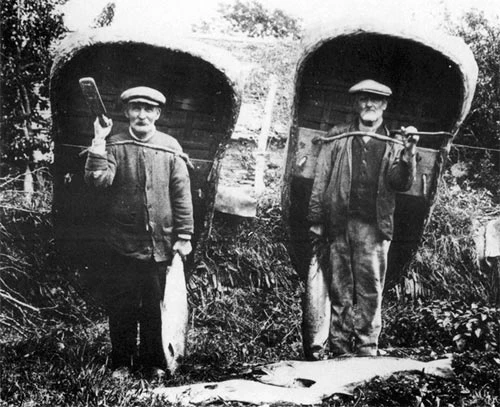
Cilgerran coracle-men William Johnson and John Morgan with their haul of fish, 1905.
Like most rural photographers, Mathias made his livelihood recording important family occasions and over half the images in the collection feature weddings, christenings and family groups, demonstrating an originality of approach which frequently cuts through the formality of the poses to capture the humanity and personality of the subjects. According to those who knew him, Tom Mathias had infinite patience in setting up his shots and nowhere is this patience better rewarded than in his splendidly informal photographs of children.
Tom Mathias took many photographs of the general daily life in and around Cilgerran, documenting an unequalled record of the social and economic life of his community. Not only did he take an interest in special events such as the return of the local regiment from the Boer War, Sunday school outings and village celebrations, but his camera also recorded the mundane and ordinary aspects of life.
Unusually for a collection of historic photographs, the material is fully documented. As well as saving the negatives Maxi Davis and his wife Peggy staged a series of exhibitions of the photographs in Cilgerran and the neighbouring villages, managing to establish the location and date of almost every photograph, as well as the identity of virtually every individual who appears in them!
This remarkable collection was nearly lost forever had it not been for the set of circumstances that saw these photographs rescued from neglect and decay to become an important museum collection preserved for future generations.
Cilgerran High Street, taken in 1905.
If you go down to the beach today….
Helios and a Partial Solar Eclipse
SBRAGIO - call-out for creative freelancers!
Curating at St Fagans National Museum of History: What I've learned and why it matters
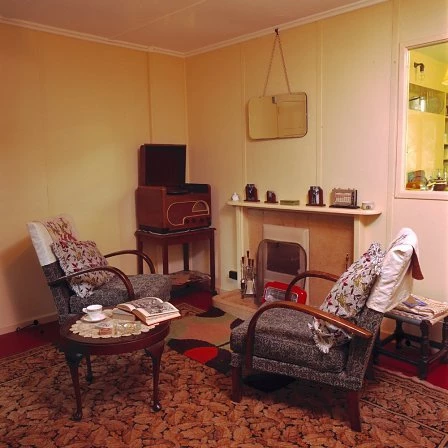
The living room.
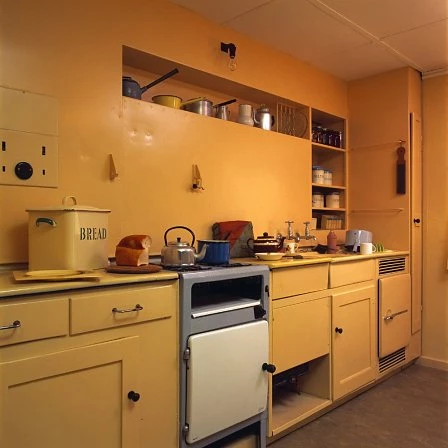
The kitchen.
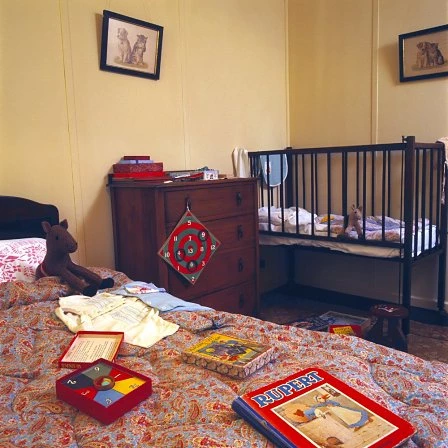
A bedroom.
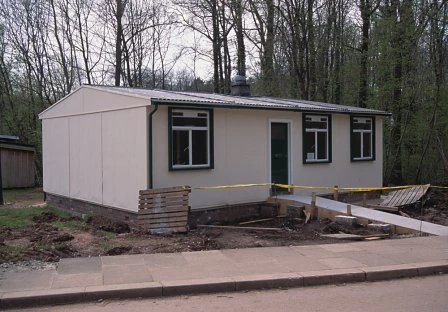
A Type B2 aluminium bungalow, built in 1947, now re-erected and displayed at the Museum of Welsh Life, St Fagans.
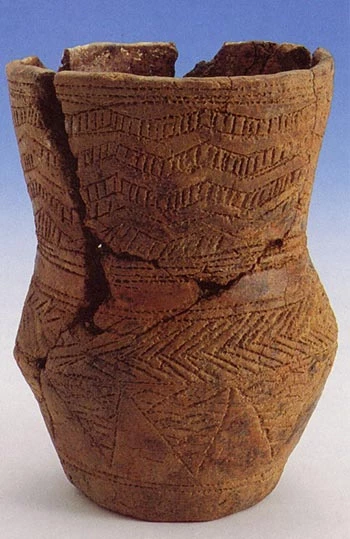
The Llandaff Beaker.
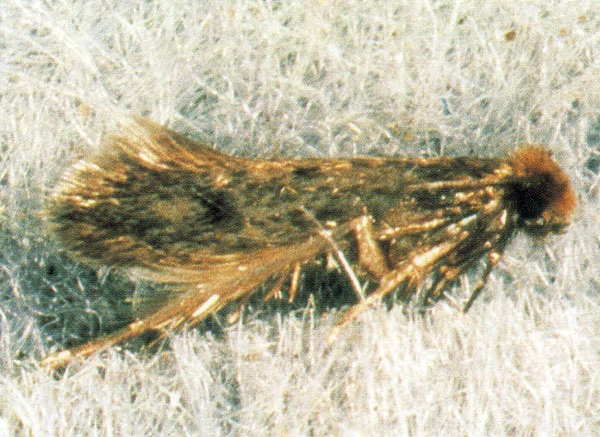
Webbing cloths moth — Tineola bisselliella
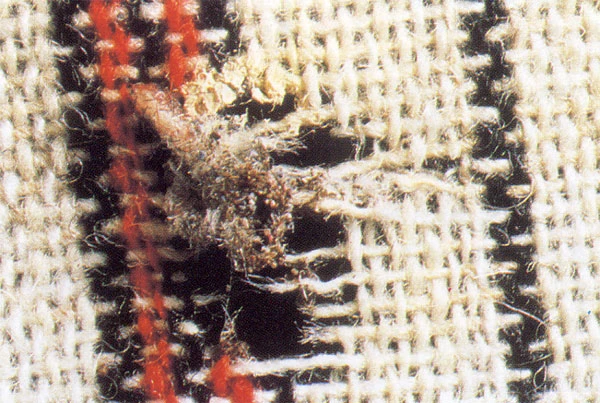
Moth damage.
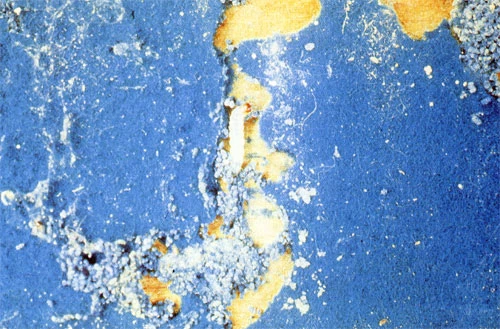
Moth larvae on piano felt.
Watercolour by F.G. Newton, 1905
Removing one of the panels
Tom Mathias (1866–1940)
Cilgerran coracle-men William Johnson and John Morgan with their haul of fish, 1905.