: The Stone Age & Early Humans

Uncovering our Collections: Half a Million Records now Online

26 March 2018

As we reveal half a million collection records for the first time, we look at some of the strangest and most fascinating objects from National Museum Wales Collections Online.

This article contains photos of human skeletal fragments.

The Biggest

We have some real whoppers in our collections - including a full-size Cardiff Tram and a sea rescue helicopter - but the biggest item in our collection is actually Oakdale Workmen's Institute.

Built in 1917, the Institute features a billiard room, dance hall and library - and is nowadays found in St Fagans National Museum of History.

Photograph from 1908 showing Horace Watkins in a very early, precarious-looking monoplane

Horace Watkins testing his monoplane in 1908

Many of the buildings in St Fagans are part of the national collection - meaning they have the same legal status as one of our masterpiece Monets or this coin hoard. The buildings are dismantled, moved, rebuilt - and cared for using traditional techniques, by the museum's legendary Historic Buildings Unit.
 

The Oldest


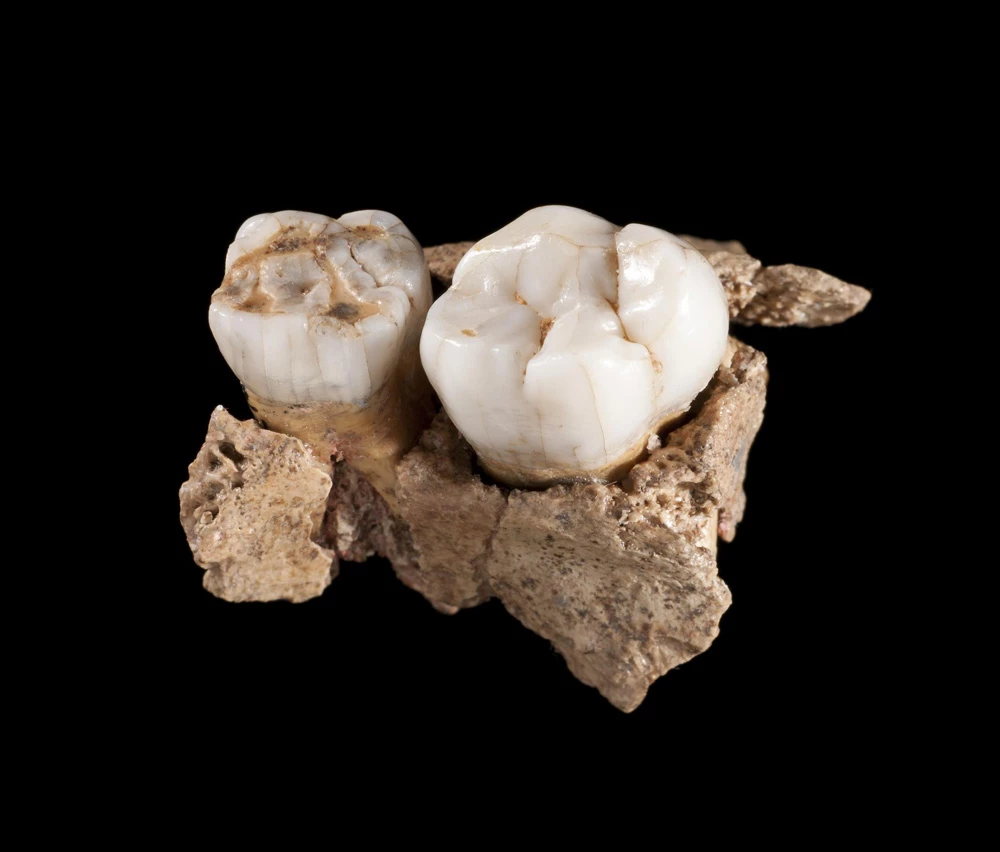
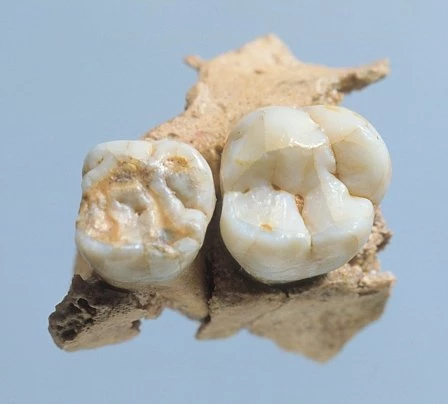
photograph of two teeth, belonging to a Neanderthal boy aged 8

The oldest human remains ever discovered in Wales

These teeth belonged to an eight year-old Neanderthal boy - and at 230,000 years old, they are the oldest human remains in Wales.

They were discovered in a cave near Cefn Meiriadog in Denbighshire, along with a trove of other prehistoric finds, including stone tools and the remains of a bear, a lion, a leopard and a rhinocerous tooth.

These teeth are among some of the incredible objects on display at St Fagans National Museum of History
 

The Shiniest

People in Wales have been making, trading and wearing beautiful treasures from gold for thousands of years - like this Bronze Age hair ornament and this extremely blingy Medieval signet.


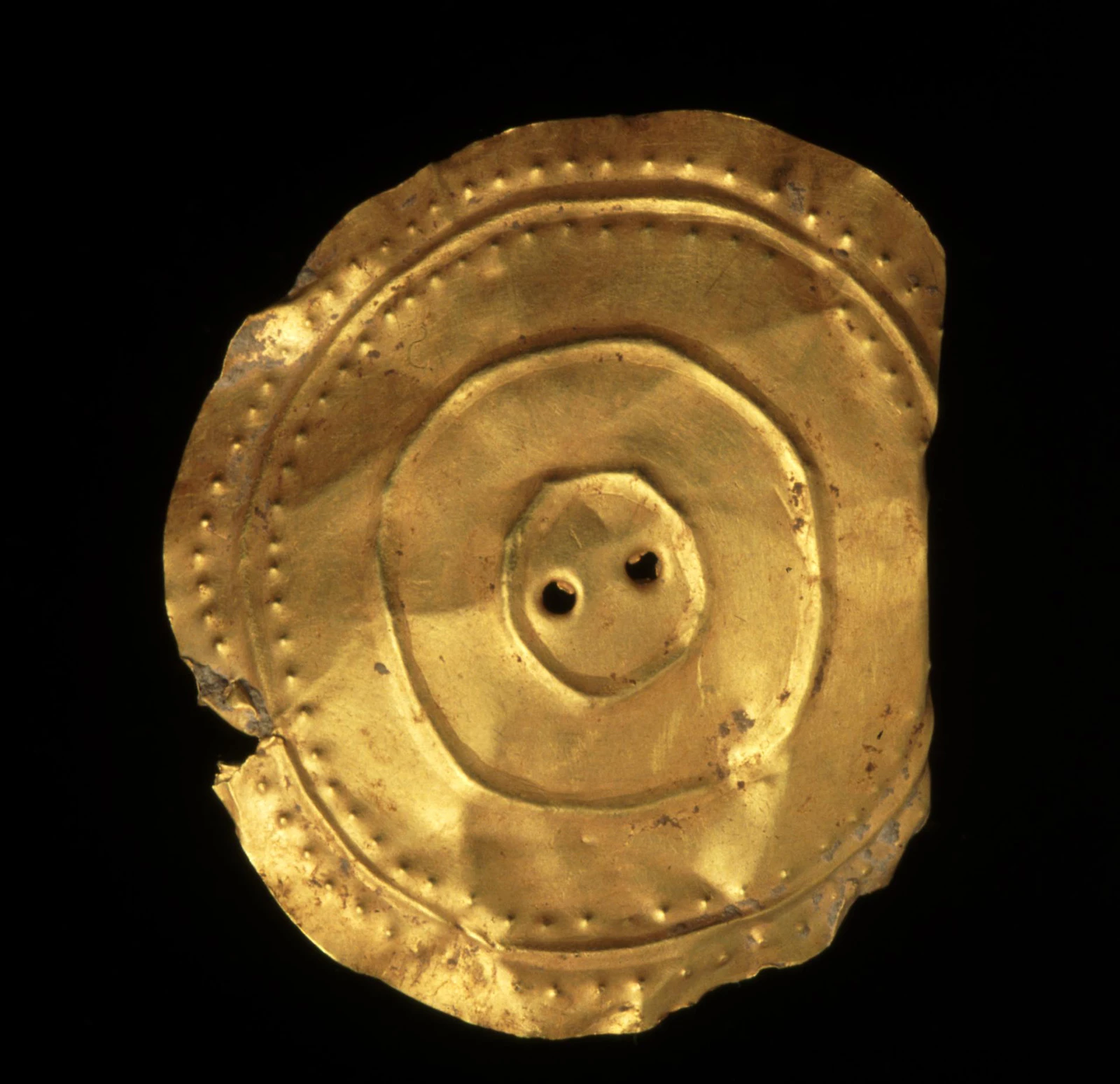
photograph of gold disc with repousse design

At around 4000 years old, this sun disc is one of the earliest and rarest examples of Welsh bling

One of the earliest examples of Welsh bling is this so-called 'sun disc', found near Cwmystwyth in Ceredigion.

Current research suggests that these 'sun discs' were part of ancient funeral practice, most likely sewn onto the clothes of the dead before their funerals. Only six have ever been found in the UK.
 

Most Controversial

At first glance, an ordinary Chapel tea service - used by congregations as they enjoyed a 'paned o de' after a service. A closer look reveals the words - 'Capel Celyn'. The chapel, its graveyard and surrounding village are now under water.


Photograph showing a cup and saucer with 'Capel Celyn' and a ribbon scroll design

Capel Celyn, in the Tryweryn Valley, is now underwater

Flooded in 1965 by the Liverpool Corporation, the Tryweryn valley became a flashpoint for Welsh political activism - creating a new generation of campaigners who pushed for change in how Welsh communities were treated by government and corporations.

Curators from St Fagans collected these as an example of life in Capel Celyn - to serve as a poignant reminder of a displaced community, and to commemorate one of the most politically charged moments of the 20th century in Wales.
 

Honourable Mention: an Airplane made from a Dining Room Chair

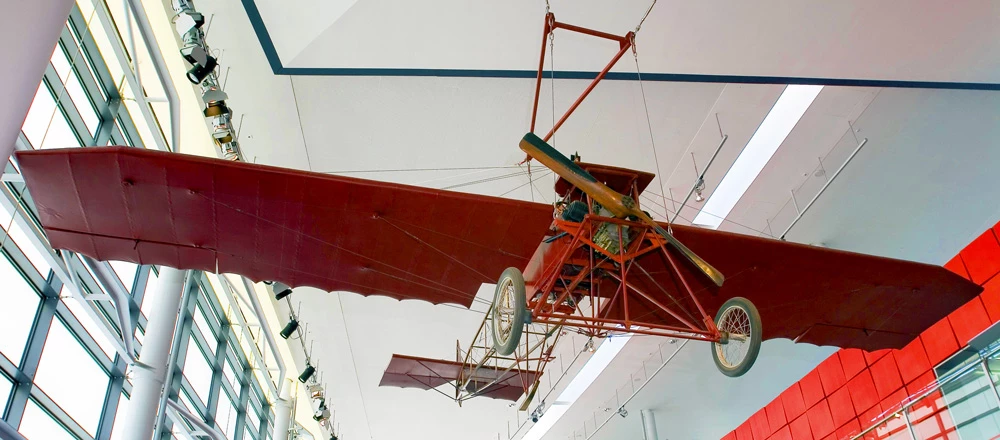
Made from a dining room chair, piano wire and a 40 horsepower engine, the Robin Goch (Red Robin) was built in 1909 - and also features a fuel gauge made from an egg timer.


photograph of a small, early twentieth century airplane with red wings

The Robin Goch (Red Robin) on display at the National Waterfront Museum

Its builder, Horace Watkins, was the son of a Cardiff printer - here he is pictured with an earlier, even more rickety version of his famous monoplane.
 

Photograph from 1908 showing Horace Watkins in a very early, precarious-looking monoplane

Horace Watkins testing his monoplane in 1908

Our collections are full of stories which reflect Wales' unique character and history. The Robin Goch is one of the treasures of the collection, and is an example of Welsh ingenuity at its best.

Half a Million Searchable Items

The launch of Collections Online uncovers half a million records, which are now searchable online for the first time.

“Collections Online represents a huge milestone in our work, to bring more of our collections online and to reach the widest possible audience.

It’s also just the beginning. It’s exciting to think how people in Wales and beyond will explore these objects, form connections, build stories around them, and add to our store of knowledge." – Chris Owen, Web Manager
 

Search Collections Online

Plans for the future

Our next project will be to work through these 500,000 records, adding information and images as we go.

We'll be measuring how people use the collections, to see which objects provoke debate or are popular with our visitors. That way, we can work out what items to photograph next, or which items to consider for display in our seven national museums.

Preparing and photographing the collections can take time, as some items are very fragile and sensitive to light. If you would like to support us as we bring the nation's collections online, please donate today - every donation counts.


Donate Today


We are incredibly grateful to the People's Postcode Lottery for their support in making this collection available online.
 

The oldest people in Wales - Neanderthal teeth from Pontnewydd Cave

9 July 2013

Reconstruction painting showing Early Neanderthal Man.

Reconstruction painting showing Early Neanderthal Man.

Upper jaw of a Neanderthal child aged around 9 years old.

Upper jaw of a child aged around 9 years old.

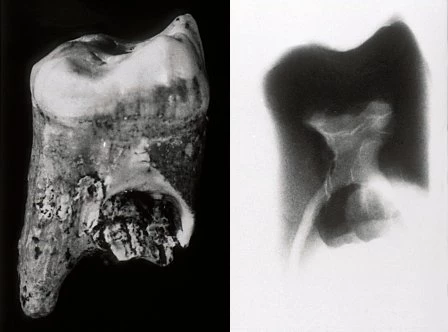
Neanderthal Man tooth x-ray

Early Neanderthal tooth (left), and X-ray (right). The X-ray show the enlarged pulp cavity that has helped archaeologists to identify the Pontnewydd teeth as belonging to Neanderthals.

Pontnewydd Cave, home to Neanderthal Man in Wales

Pontnewydd Cave was excavated by Amgueddfa Cymru between 1978 and 1995. The wall that can be seen across the entrance to the cave was built during the Second World War, at which time Pontnewydd Cave served as a munitions store.

Pontnewydd Cave

Excavations at Pontnewydd Cave, Denbighshire have discovered the oldest human remains known from Wales dating back some 230,000 years.

Excavations at the cave by Amgueddfa Cymru between 1978 and 1995 unearthed a total of

19 teeth , discovered found deep inside the cave. These have been identified by experts at the Natural History Museum, London as belonging to an early form of Neanderthal.

Neanderthals in Wales

Neanderthals are one branch of the human evolutionary tree that is thought to have died out approximately 36,000 years ago. Our own species shared a common ancestor with Neanderthals, but did not evolve from them.

Neanderthals were fairly short and stocky, had ridges under their eyebrows, big square jaws, and teeth that are larger than ours are today.

Study of the remains found at Pontnewydd found that these teeth represent the remains of at least five individuals.

Neanderthal Teeth

The teeth have all been x-rayed and they show an interesting characteristic known as taurodontism - an enlarged pulp cavity to the teeth and shorter roots. Taurodontism is a characteristic (although not unique) feature of Neanderthal teeth and it is one of the features that has led experts to decide that these are Neanderthal as opposed to another early human.

The people discovered in Pontnewydd Cave range in age from

young children to adults. The most complete discovery from the site is a fragment of an upper jaw of a child aged around nine years old. In the jaw a very heavily worn milk tooth can be seen sitting next to a newly erupted permanent molar.

Food remains

The teeth were not found on their own inside the cave. Alongside them were

stone tools and animal bones , some of which show signs of butchery - evidence that these were the food remains of these early Neanderthals.

Questions remain as to whether these humans were originally buried in graves within the cave. The cave has since been washed through by the melt water from the retreating ice sheets at the end of the last Ice Age. Unfortunately the forces that have remarkably led to the preservation of these teeth deep within Pontnewydd Cave destroyed any traces of their original burial context.

Background Reading

Ice Age hunters: neanderthals and early modern hunters in Wales by S. Green and E. Walker Published by the National Museum of Wales (1991).

In search of the neanderthals: solving the puzzle of human origins by C. Stringer and C. Gamble. Published by Thames and Hudson (1993).

Pontnewydd Cave: a lower Palaeolithic hominid site in Wales: the first report by H. S. Green. Published by the National Museum of Wales (1984).

Neanderthals in Wales: Pontnewydd and the Elwy Valley Caves edited by Stephen Aldhouse-Green, Rick Peterson and Elizabeth A. Walker. Published by National Museum Wales Books and Oxbow Books (2012).

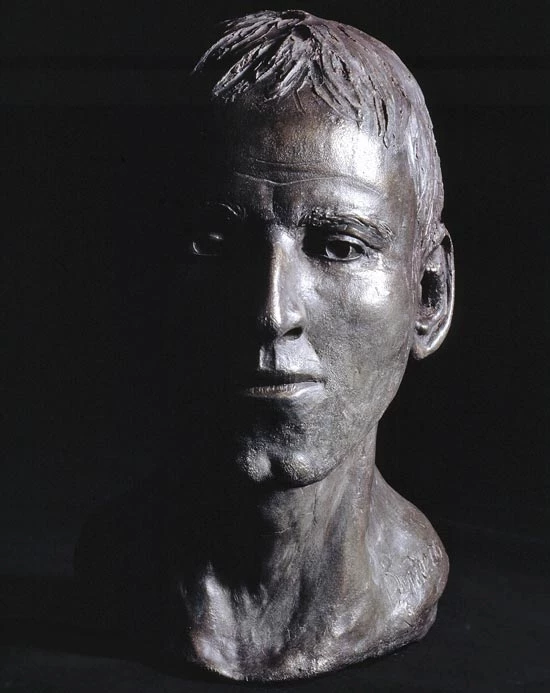
The face of a 6,000-year-old man

Steve Burrow, 22 January 2010

The Penywyrlod Head

The Penywyrlod Skull

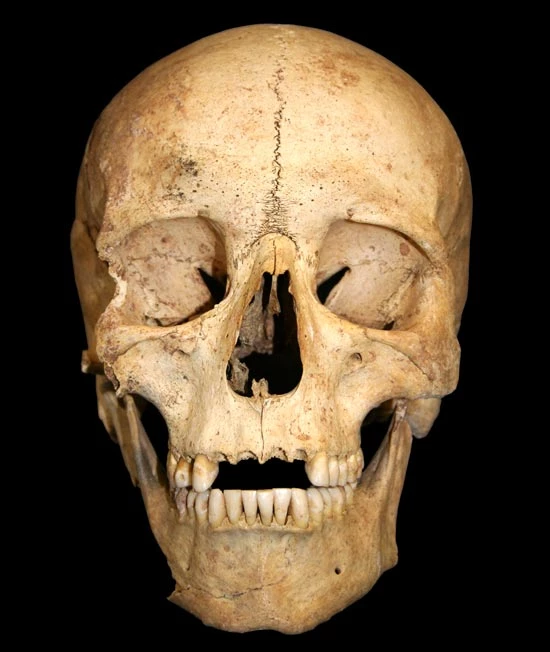
The Penywyrlod Skull.
One of the few complete Stone Age skulls yet to have been discovered in Wales.

A rare Stone Age skull discovered in a burial mound in Powys has given scientists the opportunity to reconstruct the face of a 6,000-year-old man, revealing that he was no hulking cave man but in fact very similar looking to modern man.

In June 1972 at Penywyrlod, near Talgarth in Powys, a farmer began to quarry loose stone blocks from a grassed-over mound in one of his fields. The stone was to provide hardcore for his farmyard. It didn't take long before he came upon some larger stone slabs which lined a hole leading deeper into the mound. Within this chamber were piles of human bone.

Prehistoric burial mound

The farmer contacted Hubert Savory, an archaeologist at the National Museum and an expert in prehistoric burial mounds, and Savory came to see the new find as soon as he could. This discovery must have come as a considerable surprise to him as archaeologists had been mapping burial mounds in this part of Wales for generations. Yet here was the largest and best preserved example in Powys — it had been completely missed!

An excavation revealed that the mound was a type of tomb in use from around 3,600 BC. It consisted of a rectangular stone mound which widened at its southeast end. Here the walls of the mound bowed inwards to create a forecourt. Piercing the sides of the mound were several stone-lined chambers, like the one the farmer had found.

A complete skull

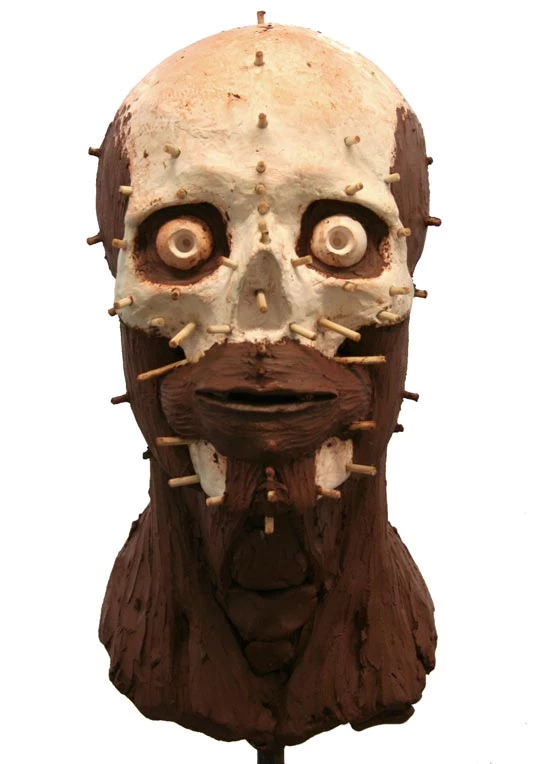
The skull, partway through the reconstruction process

The skull, partway through the reconstruction process carried out by Caroline Wilkinson of Dundee University.

By the time the excavation finished, the remains of at least six people had been found in the tomb chambers. But the star find was a complete skull — a very rare discovery — which belonged to a man who had died in his mid-20s.

The skull reveals no obvious cause of death, although it does tell us something about the man. His teeth were in good condition, but his nasal bones were slightly crooked and he had suffered from an inflammatory scalp disorder. The bones of his skull had also failed to fuse completely — the result of an inherited condition which would have caused him no inconvenience but would have given him a broader forehead than normal for the time, and a dimpled chin.

Facial reconstruction

The finished face

The finished face, cast in bronze resin and currently on display in the Origins Gallery of National Museum Cardiff.

As a skull, the man's story ends there, but in 2005 Caroline Wilkinson from Dundee University was commissioned to produce a forensic reconstruction of his face. Caroline's work involves taking a plaster cast of the skull and positioning pins on it to indicate the likely depth of flesh at a number of key locations. These depths are based on measurements from the faces of modern people of similar racial type. Clay is then used to build up the layers of muscle, before skin and hair are added. The style of hair cut and facial hair is of course subjective.

The figure revealed is startling. This was no hulking cave man; 6,000-year-old man looks as modern as anyone walking the streets today. The people who built this tomb and buried their dead in a pile of bones may have followed cultural traditions that seem strange to us, but they were not primitives. We are not better than them, just different.

Article author:

Dr Steve Burrow, Earlier Prehistorian, Department of Archaeology & Numismatics, Amgueddfa Cymru

The sound of the Neanderthals

Elizabeth Walker, 14 May 2009

Reconstruction painting showing an Early Neanderthal Man.

Reconstruction painting showing an Early Neanderthal Man.

<em>Neanderthal</em> performance, National Museum Cardiff

The first live performance of Neanderthal at the National Museum Cardiff, February 2009.

Neanderthal remains dating back 230,000 years have been found at Pontnewydd Cave, Denbighshire in Wales. The teeth and stone tools provided the inspiration for composer Simon Thorne to create a soundscape, Neanderthal, to play in the galleries at Amgueddfa Cymru to bring otherwise silent displays to life

Neanderthals were an evolutionary dead-end, although modern humans such as ourselves shared a common ancestor with them some 600,000 years ago. They have the same inner ear and vocal structures as us, and therefore had the ability to create and hear sounds. It is possible, however, that Neanderthal brains worked in very different ways from ours. The links between different parts of the brain might not have been as fluid as they are in ours. They might not have been able to form language as a way to communicate.

Neanderthals might have had a better capacity than us to communicate and to express themselves through song. The soundscape Simon has created is based on the voice and recordings of natural sounds recorded during a visit to Pontnewydd Cave. These include the drips from the cave roof and the river flowing in the valley bottom. The sounds a Neanderthal heard would have included the communication of animals and bird song. Neanderthals would have made sounds themselves too. These would have included the chipping of stone tools; when flint is knapped (or struck) an unflawed nodule rings with a bright sound and the knapper knows whether the flint is suitable for making the flakes needed to create a stone toolkit. Neanderthals could use their voices; perhaps they sang their way through their landscapes and used sound to communicate to one another while hunting.

Neanderthal is pure imagination. However, it is based on science and helps to bring an otherwise silent museum display to life in new and exciting ways.

Article by: Elizabeth Walker, Curator of Palaeolithic and Mesolithic Archaeology

The Neanderthal soundscapes:


Download
  • [1mb, MP3]


Download
  • [64kb, MP3]

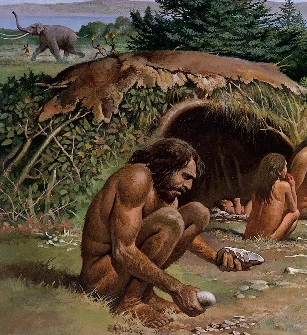
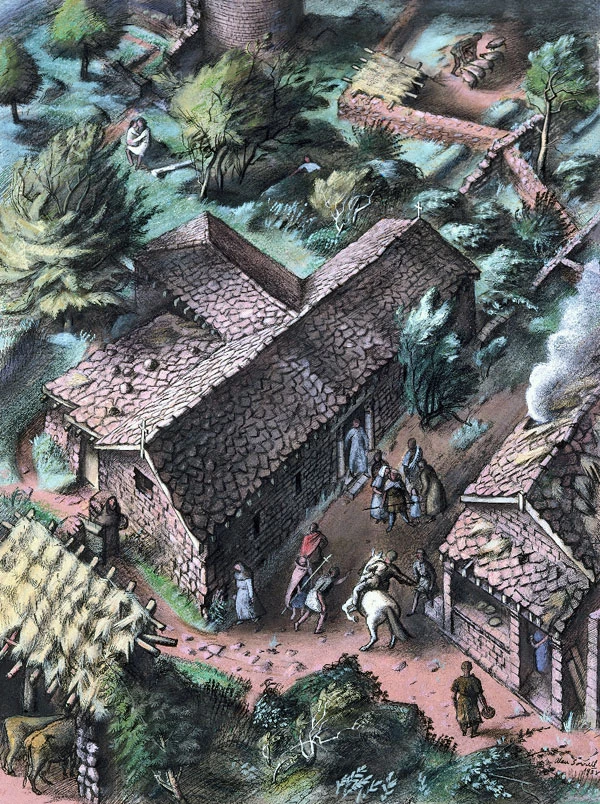
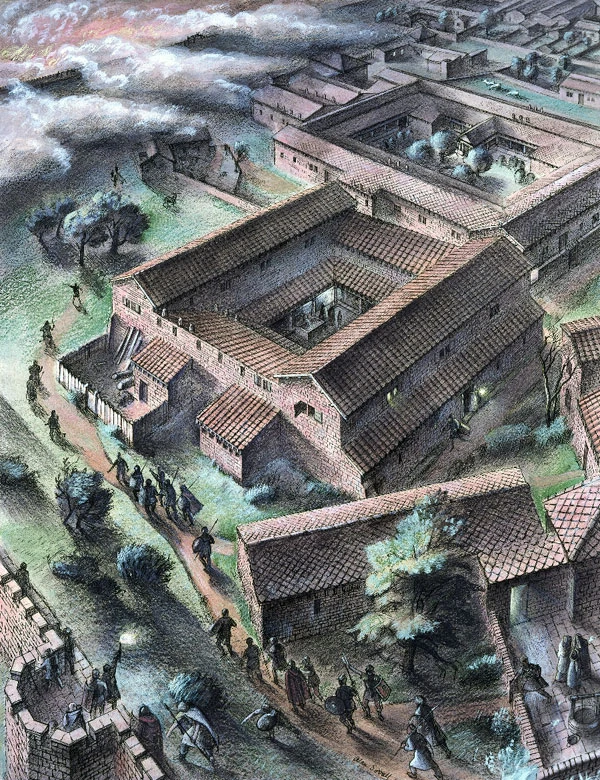
Re-creating life in early Wales

2 August 2007

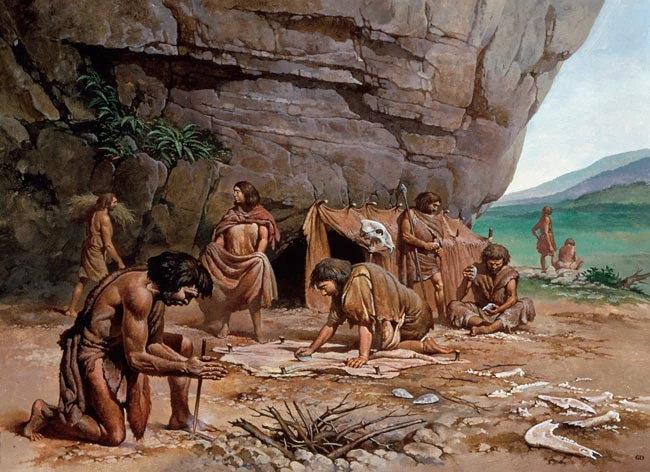
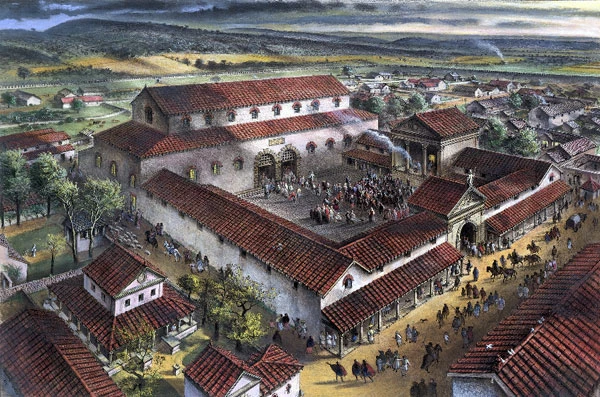
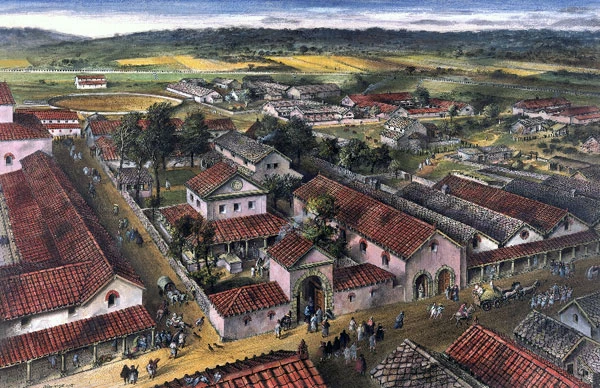
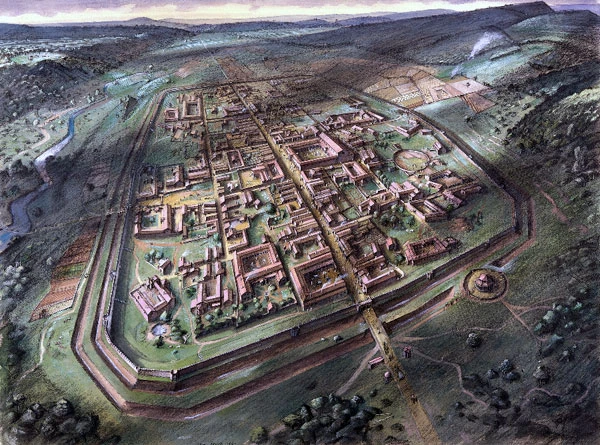
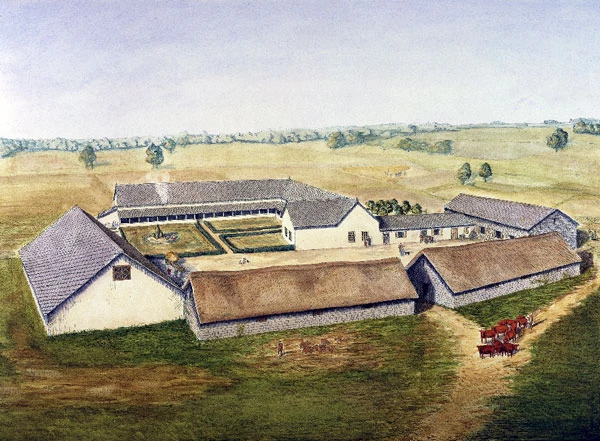
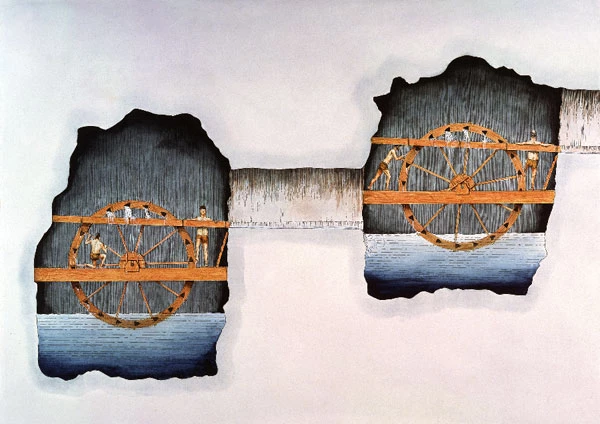
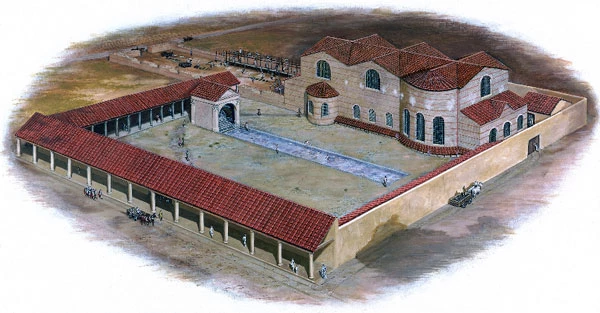
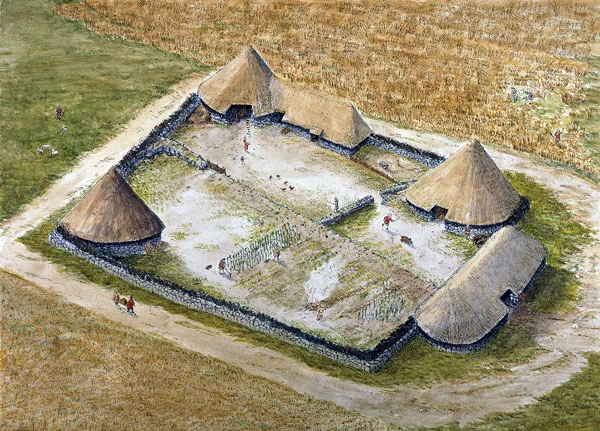
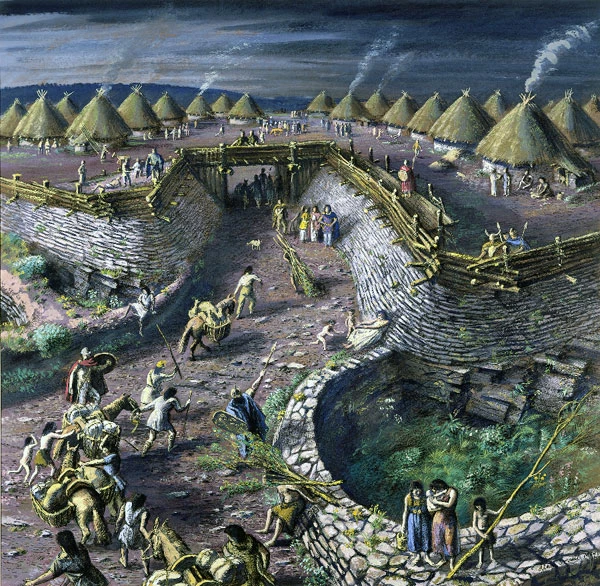
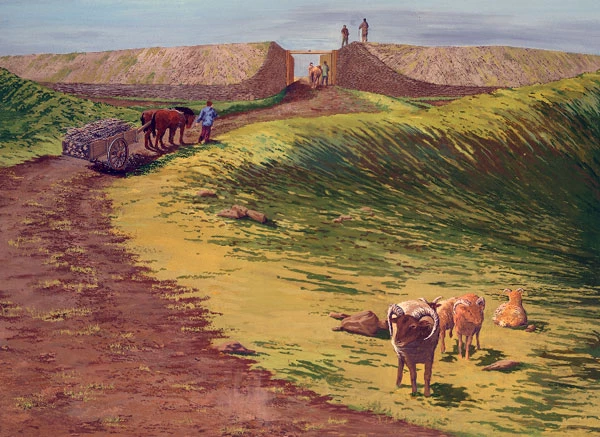
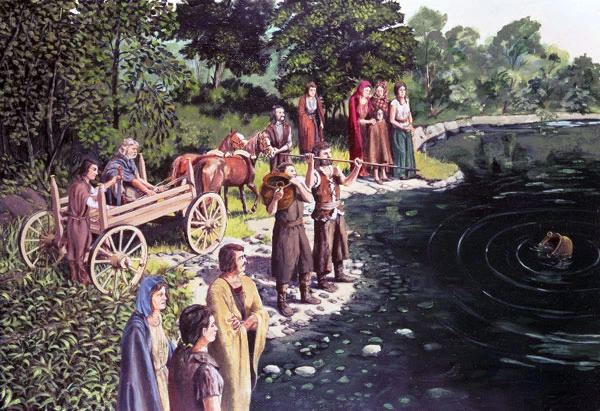
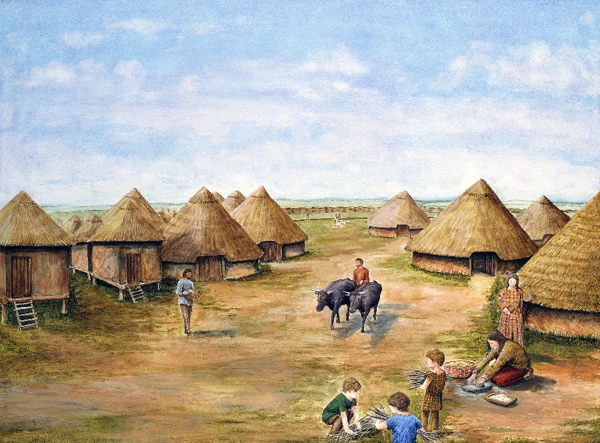
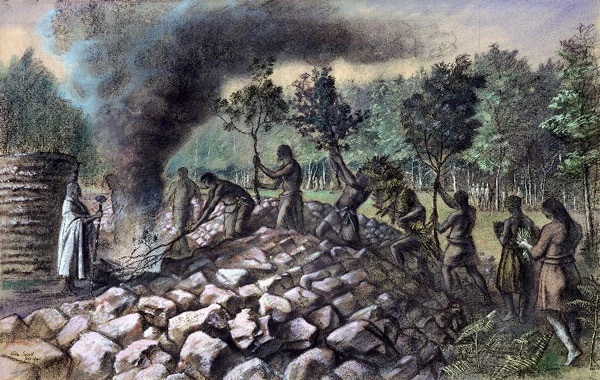
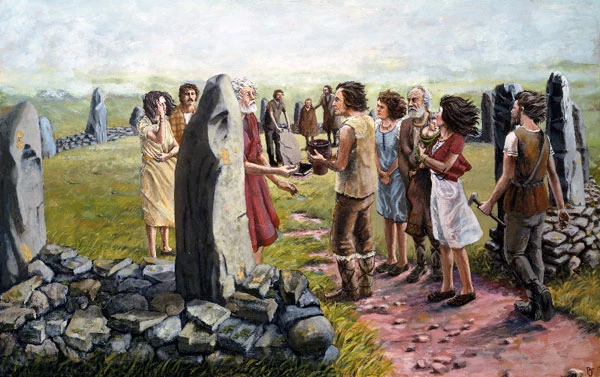
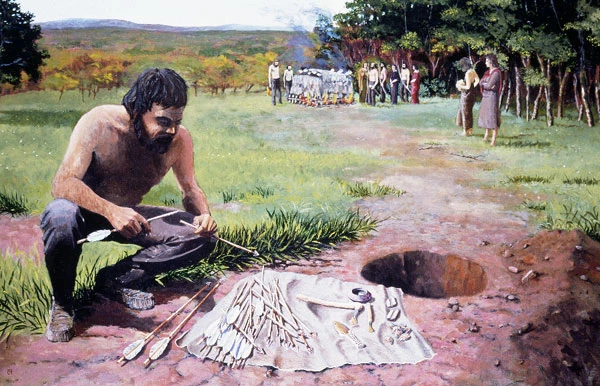
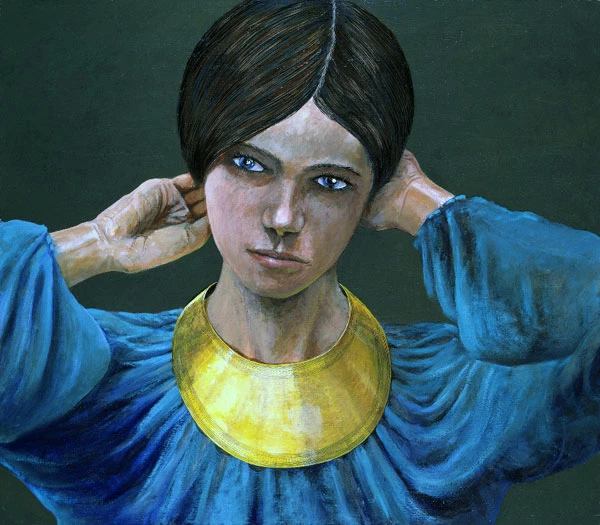
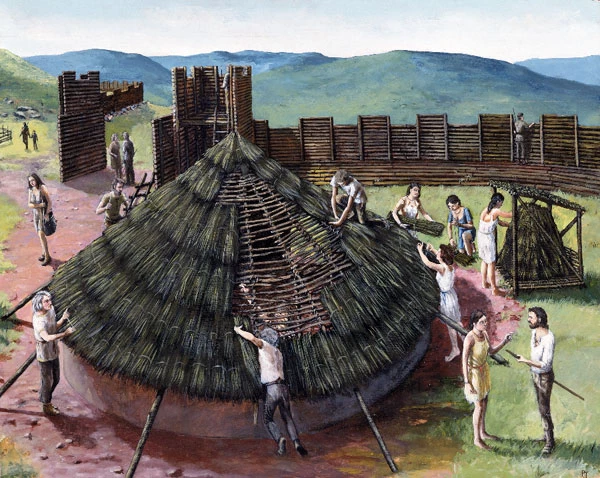
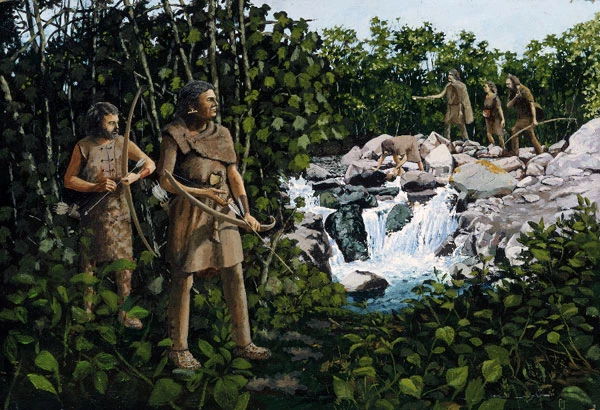
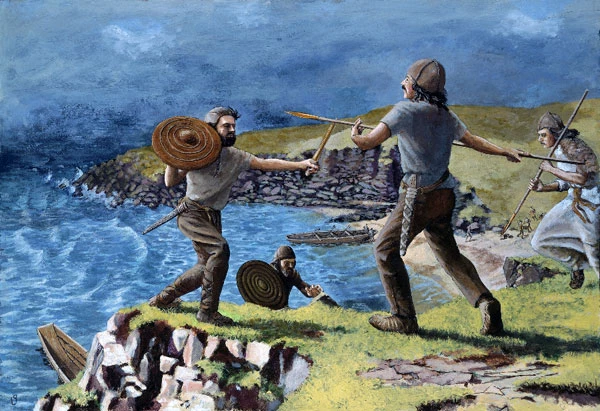
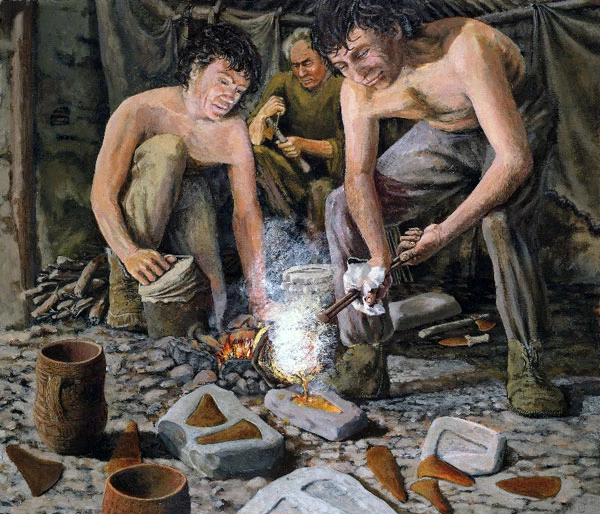
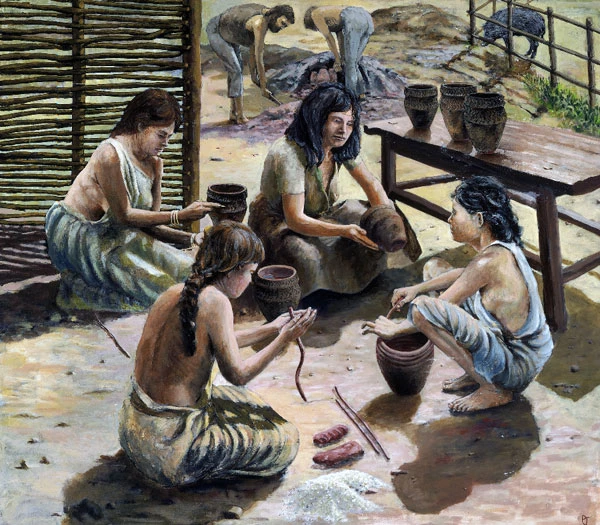
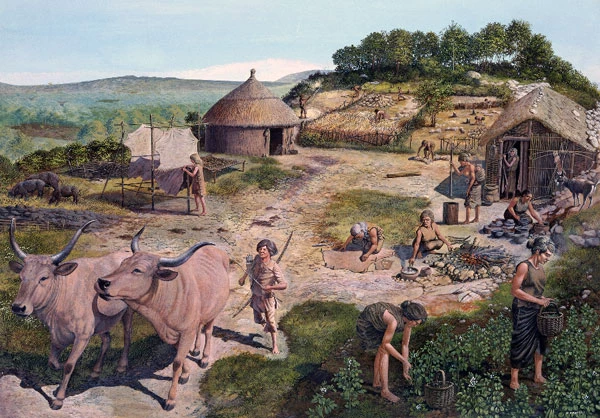
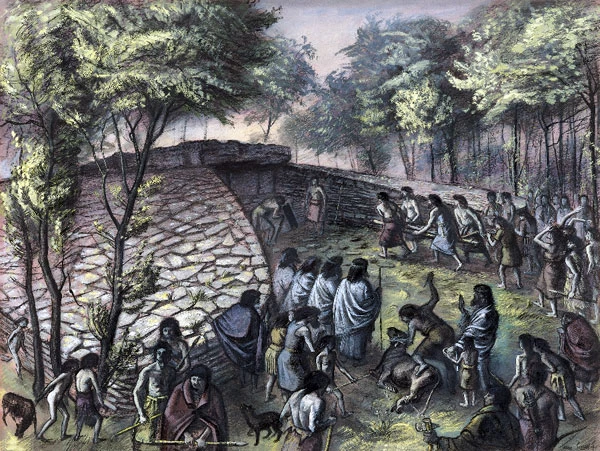
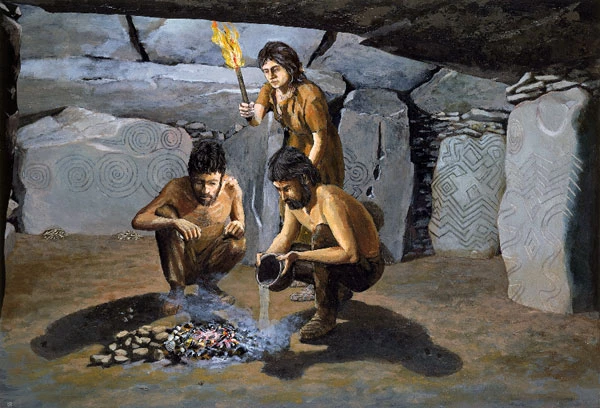
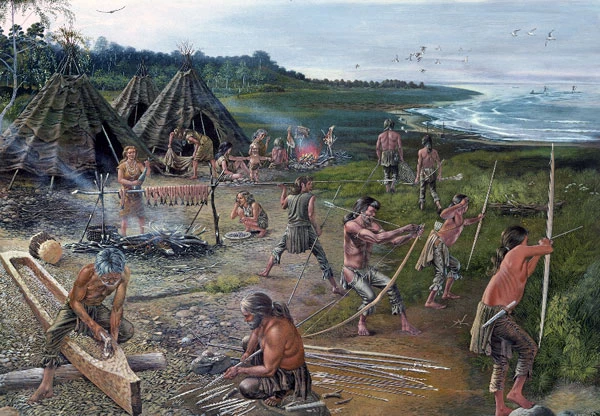
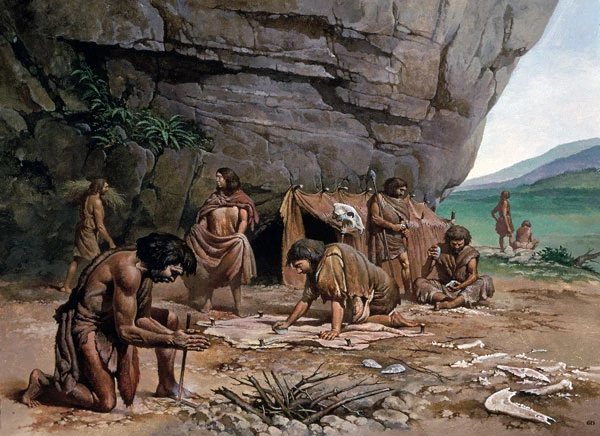
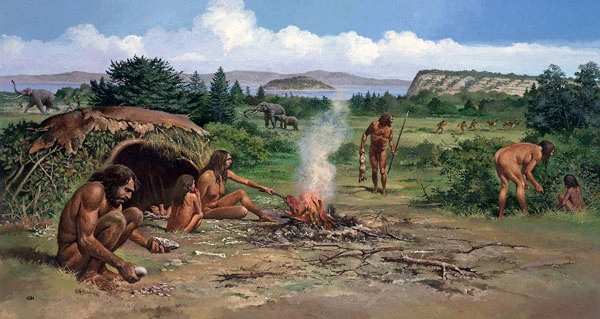
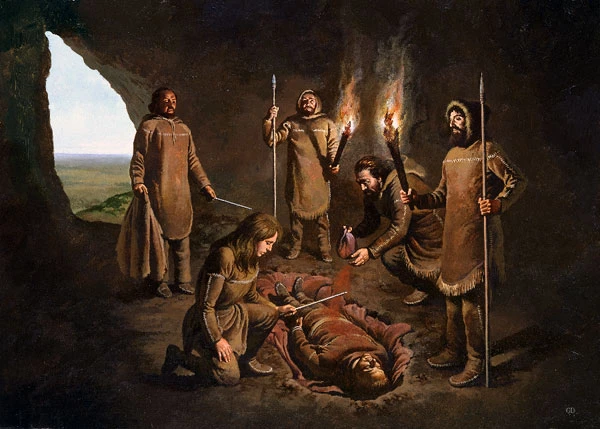
Below is a selection of artists impressions showing scenes of everyday life in Wales. Images range from the Palaeolithic, when humans first set foot in Wales, through to the Roman Conquest. Click on the images below for more detail.