Fragile - The Biggest Contemporary Ceramics Exhibition ever held in Wales 19 March 2020 The 'Fragile' exhibition was held at Amgueddfa Cymru - National Museum Wales between 18 April - 4 October 2015. It was the biggest contemporary ceramics exhibition ever held in Wales. The exhibition brought together key works from the collection of Amgueddfa Cymru – National Museum Wales, including ceramic works by Richard Deacon and Felicity Aylieff, as well as pieces from the archaeology, industry and botany collections. Also on view were works by four Wales-based artists – Claire Curneen, Walter Keeler, Lowri Davies and Adam Buick – shown together with specially-commissioned films that delve into each maker’s creative process. You can see the films here: Alongside these were three major innovative installations by Phoebe Cummings, Keith Harrison and Clare Twomey, who challenged you to walk across and break a sea of bone china tiles. Links Adam Buick Claire Curneen Lowri Davies Walter Keeler Clare Twomey ‘Consciousness/Conscience’ by Clare Twomey
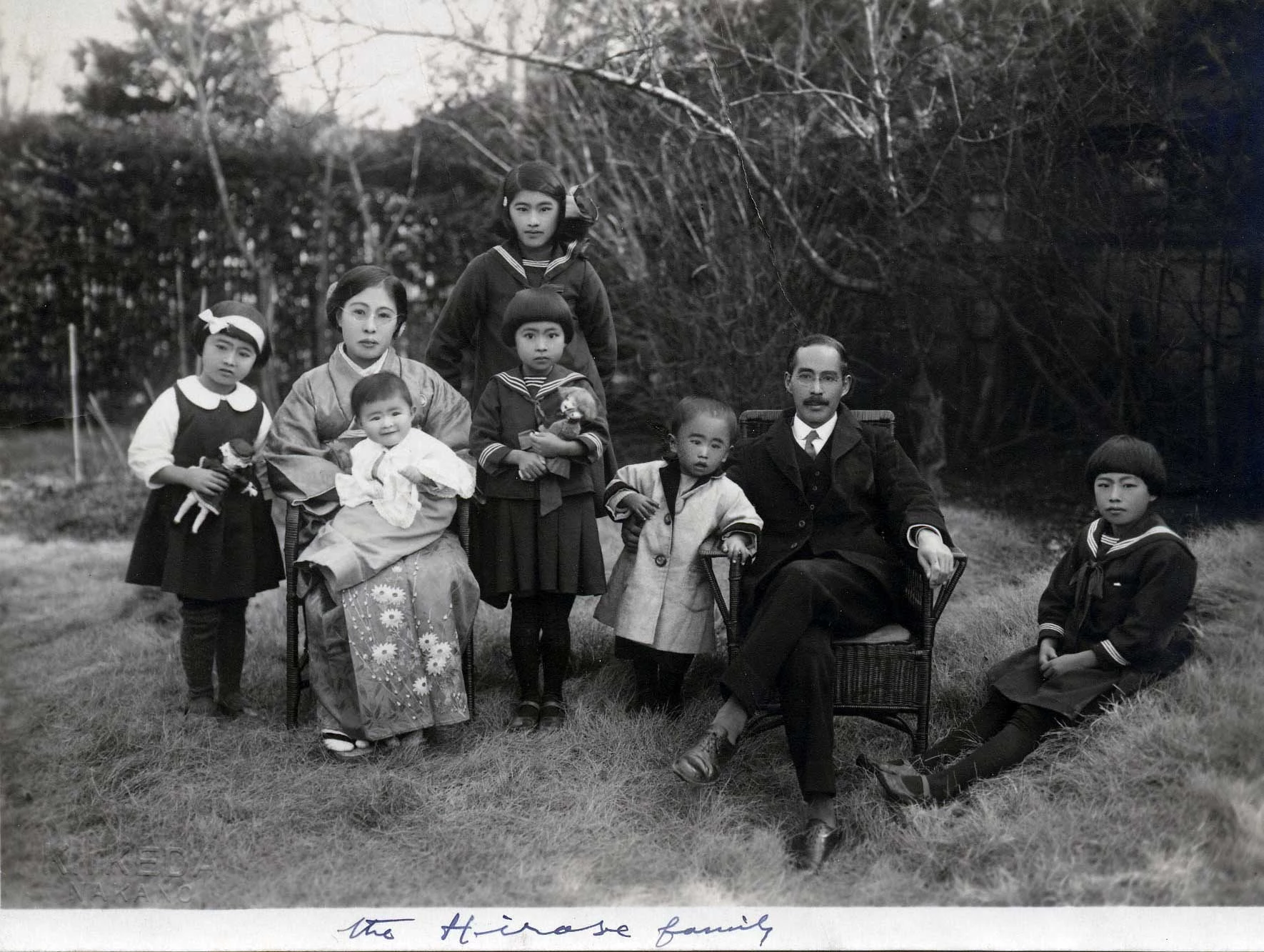
One thousand kinds of shells existing in Japan Kristine Chapman, 7 September 2018 The Hirase Conchological Museum Shintaro Hirase and family, September 1931. The Library holds a set of beautiful Japanese shell books in its Mollusca collection. The book is Kai Chigusa, but is more commonly known as Kai sen shu (or The Illustrations of a Thousand Shells in English) by Yoichirō Hirase (1859–1925), and was produced from 1914-1922. Hirase was a Japanese conchologist who assembled the largest collection of shells in Japan at the turn of the century, and established his own shell museum (the Hirase Conchological Museum) in Kyoto from 1913 to 1919. His son Shintarō Hirase (1884–1939) was also a Japanese malacologist, who taught at Seikei College. The book is comprised of four volumes, and each volume is an ‘orihon’ folding book. Orihon is a traditional bookmaking technique that consists of a long strip of paper that is written on one side and then compacted by folding in zig-zag, or concertina, fashion. The style originated in China, but was later developed in Japan, where it is primarily associated with Buddhist works or picture books. Each of the four volumes has roughly 100 illustrations of shells, resulting in 400 illustrations in total. There is a theory that Hirase originally planned to produce 10 volumes, each with 100 illustrations, and that would have resulted in the ‘One Thousand Shells’ of the English title. All the illustrations are hand-coloured woodcuts, Hirase chose this technique, rather than the more common lithography of the time, because he wanted the work to be of interest to artists. The text is kept quite minimal, as they are predominantly picture books, but the preface is in Japanese, and the plate lists are bilingual, in Japanese and English. The first three volumes are quite rare, volume one was commissioned in 1914 to commemorate the first anniversary of his Conchological Museum. Volumes two and three were produced a year later in 1915. Then there was a delay in the production of volume four, and it was not issued until 1922. Copies of volume four are now very rare, and it is believed by many that it was not produced in as many numbers as the first three. The Hirase Conchological Museum However, we don’t know exactly when our copy of Kai Chigusa was published. It was produced by leading Kyoto art publisher Unsodo, who carried on printing it after Hirase’s death, right up until the mid-1930s. The publishers never indicated which edition was which, each volume carries the date of its original publication, so it is impossible to know when each of the four volumes were actually printed! Hirase suffered poor health and severe financial strain in the final years of his life, which might explain why he was unable to complete the remaining volumes. His Conchological Museum closed down in 1919, and the shell collections were dispersed. A number went to the Smithsonian in 1921, many more went to what is now the Natural Science Museum in Tokyo, and the remainder were given to his son Shintarō. Years later, Shintarō’s collection went to the Research Institute for Natural Resources in Tokyo. Some of it was destroyed during World War II, but what remains of the collection is still stored there. We purchased this copy of Kai Chigusa from Antiquariaat Junk in 1999 to add to our Tomlin Library. Hirase communicated with many key shell collectors, including John Read le Brockton Tomlin, and the Tomlin archive contains a number of letters, postcards and photos from him. Although Tomlin didn't own a copy of Kai Chigusa himself, he did have a number of other books in his collection relating to Hirase, such as an album of pictures in commemoration of a Conchological Exhibition in Kyoto Library in 1910. The exhibition was organised by Hirase, and included shells, books, illustrations and paintings from both his own collections, and that of collectors around the world. It was a precursor to his setting up his own Museum in 1913, and Tomlin’s copy of the album also contains two line drawings of the proposed museum.

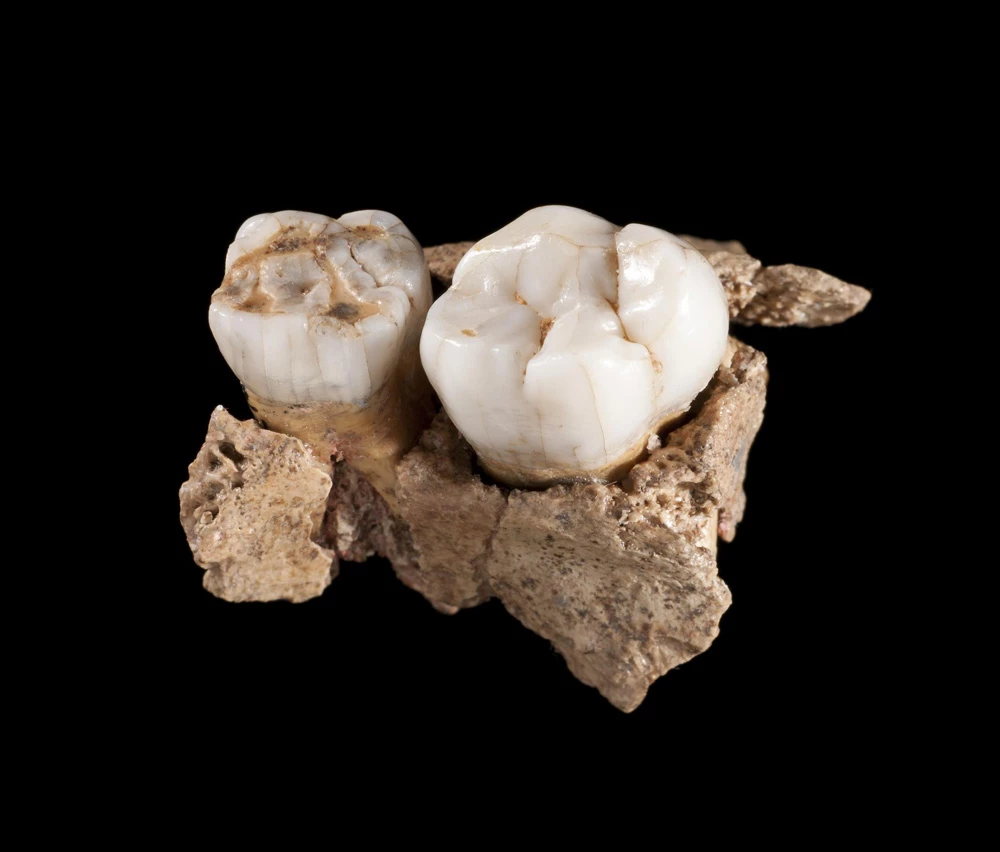
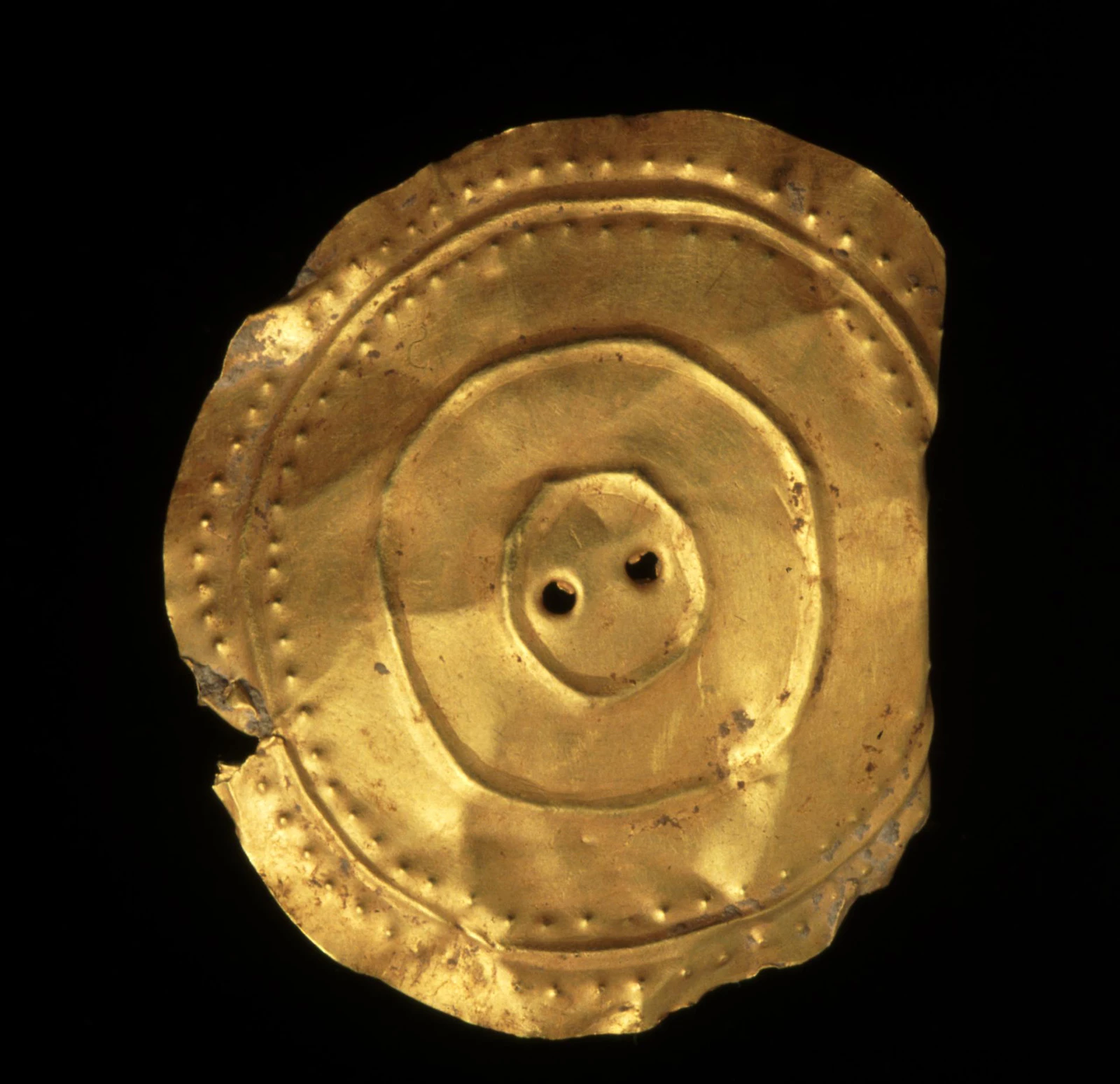
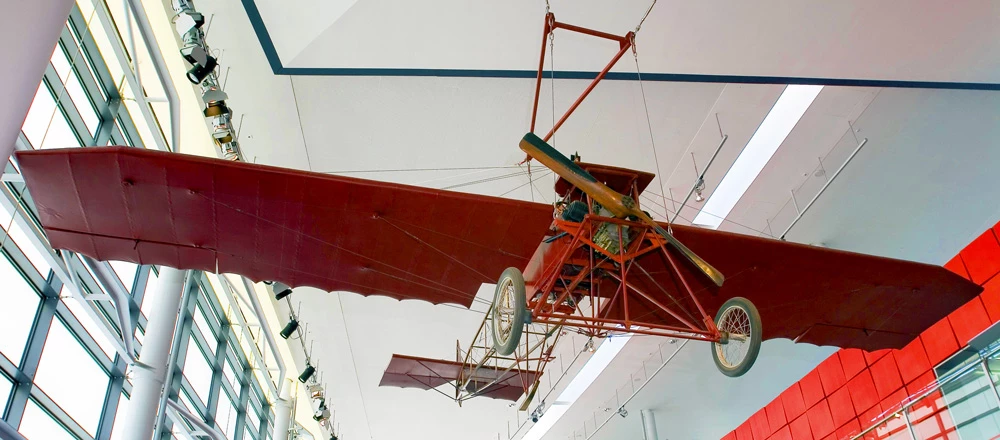
Uncovering our Collections: Half a Million Records now Online 26 March 2018 As we reveal half a million collection records for the first time, we look at some of the strangest and most fascinating objects from National Museum Wales Collections Online. This article contains photos of human skeletal fragments. The Biggest We have some real whoppers in our collections - including a full-size Cardiff Tram and a sea rescue helicopter - but the biggest item in our collection is actually Oakdale Workmen's Institute. Built in 1917, the Institute features a billiard room, dance hall and library - and is nowadays found in St Fagans National Museum of History. Horace Watkins testing his monoplane in 1908 Many of the buildings in St Fagans are part of the national collection - meaning they have the same legal status as one of our masterpiece Monets or this coin hoard. The buildings are dismantled, moved, rebuilt - and cared for using traditional techniques, by the museum's legendary Historic Buildings Unit. The Oldest The oldest human remains ever discovered in Wales These teeth belonged to an eight year-old Neanderthal boy - and at 230,000 years old, they are the oldest human remains in Wales. They were discovered in a cave near Cefn Meiriadog in Denbighshire, along with a trove of other prehistoric finds, including stone tools and the remains of a bear, a lion, a leopard and a rhinocerous tooth. These teeth are among some of the incredible objects on display at St Fagans National Museum of History The Shiniest People in Wales have been making, trading and wearing beautiful treasures from gold for thousands of years - like this Bronze Age hair ornament and this extremely blingy Medieval signet. At around 4000 years old, this sun disc is one of the earliest and rarest examples of Welsh bling One of the earliest examples of Welsh bling is this so-called 'sun disc', found near Cwmystwyth in Ceredigion. Current research suggests that these 'sun discs' were part of ancient funeral practice, most likely sewn onto the clothes of the dead before their funerals. Only six have ever been found in the UK. Most Controversial At first glance, an ordinary Chapel tea service - used by congregations as they enjoyed a 'paned o de' after a service. A closer look reveals the words - 'Capel Celyn'. The chapel, its graveyard and surrounding village are now under water. Capel Celyn, in the Tryweryn Valley, is now underwater Flooded in 1965 by the Liverpool Corporation, the Tryweryn valley became a flashpoint for Welsh political activism - creating a new generation of campaigners who pushed for change in how Welsh communities were treated by government and corporations. Curators from St Fagans collected these as an example of life in Capel Celyn - to serve as a poignant reminder of a displaced community, and to commemorate one of the most politically charged moments of the 20th century in Wales. Honourable Mention: an Airplane made from a Dining Room Chair Made from a dining room chair, piano wire and a 40 horsepower engine, the Robin Goch (Red Robin) was built in 1909 - and also features a fuel gauge made from an egg timer. The Robin Goch (Red Robin) on display at the National Waterfront Museum Its builder, Horace Watkins, was the son of a Cardiff printer - here he is pictured with an earlier, even more rickety version of his famous monoplane. Horace Watkins testing his monoplane in 1908 Our collections are full of stories which reflect Wales' unique character and history. The Robin Goch is one of the treasures of the collection, and is an example of Welsh ingenuity at its best. Half a Million Searchable Items The launch of Collections Online uncovers half a million records, which are now searchable online for the first time. “Collections Online represents a huge milestone in our work, to bring more of our collections online and to reach the widest possible audience. It’s also just the beginning. It’s exciting to think how people in Wales and beyond will explore these objects, form connections, build stories around them, and add to our store of knowledge." – Chris Owen, Web Manager Search Collections Online Plans for the future Our next project will be to work through these 500,000 records, adding information and images as we go. We'll be measuring how people use the collections, to see which objects provoke debate or are popular with our visitors. That way, we can work out what items to photograph next, or which items to consider for display in our seven national museums. Preparing and photographing the collections can take time, as some items are very fragile and sensitive to light. If you would like to support us as we bring the nation's collections online, please donate today - every donation counts. Donate Today We are incredibly grateful to the People's Postcode Lottery for their support in making this collection available online.
Swaps: David Hurn on Photography - Part 3 16 March 2018 Swaps: Photographs from the David Hurn Collection runs from 30 September 2017 to 15 April 2018. This exhibition celebrates the major gift of photographs from David Hurn’s private collection and marks the opening of Amgueddfa Cymru’s first gallery dedicated to photography. Here are the final collection of short films from the exhibition: Philip Jones Griffiths "This is a picture by Philip Jones Griffiths. Philip is a Welshman, he’s a Welsh speaking Welshman from North Wales. From an educational point of view I find him another one of the people who was self trained as a photographer. I find it intriguing how most of the people that I really admire in photography, are self trained. To me, it’s one of the most moving pictures I’ve ever seen. It’s usually on my wall, it’s on the stairs and you’re confronted by it if you’re going up to the toilet. Not infrequently, people come down with bleary, teary eyes and I think that’s, in a way, what a picture should do. I think that’s what photography does terribly well. You don’t need to have an explanation. I think the general public know enough about what goes on in the world of wars and thing like that, so it’s not that important to anyone going up there whether it’s Vietnam, or Biafra or whatever. It tells you something about the human condition which we all instinctively know enough about to get an emotional impact from the picture. And I just think it’s a strong a picture as I’ve ever seen by anybody. A truly remarkable person, and greatly, greatly missed." Clémentine Schneidermann "I saw the work of this young lady, I didn’t know her or anything about her, at a small gallery in Abertillery and it reeked of quality. There was what I call authorship. This looked to me, potentially, a cloass photographer. Later she had a little brochure made which again has that same thing. It kind of has a feeling of togetherness about it, you sense that the person understands what they’re photographing. This kind of photography is very in at the moment, a certain look of person and a certain kind of portraiture. All I can say is that she does it much better than a lot of other people around. It’s my personal opinion. And that’s why I asked her if I could swap a couple of prints with her. I think she already is a pretty classy photographer and I suspect in 50 years’ time she will still be shooting pictures." Bruce Davidson "And then the other photographer who I met at that time was Bruce Davidson who was… I did travel around quite a lot with him and particularly when he was in London I introduced him and got him into a lot of ‘slightly undergroundy’ places he might have struggled to get to. This particular picture is an extraordinary picture, from a set of pictures he did on a gang in New York. Incredible set of pictures. Bruce was lovely, we used to go round in one of the first little Mini’s and I remember he used to eat a staggering amount of bananas. For some reason we lived off bananas. He is a wonderful photographer and a wonderful person. He did extraordinary work on the Selma marches and things like that. Great social conscience and decent human being. He had an incredible effect on me and gave me a lot of prints. This was at the time when there weren’t galleries, a print was something that cost you 50p to have made. Somebody said “oh, I’d like that”, which people mainly didn’t, and he’d say “fine”, you know. I think in the collection there are probably about eight or nine Bruce Davidson pictures and I think every one of them is so beautiful. I would have loved to have taken this picture, it’s a great picture. " John Davies "John Davies was living in South Wales, he is an extraordinarily good landscape photographer of a very, very pure documentary nature. They’re very straight pictures of the landscape, there’s obviously no tricks, they’re just very much scene pictures. I basically swapped a mass of pictures, probably over twenty years, in that we swapped Christmas cards. We both made handmade Christmas cards – they’re actual prints that are made, and in my case, every year I make fifty of them and they go out as a limited edition. I’m not quite sure what his edition is, but he does the same. There was no reason to try and get a bigger print because I just think they are so beautiful this size. They are just so delicate and lovely." Banner photograph by Clémentine Schneidermann. More info David Hurn at Magnum Philip Jones Griffiths at Magnum Clémentine Schneidermann Bruce Davidson at Magnum John Davies
Swaps: David Hurn on Photography - Part 2 15 January 2018 Swaps: Photographs from the David Hurn Collection runs from 30 September 2017 to 15 April 2018. This exhibition celebrates the major gift of photographs from David Hurn’s private collection and marks the opening of Amgueddfa Cymru’s first gallery dedicated to photography. Here are some short films from the exhibition: Josef Koudelka "I had this very large flat in London, in Bayswater, so what actually happened was when people used to come to England from abroad they would all end up on my floor, so much so that I had a big front room that actually had four mattresses on the floor. But anyway, basically what happened was Josef Koudelka, who’s Czech, after the Czech uprising was having potential problems in Czechoslovakia, and Elliott Erwitt primarily, who was then the president of Magnum, discovered a way of getting Josef out of Czechoslovakia by giving him some award from Magnum to come and take pictures." "There was this ring at the front doorbell, it was Elliott who I knew was coming with this photographer who I didn’t know very much about who was Josef Koudelka. So Elliott said ‘Look, Josef here, can he use your darkroom and stay with you while he develops his film. So I said, ‘Yes of course, how many rolls do you have?’ My memory is he said 800!" "So he stayed in the flat… who knows, we said 8 years or so, it was an awful long time and in the end we were so close that I used to introduce him as my brother and he did the same. I love him dearly and he’s just the most perfect example, because I’ve never known anybody that works so hard, I’ve never known anyone that’s so involved with photography, that’s so meticulous about what he does." Tish Murtha "Tish was a puzzle; she was a student who came in, she had the shortest interview, so short I remember it, of any person that we ever interviewed coming into Newport. I never used to look at portfolios; I wasn’t that interested in whether people thought they could shoot pictures. I was interested in finding people that had passions about things, they could be a botanist or an architect." "Anyway, Tish came in and I remember asking her what did she want to do and she said something like ‘I want to photograph policemen kicking kids’ or something. That’s all she said, and I said “fine, we’ll teach you how to photograph that”." "I knew I was onto a winner because she talked about her background just in that little sentence with so much passion and so much obvious knowledge etc. etc. She was a wonderful photographer. I mean this picture is extraordinary. Such a loving picture of two people who are living on the streets. It has such intimacy and you can’t take that sort of picture unless you really, really are involved with the people involved." Sergio Larraín "This particular picture by Sergio Larrain is kind of important for me, because it, in a way gave me permission to do certain things. I was in Trafalgar Square photographing the pigeons and there in Trafalgar Square was another photographer photographing the pigeons who turned out to be Sergio Larrain." "We became friends, and Sergio looked at my pictures and he said to me that competing in this world of current affairs was really not me at my best, and that I was at my best doing much more personal kinds of things. That was extraordinary for me because I suddenly realised that here was a photographer who took pictures that I really loved saying to me “it’s ok to go and do what you really love doing”. Now, it happened that by luck, the colour supplements started in the 1960s, and that was great for me because there was always a little slot in those colour supplements for that mundane type of story, which meant that the only person that was left to fill in this slot of the mundane was me! So I had, in many ways, a free hand, and he is a very, very important person in my life." Banner photograph by Tish Murtha. More info David Hurn at Magnum Josef Koudelka at Magnum Sergio Larrain at Magnum Tish Murtha