: Death & Burial

Uncovering our Collections: Half a Million Records now Online

26 March 2018

As we reveal half a million collection records for the first time, we look at some of the strangest and most fascinating objects from National Museum Wales Collections Online.

This article contains photos of human skeletal fragments.

The Biggest

We have some real whoppers in our collections - including a full-size Cardiff Tram and a sea rescue helicopter - but the biggest item in our collection is actually Oakdale Workmen's Institute.

Built in 1917, the Institute features a billiard room, dance hall and library - and is nowadays found in St Fagans National Museum of History.

Photograph from 1908 showing Horace Watkins in a very early, precarious-looking monoplane

Horace Watkins testing his monoplane in 1908

Many of the buildings in St Fagans are part of the national collection - meaning they have the same legal status as one of our masterpiece Monets or this coin hoard. The buildings are dismantled, moved, rebuilt - and cared for using traditional techniques, by the museum's legendary Historic Buildings Unit.
 

The Oldest


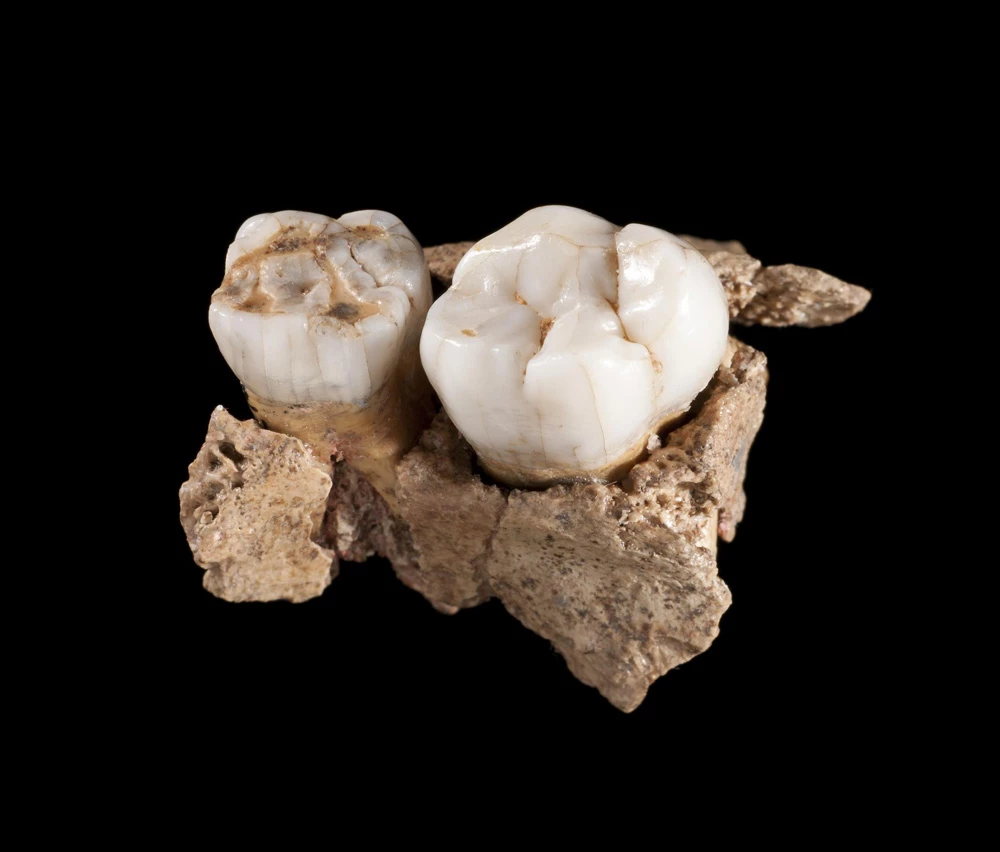
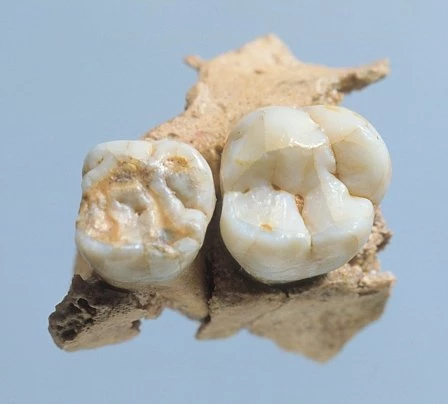
photograph of two teeth, belonging to a Neanderthal boy aged 8

The oldest human remains ever discovered in Wales

These teeth belonged to an eight year-old Neanderthal boy - and at 230,000 years old, they are the oldest human remains in Wales.

They were discovered in a cave near Cefn Meiriadog in Denbighshire, along with a trove of other prehistoric finds, including stone tools and the remains of a bear, a lion, a leopard and a rhinocerous tooth.

These teeth are among some of the incredible objects on display at St Fagans National Museum of History
 

The Shiniest

People in Wales have been making, trading and wearing beautiful treasures from gold for thousands of years - like this Bronze Age hair ornament and this extremely blingy Medieval signet.


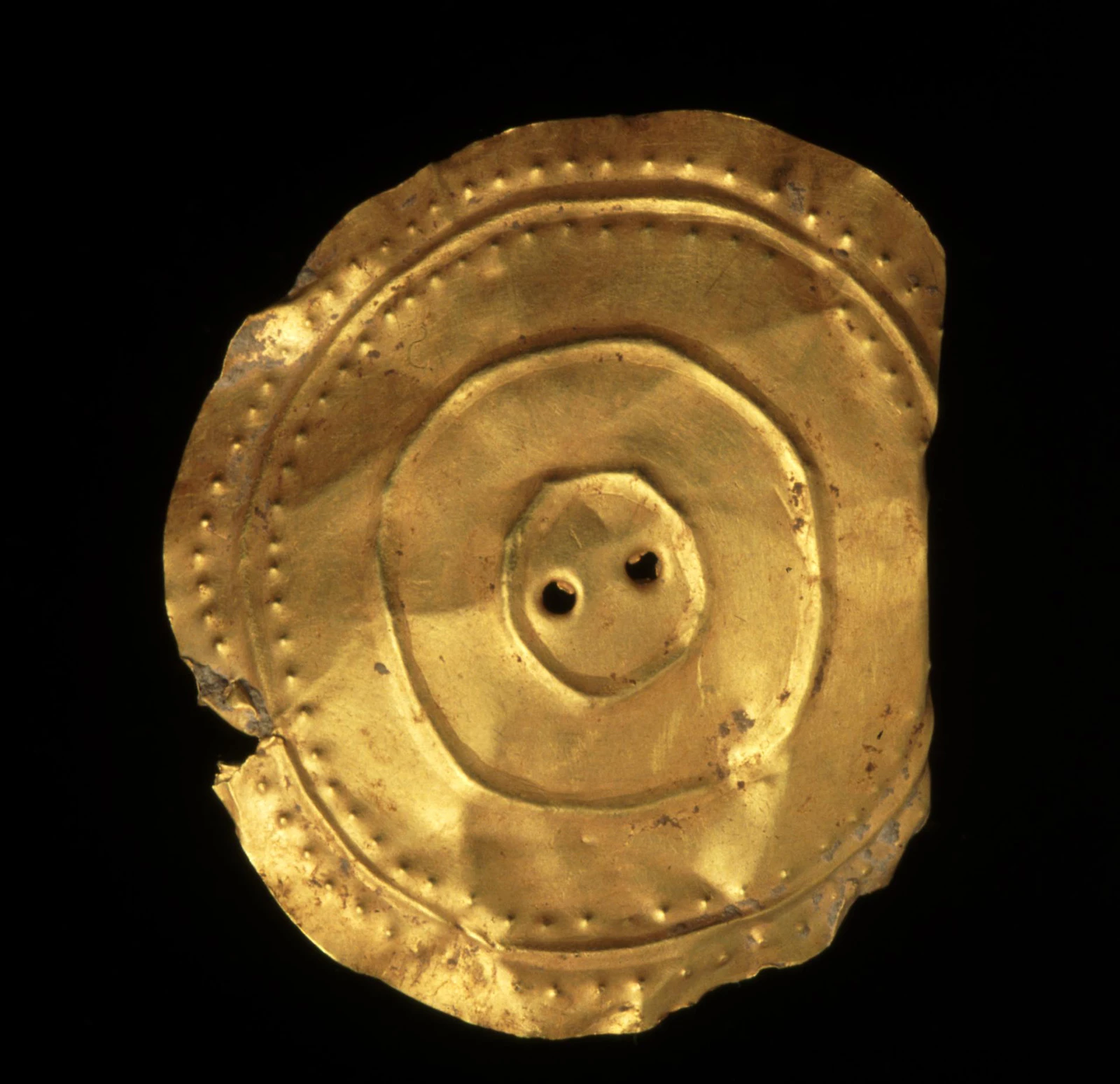
photograph of gold disc with repousse design

At around 4000 years old, this sun disc is one of the earliest and rarest examples of Welsh bling

One of the earliest examples of Welsh bling is this so-called 'sun disc', found near Cwmystwyth in Ceredigion.

Current research suggests that these 'sun discs' were part of ancient funeral practice, most likely sewn onto the clothes of the dead before their funerals. Only six have ever been found in the UK.
 

Most Controversial

At first glance, an ordinary Chapel tea service - used by congregations as they enjoyed a 'paned o de' after a service. A closer look reveals the words - 'Capel Celyn'. The chapel, its graveyard and surrounding village are now under water.


Photograph showing a cup and saucer with 'Capel Celyn' and a ribbon scroll design

Capel Celyn, in the Tryweryn Valley, is now underwater

Flooded in 1965 by the Liverpool Corporation, the Tryweryn valley became a flashpoint for Welsh political activism - creating a new generation of campaigners who pushed for change in how Welsh communities were treated by government and corporations.

Curators from St Fagans collected these as an example of life in Capel Celyn - to serve as a poignant reminder of a displaced community, and to commemorate one of the most politically charged moments of the 20th century in Wales.
 

Honourable Mention: an Airplane made from a Dining Room Chair

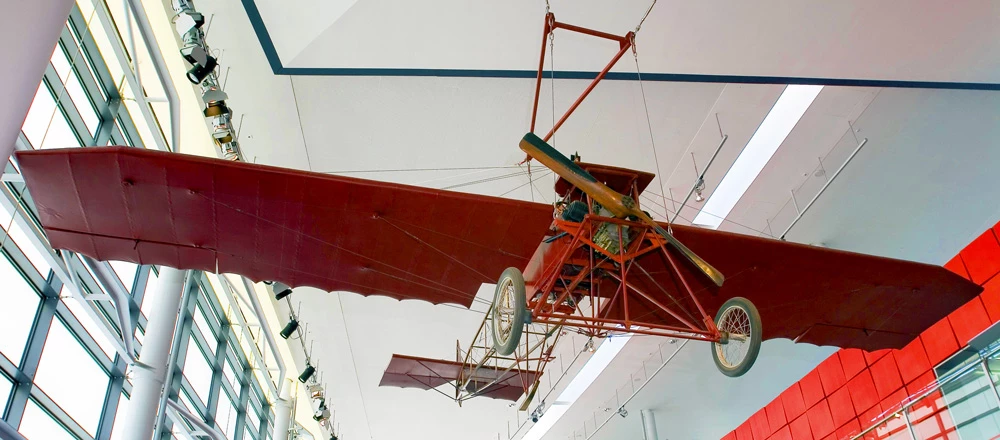
Made from a dining room chair, piano wire and a 40 horsepower engine, the Robin Goch (Red Robin) was built in 1909 - and also features a fuel gauge made from an egg timer.


photograph of a small, early twentieth century airplane with red wings

The Robin Goch (Red Robin) on display at the National Waterfront Museum

Its builder, Horace Watkins, was the son of a Cardiff printer - here he is pictured with an earlier, even more rickety version of his famous monoplane.
 

Photograph from 1908 showing Horace Watkins in a very early, precarious-looking monoplane

Horace Watkins testing his monoplane in 1908

Our collections are full of stories which reflect Wales' unique character and history. The Robin Goch is one of the treasures of the collection, and is an example of Welsh ingenuity at its best.

Half a Million Searchable Items

The launch of Collections Online uncovers half a million records, which are now searchable online for the first time.

“Collections Online represents a huge milestone in our work, to bring more of our collections online and to reach the widest possible audience.

It’s also just the beginning. It’s exciting to think how people in Wales and beyond will explore these objects, form connections, build stories around them, and add to our store of knowledge." – Chris Owen, Web Manager
 

Search Collections Online

Plans for the future

Our next project will be to work through these 500,000 records, adding information and images as we go.

We'll be measuring how people use the collections, to see which objects provoke debate or are popular with our visitors. That way, we can work out what items to photograph next, or which items to consider for display in our seven national museums.

Preparing and photographing the collections can take time, as some items are very fragile and sensitive to light. If you would like to support us as we bring the nation's collections online, please donate today - every donation counts.


Donate Today


We are incredibly grateful to the People's Postcode Lottery for their support in making this collection available online.
 

The oldest people in Wales - Neanderthal teeth from Pontnewydd Cave

9 July 2013

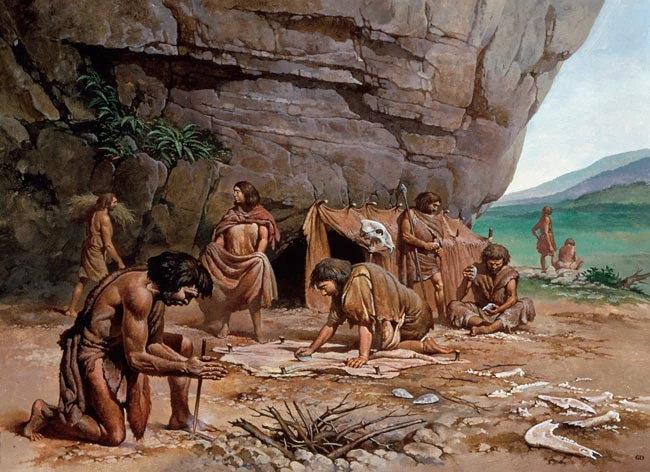
Reconstruction painting showing Early Neanderthal Man.

Reconstruction painting showing Early Neanderthal Man.

Upper jaw of a Neanderthal child aged around 9 years old.

Upper jaw of a child aged around 9 years old.

Neanderthal Man tooth x-ray

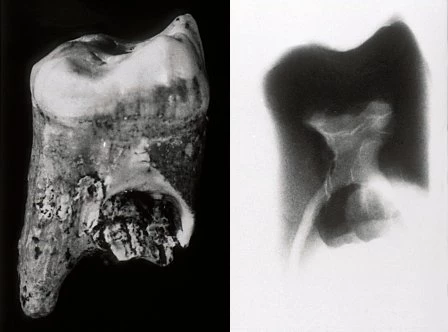
Early Neanderthal tooth (left), and X-ray (right). The X-ray show the enlarged pulp cavity that has helped archaeologists to identify the Pontnewydd teeth as belonging to Neanderthals.

Pontnewydd Cave, home to Neanderthal Man in Wales

Pontnewydd Cave was excavated by Amgueddfa Cymru between 1978 and 1995. The wall that can be seen across the entrance to the cave was built during the Second World War, at which time Pontnewydd Cave served as a munitions store.

Pontnewydd Cave

Excavations at Pontnewydd Cave, Denbighshire have discovered the oldest human remains known from Wales dating back some 230,000 years.

Excavations at the cave by Amgueddfa Cymru between 1978 and 1995 unearthed a total of

19 teeth , discovered found deep inside the cave. These have been identified by experts at the Natural History Museum, London as belonging to an early form of Neanderthal.

Neanderthals in Wales

Neanderthals are one branch of the human evolutionary tree that is thought to have died out approximately 36,000 years ago. Our own species shared a common ancestor with Neanderthals, but did not evolve from them.

Neanderthals were fairly short and stocky, had ridges under their eyebrows, big square jaws, and teeth that are larger than ours are today.

Study of the remains found at Pontnewydd found that these teeth represent the remains of at least five individuals.

Neanderthal Teeth

The teeth have all been x-rayed and they show an interesting characteristic known as taurodontism - an enlarged pulp cavity to the teeth and shorter roots. Taurodontism is a characteristic (although not unique) feature of Neanderthal teeth and it is one of the features that has led experts to decide that these are Neanderthal as opposed to another early human.

The people discovered in Pontnewydd Cave range in age from

young children to adults. The most complete discovery from the site is a fragment of an upper jaw of a child aged around nine years old. In the jaw a very heavily worn milk tooth can be seen sitting next to a newly erupted permanent molar.

Food remains

The teeth were not found on their own inside the cave. Alongside them were

stone tools and animal bones , some of which show signs of butchery - evidence that these were the food remains of these early Neanderthals.

Questions remain as to whether these humans were originally buried in graves within the cave. The cave has since been washed through by the melt water from the retreating ice sheets at the end of the last Ice Age. Unfortunately the forces that have remarkably led to the preservation of these teeth deep within Pontnewydd Cave destroyed any traces of their original burial context.

Background Reading

Ice Age hunters: neanderthals and early modern hunters in Wales by S. Green and E. Walker Published by the National Museum of Wales (1991).

In search of the neanderthals: solving the puzzle of human origins by C. Stringer and C. Gamble. Published by Thames and Hudson (1993).

Pontnewydd Cave: a lower Palaeolithic hominid site in Wales: the first report by H. S. Green. Published by the National Museum of Wales (1984).

Neanderthals in Wales: Pontnewydd and the Elwy Valley Caves edited by Stephen Aldhouse-Green, Rick Peterson and Elizabeth A. Walker. Published by National Museum Wales Books and Oxbow Books (2012).

Lost Landscapes: Beneath the Eisteddfod of 2012 is a sacred landscape

3 August 2012

sketch from Cyril Fox archive notebooks

At the site of the National Eisteddfod of 2012, four thousand years ago, the people of the Vale buried selected members of their community.

Impressive and complex mound constructions marked the resting places of their (and our?) ancestors.

In the extreme winter of 1939-40 Sir Cyril Fox, Director of the National Museum, excavated these archaeological monuments. Around him bulldozers were already preparing the ground for the WWII airfield Llandow.

Sir Cyril Fox, Lady Fox and "half-a-dozen pick-and-shove men" explored the remains of the past.

That winter of 1939-40 was the coldest on record. The future looked very grim.

The items in this gallery are a selection of pages from Cyril Fox's own handwritten notebooks from these excavations.


The Stone Age tombs of south-east Wales

14 May 2007

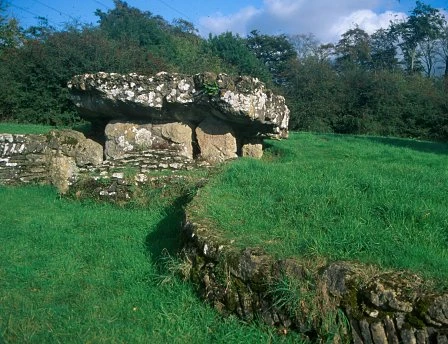
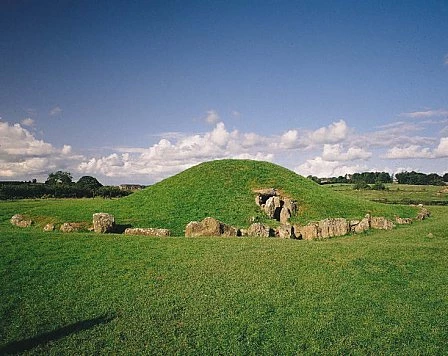
The forecourt and chamber of Tinkinswood (Vale of Glamorgan).

The forecourt and chamber of Tinkinswood (Vale of Glamorgan). Built in the Cotswold-Severn style, the chamber of this impressive monument can still be visited today. Image: Cadw (Crown Copyright).

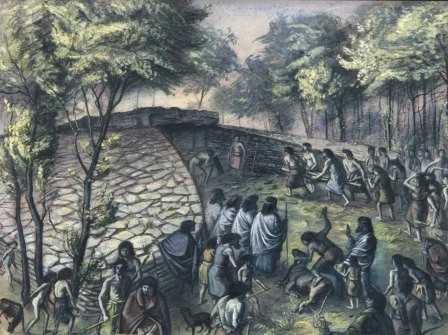
Imaginative reconstruction of a burial ceremony at Tinkinswood, by Alan Sorrell.

Imaginative reconstruction of a burial ceremony at Tinkinswood, by Alan Sorrell.

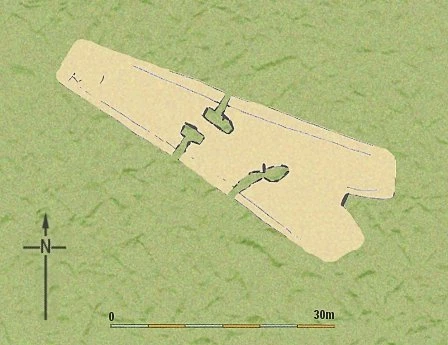
Ground plan of tomb at Gwernvale (Powys).

Ground plan of tomb at Gwernvale (Powys). This plan of the tomb is typical of the Cotswold-Severn type, although in this case the chambers are not accessed from the forecourt, but from the sides of the tomb.

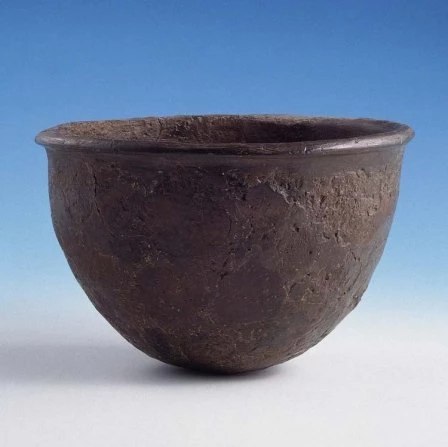
Bowl from Ty-Isaf (Powys). 24.6cm (9.8 inches) in diameter. Found in fragments, this simple bowl is more typical of the grave goods offered at this time.

Bowl from Ty-Isaf (Powys). 24.6cm (9.8 inches) in diameter. Found in fragments, this simple bowl is more typical of the grave goods offered at this time.

6,000 years ago small farming communities began to build tombs that continued to be used for hundreds of years - many survive to this day.

Stone Age tombs are relatively common in Wales. These 6,000 year old monuments consist of one or more chambers constructed from massive stones (megaliths). These were originally covered by a mound of earth or stones, although this rarely survives.

Many of these tombs were made to a common design, and in south-east Wales this often takes the form of mounds where the wider end points eastwards and opening to a forecourt. The internal chambers are accessed by short passages leading from the forecourt or the sides of the mound.

This design also appears throughout the Cotswolds (England), and beside the River Severn giving rise to the archaeological name Cotswold-Severn tombs.

Excavation at Cotswold-Severn tombs such as Gwernvale (Powys) have shown that they were sometimes built over earlier settlements, suggesting it was important that the dead be buried on land once occupied by the living.

At Pipton and Ty-Isaf (both in Powys) archaeologists have also discovered that some tombs were built in stages, often with a smaller monument being incorporated into a larger design.

The end product can be massive, for example Penywyrlod, Talgarth (Powys). It is likely that these grand houses for the dead were intended to stake a claim to a territory, emphasising to passers-by that the land was taken.

Once built Cotswold-Severn tombs were used for generations. For example, bodies were interred at Parc le Breos Cwm (Gower) for over five hundred years. This site gives us a glimpse of the burial rituals at these tombs, with some bodies apparently having been kept outside the tomb until they had partially decomposed - a practice which sounds gruesome today, but appears to have been a common part of the burial rite at this time.

When abandoned Cotswold-Severn tombs often held the remains of a large number of people. At Parc le Breos Cwm archaeologists found more than 40 bodies, while at Ty-Isaf and Tinkinswood (Vale of Glamorgan) over 30 and 50 were found respectively.

The fragmentary nature of these bodies suggests that it was not the individual burial that was important to the tomb builders, but the creation of an ancestral bone pile.

Few grave goods are found in these tombs, at most a few broken pots and a handful of flint tools. It is likely that what ceremony occurred to honour the dead took place outside of the chambers.

Together, the bones, grave goods and the tombs themselves provide one of the main sources of information about life and death in south-east Wales during this remote period.

Background Reading

The Tomb Builders: In Wales 4000-3000BC by Steve Burrow. National Museum Wales Books (2006)

The megalithic chambered tombs of the Cotswold-Severn region by T. C. Darvill. Vorda Publications (1982).

The burial tombs of Stone Age Wales

14 May 2007

Common Culture

Bryn Celli Ddu

Bryn Celli Ddu (Anglesey) is one of the best preserved passage tombs in Wales. Image: Cadw (Crown copyright).

5,500 years ago a common culture spread around the Atlantic coast of Europe linking Brittany, Cornwall, Wales, southern Scotland and Ireland.

Today, evidence of this culture survives in the form of passage tombs - circular burial mounds pierced by stone-lined passages that open into central chambers.

Stone Age Crematoriums

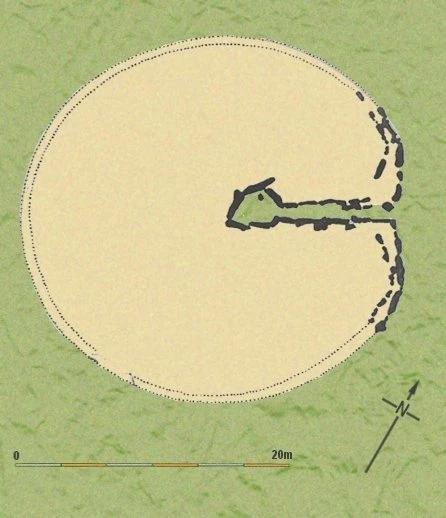
Plan of Bryn Celli Ddu showing the passage way leading into the centre of the circular mound.

Plan of Bryn Celli Ddu showing the passage way leading into the centre of the circular mound.

These tombs were built by early farming communities to house the cremated remains of their dead and were used for generations. They must have been important landmarks that linked the living with their ancestors.

Within Wales, passage tombs are best seen on Anglesey where two important examples are sufficiently well-preserved to allow public access - Barclodiad y Gawres and Bryn Celli Ddu.

Barclodiad y Gawres ('the apronful of the giantess') was built with a main chamber flanked by three side-chambers in which the dead would have been placed. In the centre of the main chamber was a hearth from which a fire would have illuminated the tomb during rituals.

Witches brew and spiral artwork

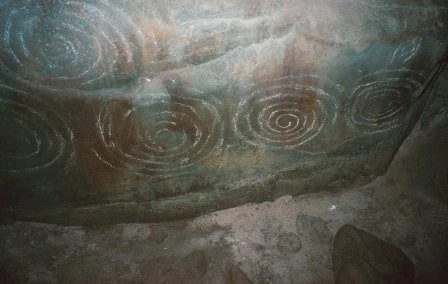
Carved stone inside the chamber of Barclodiad y Gawres (Anglesey). The style of carving in this passage tomb is common to many tombs in Ireland.

Carved stone inside the chamber of Barclodiad y Gawres (Anglesey). The style of carving in this passage tomb is common to many tombs in Ireland.

To the surprise of the archaeologists excavating the site, the hearth contained a strange mix of reptile, fish and amphibian bones. While the reason for this 'witches brew' will never be known, one important insight into the culture of these tomb builders is the strange artwork that is pecked into the rocks that line the passage and chamber. These designs include spirals and strange meandering zig-zag patterns.

On their own they might be dismissed as a whim of the builders, but this type of design is also found within other passage tombs as far afield as Ireland and Brittany.

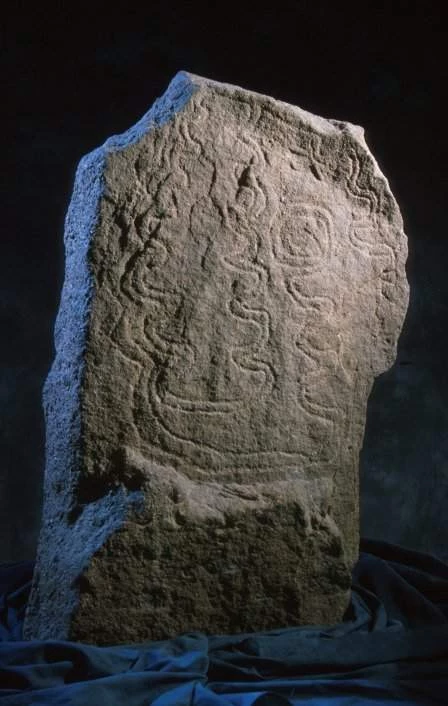
A similarly patterned stone was found at Bryn Celli Ddu (Anglesey). However, here the stone was discovered lying face down in a pit beneath the tomb's chamber where it must have been buried before tomb building began. Was it buried in order to sanctify the site, or was it buried to hide it away? - another unanswered mystery.

The passage tombs on Anglesey are not the only ones in Wales. Other examples are known from Gwynedd and Pembrokeshire, although these are less well-preserved.

Grand ambitions

Decorated stone

Decorated stone found beneath Bryn Celli Ddu (Anglesey). 1.5m (4.9 feet) high. The swirling patterns on this stone are typical of passage tomb art.

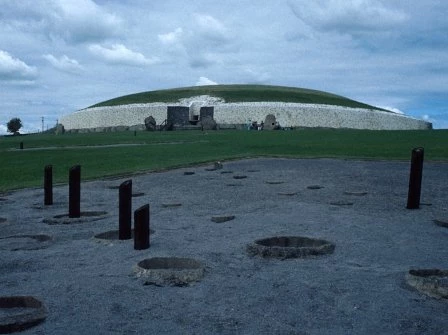
The largest and most complex passage tombs occur in Ireland. The tombs at Newgrange and Knowth show how grand the ambitions of the tomb builders could be.

At Knowth the central tomb is accompanied by a cemetery of at least 18 smaller examples, while at Newgrange skilled engineers precisely aligned the passage way with the mid-winter sunrise.

In all of the areas where passage tombs appear they are built to slightly different designs, but there is sufficient similarity between them all to indicate that the Irish Sea was a thriving highway at the end of the Stone Age, with communities from Brittany to Scotland sharing both ideas and ways of respecting the dead.

Background Reading

Newgrange, Co. Meath (Ireland), with pit circle in foreground.

Newgrange, Co. Meath (Ireland), with pit circle in foreground. The reconstructed passage tomb at Newgrange is one of several massive tombs in the Boyne Valley. Image © Steve Burrow.

The Tomb Builders: In Wales 4000-3000BC by Steve Burrow. National Museum Wales Books (2006)

Barclodiad y Gawres: the excavation of a megalithic chamber tomb in Anglesey, 1952-1953 by T. G. E. Powell and G. E. Daniel. Liverpool University Press (1956).

Irish Passage Graves: Neolithic tomb builders in Ireland and Britain 2500BC by M. Herity. Dublin University Press (1974).

'The chambered cairn of Bryn Celli Ddu' by W. J. Hemp. In Archaeologia Cambrensis vol. 86, p216-58 (1931).