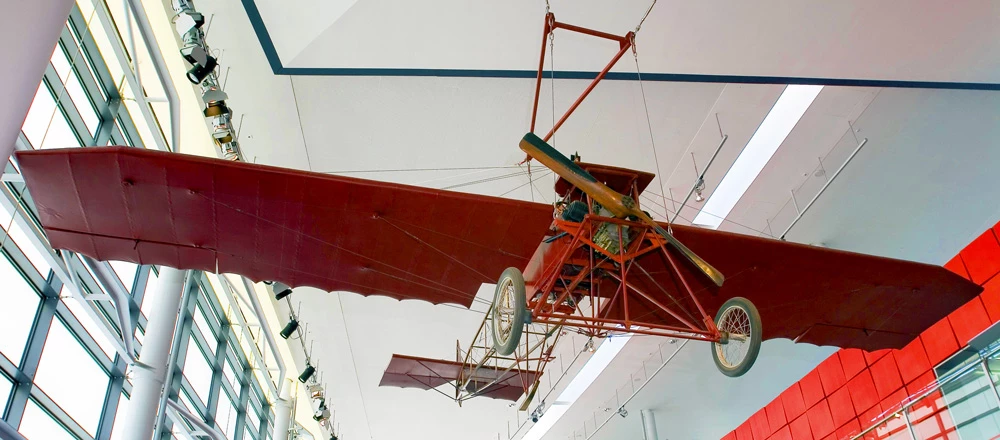
Wheels in Wales Ian Smith, 17 September 2019 When you come into the National Waterfront Museum, Swansea, there are usually around 2,000 artefacts for you to see, but this makes up only small fraction of our collection! Even though we refresh parts of the museum periodically there are many objects which never make it to the display stage. Why do you collect them then? I hear you ask. There are many reasons why something might not be on display. Curators collect things that are important to our heritage and very often these things are in poor condition, so an artefact might need a lot of expensive conservation work before it can be presented to the public. When we collect objects our first priority is to preserve them and stop any deterioration to their condition. Restoration for exhibitions or display takes a back seat until finance can be found for projects – especially large objects like cars and buses. In the Industry Collection of the National Museum of Wales there are many different forms of transport and each one has to have a strong connection to Wales – by manufacture, inventor or usage. The ones not on display are kept at Nantgarw, near Cardiff, until their turn comes. From helicopters to horse-drawn hearses and electric cars to steam rollers, the National Collection Centre in Nantgarw sometimes resembles a child’s toy box – but on a grand scale! Delicate objects are stored in acid-free boxes or specially made crates, but how do you store a bus or helicopter? Of course they can’t be kept in boxes, but are lined up like a supermarket car park and are arranged quite randomly as size and shape dictate. There is access to the stores for group visits by appointment, where you will see that some of the vehicles look quite dilapidated whilst they await the magic touch of our conservation team. Meanwhile, back at the National Waterfront Museum in Swansea one can still see quite a variety of transportation and in our Networks Gallery is the story of transport links in Wales. This gallery has a host of models of vehicles of all kinds and large digital displays of how the transport networks have grown – from sheep drovers’ pathways to the M4. Just outside ‘Networks’ can be found a ‘sociable tricycle’ from the 1880s and a Benz ‘Duc’ motorcar first registered in Monmouthshire in 1904. The sociable was exactly that with a side-by-side arrangement of seats and was a special favourite of courting couples! The Benz was owned by a Dr Cropper of Chepstow who kept it until 1910 when he donated it to the Science Museum. It was taken into the care of the National Museum of Wales in 1911 and once fully restored took part in a number of London-to-Brighton rallies. Hanging overhead is one of the star attractions of the museum. The ‘Robin Goch’ or ‘Red Robin’ has a strong claim to be the first aeroplane to fly in Wales. It was built by Charles Horace Watkins, an amateur airman, around 1908. I has a wooden structure braced with piano wire. The cockpit looks distinctly home-made, including a kitchen chair for the pilot’s seat and simple household objects for instruments. Indeed, Charles navigated by using an egg timer – he would turn the timer over, fly straight ahead until the sand ran out then turn 90 degrees and fly ahead again and repeat the turn twice more so that he ended up back where he started! To help him judge his height when landing two pieces of weighted string one 20’ and one 10’ long were hung on the underside so when the first weight touched ground he knew he was at 20’ and when the second at 10’. Not everything in this section is over one hundred years old. You’ll find two examples of the Sinclair C5, one for display and one for use by the public to sit in and get the feel for it. On high days and holidays (and weather permitting) this model is used in our garden and any visitor can try it out. The C5 is pedal-powered with battery backup for hills or if the driver became tired. With a top speed of around 15 mph the C5 was produced secretly in 1985 at the Merthyr Hoover factory. It was so secret that a tunnel was built under the road between the factories to keep prying eyes from discovering the design. Different component manufacturers only saw their plans, not the whole car. It was launched with wide public expectation but proved a flop as it was deemed too small to be safely driven in heavy traffic. A brilliant concept and years ahead of its time, it might yet make a comeback one day when cycle paths are more widespread We have many vehicles brought in for temporary exhibitions and displays. In recent years these have included a caravan and a number of boats and quite a few concept electric vehicles, but one of my favourite vehicles is actually a child’s toy car. In our ‘Made in Wales’ Gallery is the Austin J40, a blue pedal car made in Bargoed in 1959. In 1947 Parliament passed an act that recognised that many miners who were suffering from pneumoconiosis (coal dust in the lungs) could no longer work underground. So it was proposed that new factories be set up to provide lighter cleaner work to employ these men. The Austin factory at Bargoed was just one of these. The factory, which opened in 1949, stopped making the little cars in 1971 but between those dates about 36,700 were produced! All the museums in the Amgueddfa Cymru – National Museum Wales family have free entry. Visiting to the National Collections Centre in Nantgarw is by appointment only; contact them on (029) 2057 3560 for availability.
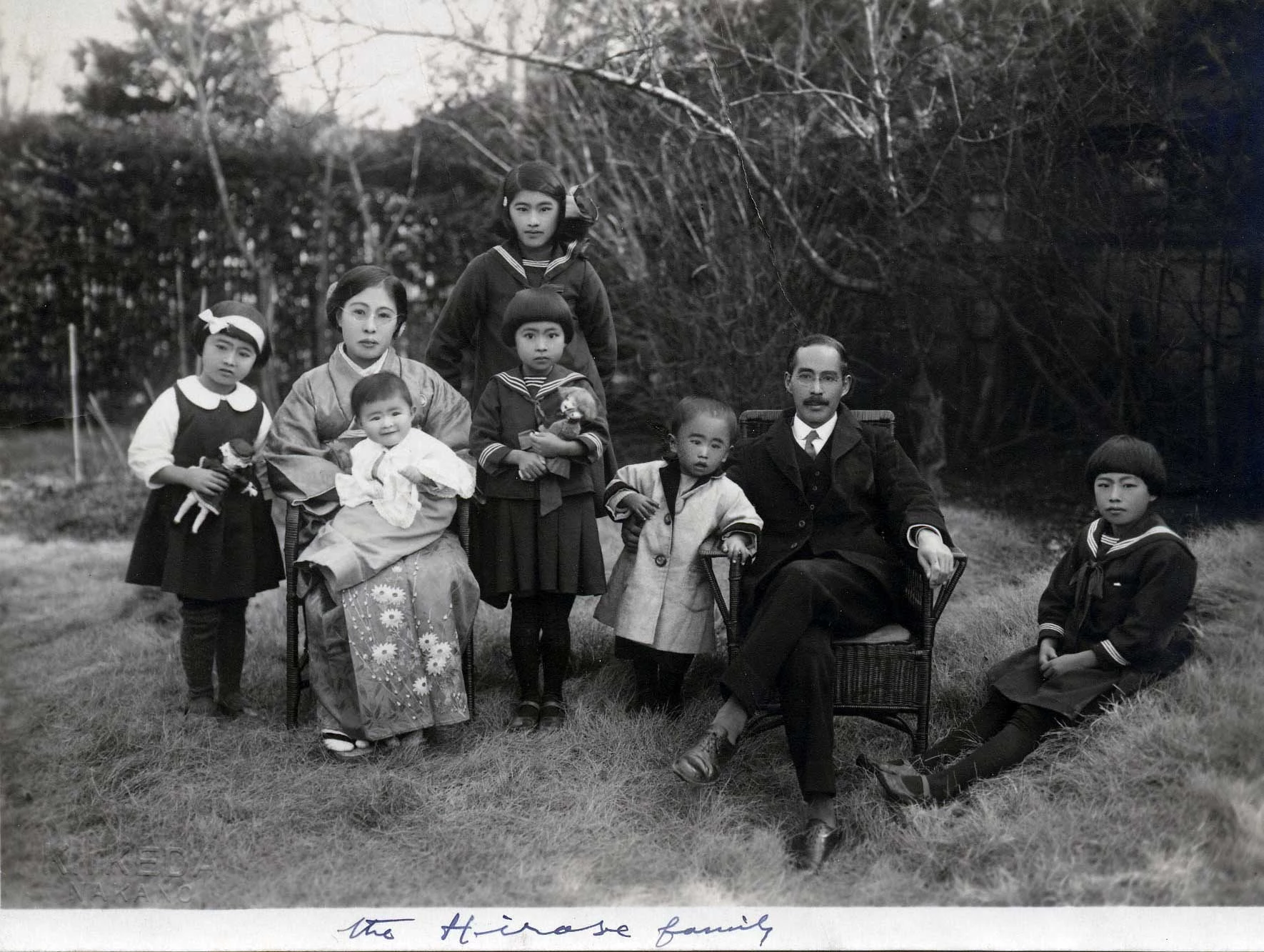
One thousand kinds of shells existing in Japan Kristine Chapman, 7 September 2018 The Hirase Conchological Museum Shintaro Hirase and family, September 1931. The Library holds a set of beautiful Japanese shell books in its Mollusca collection. The book is Kai Chigusa, but is more commonly known as Kai sen shu (or The Illustrations of a Thousand Shells in English) by Yoichirō Hirase (1859–1925), and was produced from 1914-1922. Hirase was a Japanese conchologist who assembled the largest collection of shells in Japan at the turn of the century, and established his own shell museum (the Hirase Conchological Museum) in Kyoto from 1913 to 1919. His son Shintarō Hirase (1884–1939) was also a Japanese malacologist, who taught at Seikei College. The book is comprised of four volumes, and each volume is an ‘orihon’ folding book. Orihon is a traditional bookmaking technique that consists of a long strip of paper that is written on one side and then compacted by folding in zig-zag, or concertina, fashion. The style originated in China, but was later developed in Japan, where it is primarily associated with Buddhist works or picture books. Each of the four volumes has roughly 100 illustrations of shells, resulting in 400 illustrations in total. There is a theory that Hirase originally planned to produce 10 volumes, each with 100 illustrations, and that would have resulted in the ‘One Thousand Shells’ of the English title. All the illustrations are hand-coloured woodcuts, Hirase chose this technique, rather than the more common lithography of the time, because he wanted the work to be of interest to artists. The text is kept quite minimal, as they are predominantly picture books, but the preface is in Japanese, and the plate lists are bilingual, in Japanese and English. The first three volumes are quite rare, volume one was commissioned in 1914 to commemorate the first anniversary of his Conchological Museum. Volumes two and three were produced a year later in 1915. Then there was a delay in the production of volume four, and it was not issued until 1922. Copies of volume four are now very rare, and it is believed by many that it was not produced in as many numbers as the first three. The Hirase Conchological Museum However, we don’t know exactly when our copy of Kai Chigusa was published. It was produced by leading Kyoto art publisher Unsodo, who carried on printing it after Hirase’s death, right up until the mid-1930s. The publishers never indicated which edition was which, each volume carries the date of its original publication, so it is impossible to know when each of the four volumes were actually printed! Hirase suffered poor health and severe financial strain in the final years of his life, which might explain why he was unable to complete the remaining volumes. His Conchological Museum closed down in 1919, and the shell collections were dispersed. A number went to the Smithsonian in 1921, many more went to what is now the Natural Science Museum in Tokyo, and the remainder were given to his son Shintarō. Years later, Shintarō’s collection went to the Research Institute for Natural Resources in Tokyo. Some of it was destroyed during World War II, but what remains of the collection is still stored there. We purchased this copy of Kai Chigusa from Antiquariaat Junk in 1999 to add to our Tomlin Library. Hirase communicated with many key shell collectors, including John Read le Brockton Tomlin, and the Tomlin archive contains a number of letters, postcards and photos from him. Although Tomlin didn't own a copy of Kai Chigusa himself, he did have a number of other books in his collection relating to Hirase, such as an album of pictures in commemoration of a Conchological Exhibition in Kyoto Library in 1910. The exhibition was organised by Hirase, and included shells, books, illustrations and paintings from both his own collections, and that of collectors around the world. It was a precursor to his setting up his own Museum in 1913, and Tomlin’s copy of the album also contains two line drawings of the proposed museum.
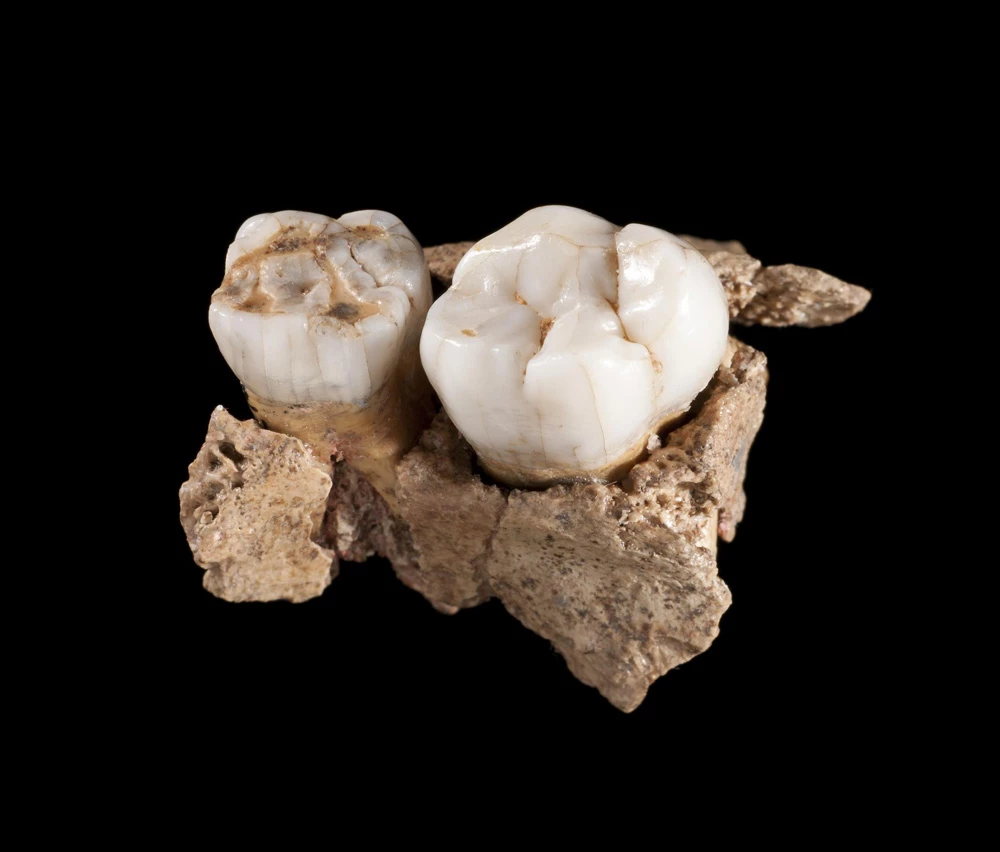
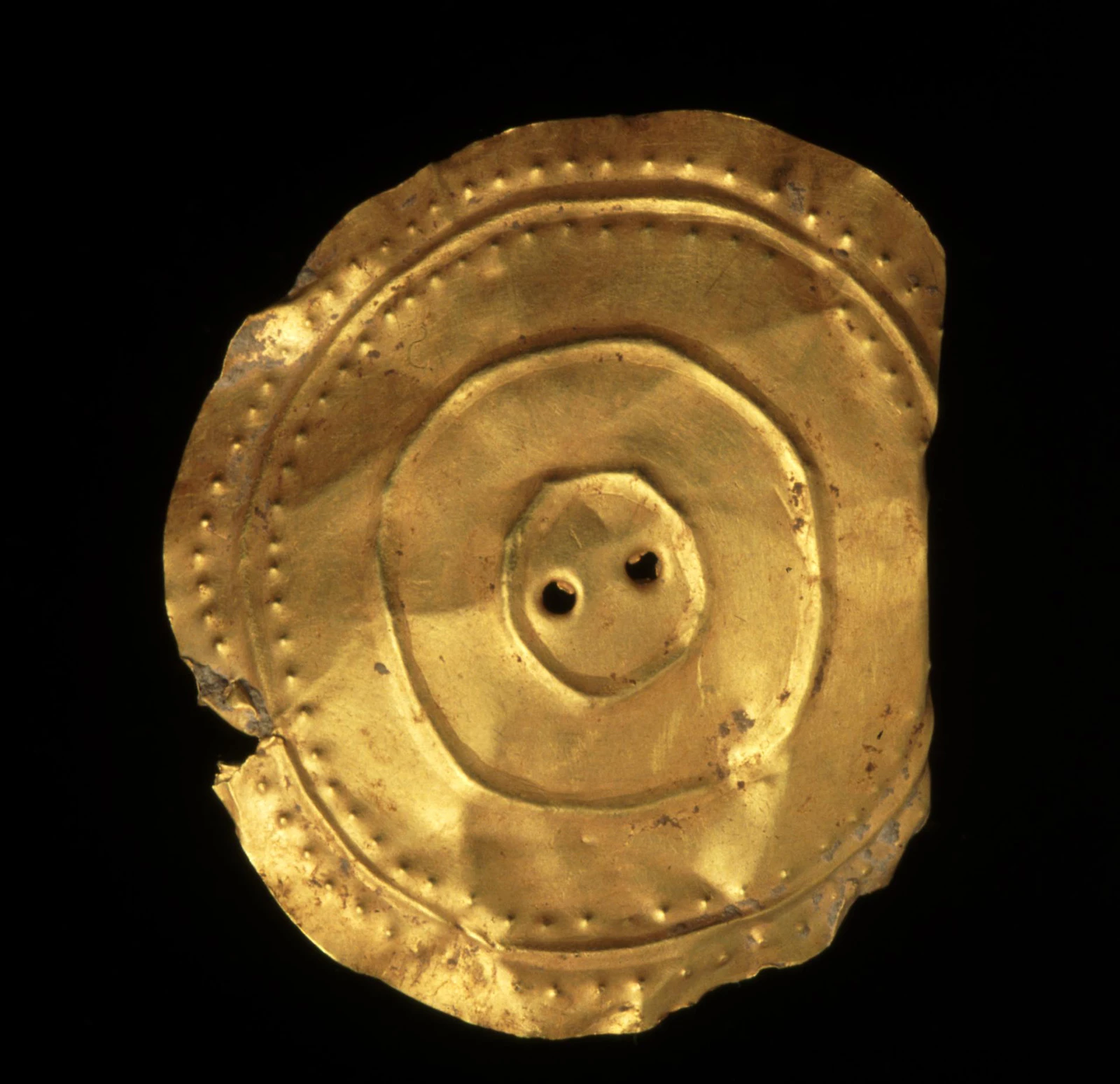
Uncovering our Collections: Half a Million Records now Online 26 March 2018 As we reveal half a million collection records for the first time, we look at some of the strangest and most fascinating objects from National Museum Wales Collections Online. This article contains photos of human skeletal fragments. The Biggest We have some real whoppers in our collections - including a full-size Cardiff Tram and a sea rescue helicopter - but the biggest item in our collection is actually Oakdale Workmen's Institute. Built in 1917, the Institute features a billiard room, dance hall and library - and is nowadays found in St Fagans National Museum of History. Horace Watkins testing his monoplane in 1908 Many of the buildings in St Fagans are part of the national collection - meaning they have the same legal status as one of our masterpiece Monets or this coin hoard. The buildings are dismantled, moved, rebuilt - and cared for using traditional techniques, by the museum's legendary Historic Buildings Unit. The Oldest The oldest human remains ever discovered in Wales These teeth belonged to an eight year-old Neanderthal boy - and at 230,000 years old, they are the oldest human remains in Wales. They were discovered in a cave near Cefn Meiriadog in Denbighshire, along with a trove of other prehistoric finds, including stone tools and the remains of a bear, a lion, a leopard and a rhinocerous tooth. These teeth are among some of the incredible objects on display at St Fagans National Museum of History The Shiniest People in Wales have been making, trading and wearing beautiful treasures from gold for thousands of years - like this Bronze Age hair ornament and this extremely blingy Medieval signet. At around 4000 years old, this sun disc is one of the earliest and rarest examples of Welsh bling One of the earliest examples of Welsh bling is this so-called 'sun disc', found near Cwmystwyth in Ceredigion. Current research suggests that these 'sun discs' were part of ancient funeral practice, most likely sewn onto the clothes of the dead before their funerals. Only six have ever been found in the UK. Most Controversial At first glance, an ordinary Chapel tea service - used by congregations as they enjoyed a 'paned o de' after a service. A closer look reveals the words - 'Capel Celyn'. The chapel, its graveyard and surrounding village are now under water. Capel Celyn, in the Tryweryn Valley, is now underwater Flooded in 1965 by the Liverpool Corporation, the Tryweryn valley became a flashpoint for Welsh political activism - creating a new generation of campaigners who pushed for change in how Welsh communities were treated by government and corporations. Curators from St Fagans collected these as an example of life in Capel Celyn - to serve as a poignant reminder of a displaced community, and to commemorate one of the most politically charged moments of the 20th century in Wales. Honourable Mention: an Airplane made from a Dining Room Chair Made from a dining room chair, piano wire and a 40 horsepower engine, the Robin Goch (Red Robin) was built in 1909 - and also features a fuel gauge made from an egg timer. The Robin Goch (Red Robin) on display at the National Waterfront Museum Its builder, Horace Watkins, was the son of a Cardiff printer - here he is pictured with an earlier, even more rickety version of his famous monoplane. Horace Watkins testing his monoplane in 1908 Our collections are full of stories which reflect Wales' unique character and history. The Robin Goch is one of the treasures of the collection, and is an example of Welsh ingenuity at its best. Half a Million Searchable Items The launch of Collections Online uncovers half a million records, which are now searchable online for the first time. “Collections Online represents a huge milestone in our work, to bring more of our collections online and to reach the widest possible audience. It’s also just the beginning. It’s exciting to think how people in Wales and beyond will explore these objects, form connections, build stories around them, and add to our store of knowledge." – Chris Owen, Web Manager Search Collections Online Plans for the future Our next project will be to work through these 500,000 records, adding information and images as we go. We'll be measuring how people use the collections, to see which objects provoke debate or are popular with our visitors. That way, we can work out what items to photograph next, or which items to consider for display in our seven national museums. Preparing and photographing the collections can take time, as some items are very fragile and sensitive to light. If you would like to support us as we bring the nation's collections online, please donate today - every donation counts. Donate Today We are incredibly grateful to the People's Postcode Lottery for their support in making this collection available online.
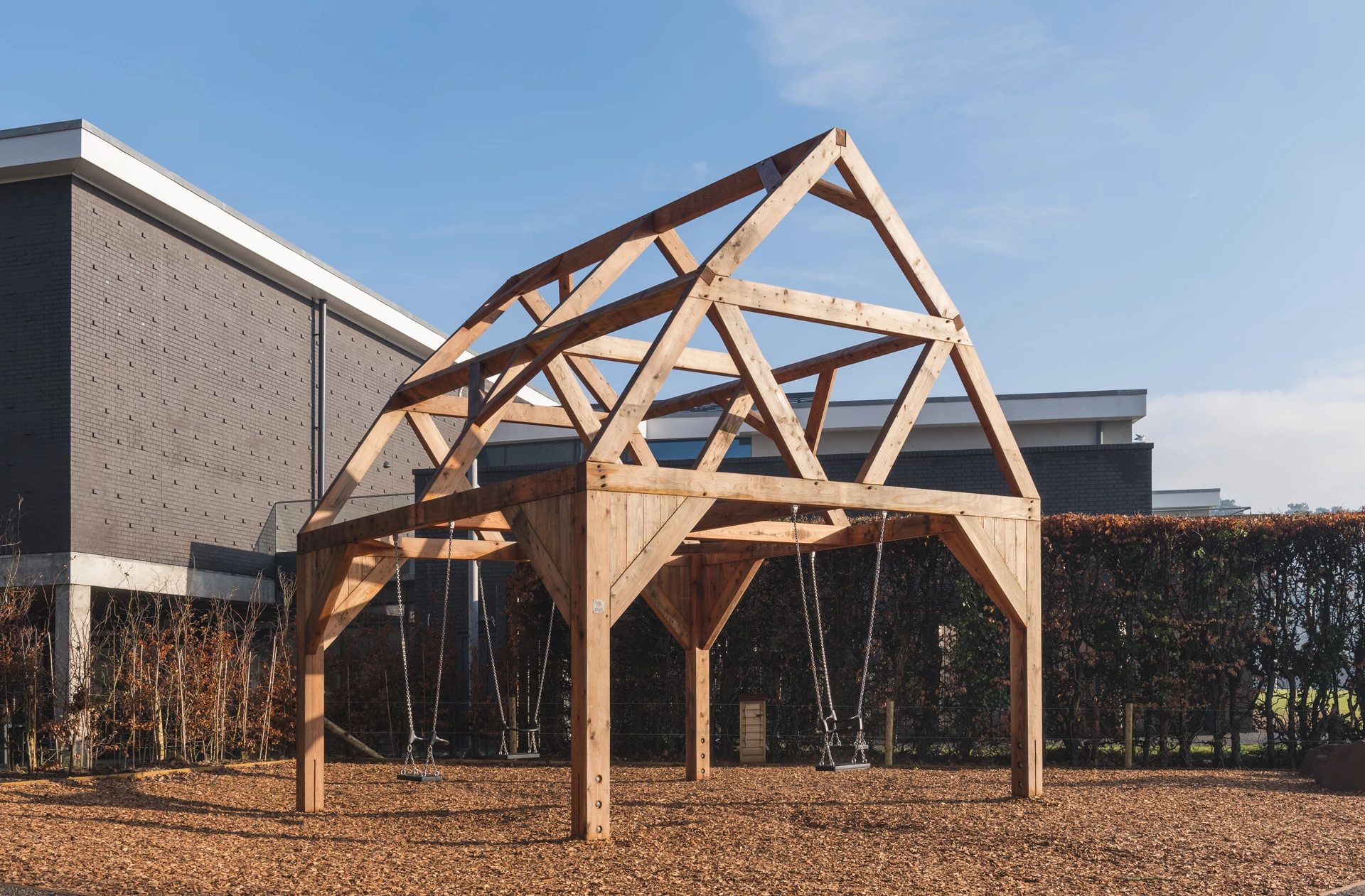
The Artists in Residence programme at St Fagans Sian Lile-Pastore, 20 July 2017 History, Art and Play St Fagans National Museum of History is renowned for its historic installations - from a medieval church to a tailor's shop, bakehouse and terraced houses . The museum has long been an inspiration to artists, who have used and responded to the museum site, its collections and archives over the years. Recently, we have created more opportunities for artists to use the museum in innovative ways, through an Artists in Residence programme. Thanks to the generous support of the Heritage Lottery Fund in Wales and the Arts Council of Wales, the Artist in Residency programme provides opportunities for artists to develop their work, as well as developing new experiences for visitors - such as the children's play area, by the artist Nils Norman. Detail from Yr Iard, an artist-led play area at St Fagans For 2017 and 2018 we are really excited to be working with Owen Griffiths, Sean Edwards with research support from Louise Hobson. Their brief is to investigate how visitors navigate the museum site. Artists in Residence at St Fagans Nils Norman, 2015-16 As part of the redevelopment of St Fagans National Museum of History , there was a need for new play area. We wanted the play area to be unique and bespoke to the site and to encourage creative play. We invited the artist Nils Norman to spend time at the museum as a resident artist and to create a design for the new play area as well as some ideas for creative play around the site. Nils is a London based artist who has worked on numerous projects dealing with play and urban design, he is the author of four publications and is also a Professor at the Royal Danish Academy of Art and Design, Copenhagen, Denmark where he leads the School of Walls and Space. See more of Nils' work. Birdscreens - Nils Norman Imogen Higgins “Being on a residency at St Fagans has enabled me the freedom to explore the potential of community arts independently. This freedom has allowed me to expand on ideas that play to my strengths and interests. Additionally, it has given me the chance to work in a more focused way and to a specific brief. I have also had to experiment with creative ways of gathering information, which I am sure will be a great advantage in my career as a community artist.” Imogen Higgins is a recent ceramics graduate based in Cardiff was is interested in community arts and engagement and her task was to work with local groups to feed into the design of the playground. Imogen began her workshops by looking at patterns in the collections and on site, investigating patchwork quilts, medieval tiles and the paving patterns in the Italian garden and also researched play grounds and creative play around Cardiff. She worked with two local groups as part of the project – students from Woodlands High School and parents and children from Ysgol Gynradd Hywel Dda. You can read more on Imogen's project blog. Workshop - Imogen Higgins Fern Thomas “Over recent years my practice has increasingly explored historical narratives, documents and archives. I am drawn to exploring lost objects, hidden narratives or knowledge, and imagining the layers of history one place can offer. I was therefore very excited about the potential of this residency, with the specific opportunity to explore the archives of St Fagans.” Fern Thomas is a Swansea-based artist whose work is rooted in research and she is also interested in folklore and folk magic. Her remit was to undertake research for the play area and information about her research and work can be foundFern's website. “The residency itself has been key in helping me shape new territory within my practice, helping me clarify my interest in archives and Welsh history, which I intend to take further into future works and research.” Fern Thomas Melissa Appleton “I set out to sample the site and to create a palette of fragments - a space of collisions – between the domestic, the spiritual, the everyday, the otherworldly. Gathering structures, plants, windows, patterns, objects, rocks, tools and doorways, I planned to rework these into a shifted, yet familiar, landscape. In essence, I set out to evolve a parallel St Fagans, with one foot in this world and one in another.” (interview with CCQ, 2015) Melissa Appleton's work usually manifests outside of the gallery walls and combines constructed environments, live events, sound and other materials into an expanded form of sculpture. During her residency in 2015 Melissa worked with the site close-up and at a distance, collaborating with Mighty Sky (Swansea) to film the site using a drone and Cardiff Met to map parts of the site using a 3D scanner. As a result of this and interviews with museum staff, Melissa gathered a palette of elements that included a man on beach conjuring mackerel through song; a triskelion (an ancient symbol depicting three hares with ears intertwined); a triple harp; window frames made from recycled aircrafts; a figure of death scratched into a headpost and the ghost of a naked coracle man furiously paddling across a river. Melissa plotted an apocryphal masterplan for the museum, drawing on St Fagans' evolution which has been shaped by desires and dreams of different curators and staff over the last fifty years. As the residency progressed Melissa became interested in the ‘listening studio and laboratory’ (the recording studio and sound/video archive) which inhabited the edge of the museum redevelopment (underway at the time), seemingly unchanged since the 1960’s – caught between the awaited future expansion and the present day. Melissa is now working with Bedwyr Williams (also artist-in-residence in 2015) on a speculative project to tour the sound and video archive across Wales in a vehicle which reimagines the curator's original caravan. Melissa Appleton James Parkinson “I set out to look into the architectural histories of the Museum and the process of recording, relocating, and rebuilding. I wanted to explore areas across the site where fragments of original and replicated elements had been fused to produce a believable whole. I was interested in how this process is central to the museum’s creation and continual development but also challenges the notion of the historic monument being fixed and immobile.” James Parkinson is a Bristol based artist whose work uses processes of material translation to re-code notions of space, object, and body. During the residency James spent the majority of his time with Museum conservators and staff from the Historic Buildings Unit. Since completing the residency, James has continued to work and develop ideas informed by his time at St Fagans. “During the residency I was able to develop a series of texts by transcribing interviews I conducted with conservators who describe techniques used to excavate a series of wall paintings. I am interested in recirculating the conditions of artefact and monuments in the museum’s collection through writing, and tracking the effect of this process of translation. Allowing these voices into my practice is a substantial moment and going forward I’m really excited at the possibilities of bringing these texts into proximity with other areas of my work.” More about the artist's work: James Parkinson Around Anything, 2015, James Parkinson That's the Original - James Parkinson Claire Prosser Claire Prosser is a visual artist, writer and performer. During her residency at St Fagans she worked with museum attendants, craftspeople, gardeners and cleaners to look at the small, every day, repetitive, subconscious movements that people make as part of their jobs – the way the museum attendants use their hands to turn the key in the locks of the historic buildings, the movements the clog maker uses as he sews or cuts leather. At the end of the residency Claire ‘scored’ a performance entitled ‘If Movement was an Object’ that was then performed for the public by herself and Expressions Dance Company. “When I was spending time with these members of staff, I realised that what I was more interested in was not necessarily the technical movements and skilled work, but the necessary, subconscious, idiosyncratic movements that each person would adopt. [….]These movements, are human, necessary and ordinary. They happen because of the time spent in the space, they happen because over time people naturally become familiar with a space. They are of the person that is there in that location, at that time every single day. These people are just as part of the space as the space is a part of them. What happens if these movements are taken elsewhere? Do they fit? Just like an object that fits in a certain space, can a movement be moved and refit?” Claire Prosser Claire Prosser Bedwyr Williams Bedwyr Williams Bedwyr Williams represented Wales in the Venice Biennale in 2015 and is currently one of the shortlisted artists for Artes Mundi. During his residency at St Fagans, Bedwyr spent a lot of his time in the sound archives as well as walking around the site filming and taking photographs. He is still considering ways to use his research in his work, but did make a short film whilst at St Fagans, which has since been exhibited as part of his show at the Whitworth in Manchester. Since presenting his work at Artes Mundi 2016, Bedwyr was awarded the The Derek Williams Trust Prize, and through the Trust's generosity, his work, 'Tyrrau Mawrion' is now part of the national collections. Read more about the St Fagans 'Making History' Redevelopment or browse the art collection of Amgueddfa Cymru - National Museum Wales.
Radical by Tradition: Cardiff and Contemporary Art 30 January 2017 The UK's largest international art prize, Artes Mundi, draws to a close this February in Cardiff. As we celebrate the announcement that video artist John Akomfrah has won this year's prize, for his work exploring 400 years of human migration: let's take a look back at Cardiff's long tradition of celebrating radical and thought-provoking art. The Davies Sisters - Collecting Light Gwendolene Davies and Mary Davies were two Methodist sisters who collected cutting-edge art at the beginning of the 20th century. The artworks they bought with their coal-boom wealth are now considered quite respectable: lillies by Monet, Venetian seascapes, open-air studies of the French middle class. It wasn't always so: in 1874, popular journalists described the Impressionists' method as: "Smear a panel with grey, plonk some black and yellow lines across it, and the enlightened few, the visionaries, exclaim: Isn't that ... perfect ..?". As some of the earliest UK patrons for the Impressionists, the sisters donated these works to the nation between 1951-63 - creating a huge boost for the national collection, displayed today in National Museum Cardiff. In addition to the Impressionists, you can now visit works by artists who, at the turn of the 20th century, responded to the impending crisis in Europe. Both Gwendoline and Mary opened the doors of their home to artists, such as those fleeing the German invasion of Belgium in 1914. The museum, in turn, collected works by David Jones, Paul Nash and many others who had taken part in campaigns during the two World Wars that were to follow. Charing Cross Bridge, Claude Monet, 1902 Wales Tomorrow - The Future of Art (in 1969) By the time the Impressionists had passed into quiet respectability, artists in the UK emerged from the post-war period eager to experiment with new ways of working - performances, happenings and pop art. Some of the earliest happenings in the UK took place in Swansea, under the care of young performance artist Ivor Davies - who, at 80, held a spectacular show at National Museum Cardiff last year. He also holds the unusual honour of being the first artist to use explosives in an artwork, as he often included film, fire and explosions in his work. The Reardon Smith Theatre at the Museum hosted the first even 'happening' in Wales, as well as intervenions by international artists. The legendary Yoko Ono didn't attend her performance piece in person, preferring instead to send a cardboard cutout of herslf to Cardiff, by taxi. National Museum Cardiff captured this new, rebellious spirit by embracing artists using new materials - such as inflatable vinyl, recycled waste and perspex - in its show 'Cymru Yfory', held in 1969. Artists were invited to imagine the 'Wales of Tomorrow' - a Wales with a bright future, booming industry and plenty of go-go boots. Visit Silent Explosion for rare images of @yokoono performing with #ivordavies in 1966 at DIAS #destructioninartpic.twitter.com/q17P0E3bmM — National Museum Art (@NatMuseumArt) November 25, 2015 A Home for Contemporary Art National Museum Cardiff's commitment to showing art from the 'here and now' continues: The Colwinston Gallery's exhibitions are varied and showcase the work of artists responding to the world around them today. It has recently been home to a golden, 12' high self-destructing loudspeaker; an installation of mosses grown in the museum's research herbarium; Welsh landscapes inspired by Allan Ginsberg's famous acid trip in the Welsh hills; and most recently, arresting contemporary portraits of people from Aberfan, taken by Shimon Attie to mark the anniversary of the disaster. Curators maintain the tradition of radical collecting and display, encouraging visitors to smash a ceramic display in 'Fragile?', and even joining in on the cowbell during Ivor Davies' playful performance art. Artes Mundi has played a part in keeping the museum's link to social activism alive. The competition bring artists from all over the world to Cardiff - and encourages us to view global issues through the eyes of contemporary practitioners. It is art that responds to the world around us, and asks questions about the 'status quo'. The national collection, displayed alongside, reminds us that even Monet's waterlilies was considered unusual, transgressive and rebellious, once. Hear more about free events and exhibitions at the museum by keeping in touch with their monthly newsletter. Through the duration of the show, friendly gallery guides will be available to make the show as accessible as possible - and this year, a brand new programme of events for adults will be held for free at National Museum Cardiff. Visit the show between 21 October and February 15th - and find out more about contemporary art near you through Arts Council Wales. You can see the Artes Mundi entries at National Museum Cardiff and Chapter Arts Centre. For the latest from Artes Mundi, sign up to receive their e-newsletter. Visitors breaking tiles in 'Fragile' at National Museum Cardiff