Great British Mollusca Types Project

Anna Holmes, 29 March 2018

Great British Mollusca Types Project: A union database for the UK

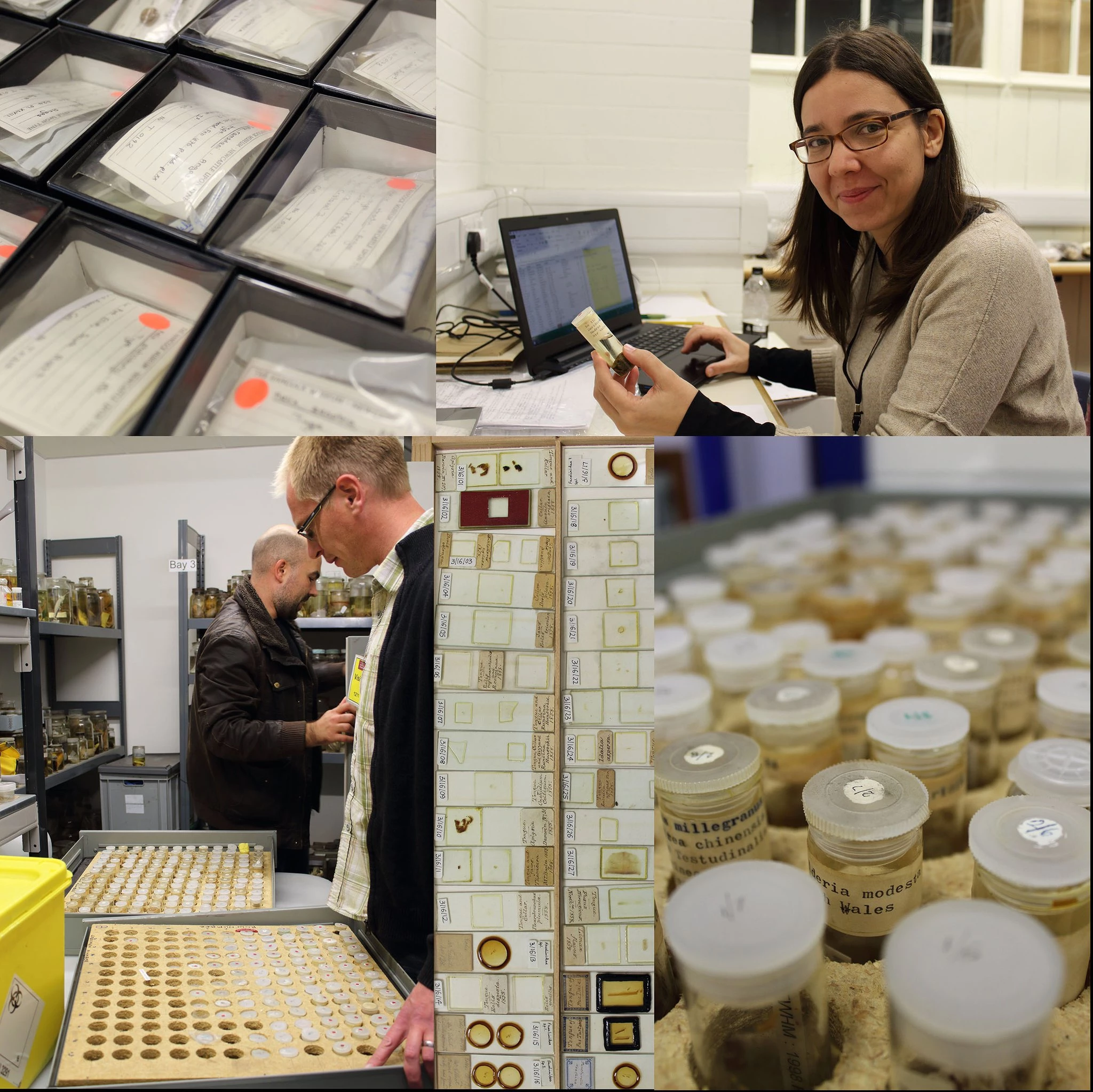
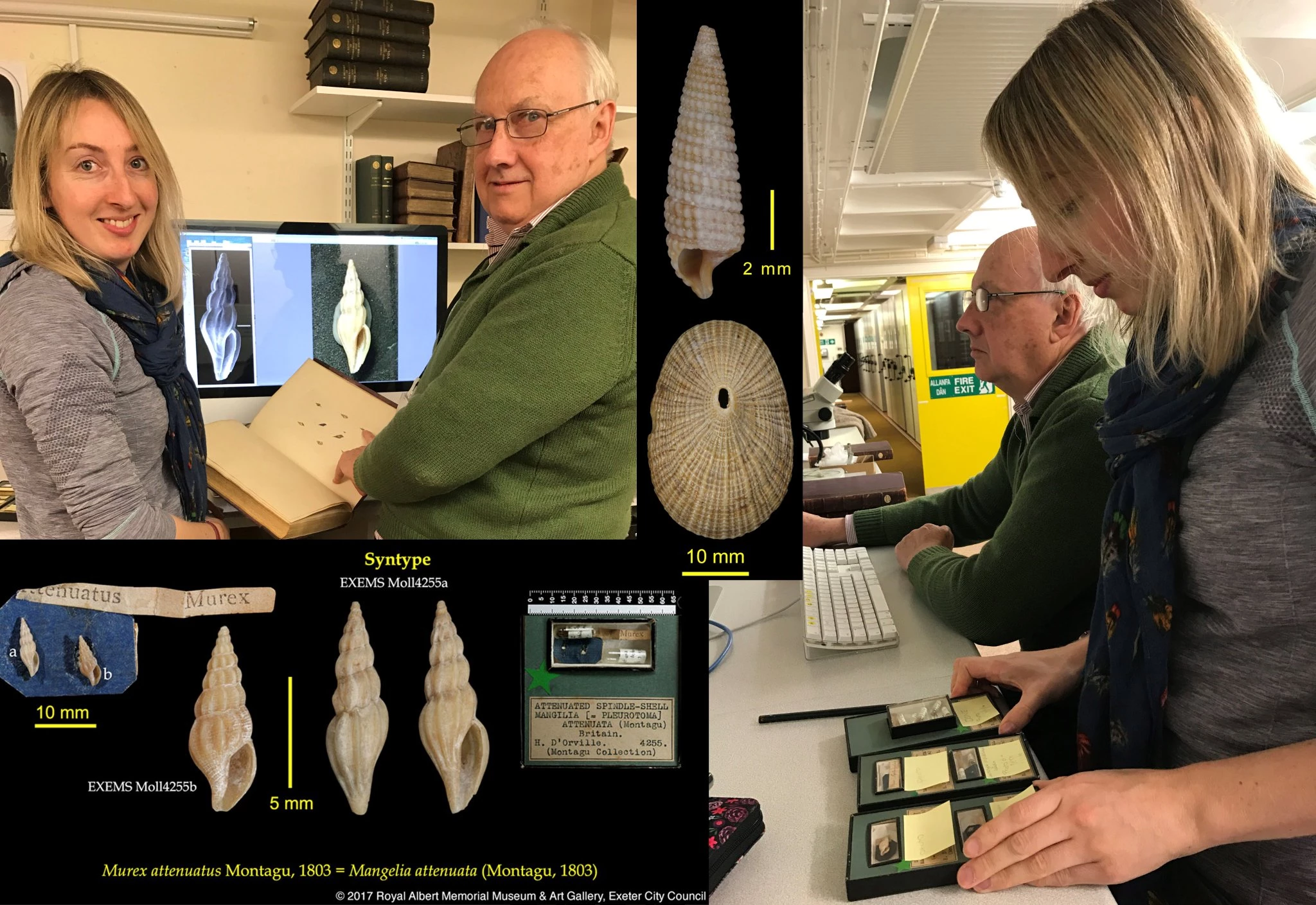
The GB types project began 2 years ago with 6 mollusc curators from National Museum Cardiff and Natural History Museum, London leading the way. The idea - to find, document and make available online as many mollusc types as possible in 7 Museums around the UK. The project funded by the John Ellerman Foundation (Regional Museums and Galleries Fund) worked with Glasgow Museums, Glasgow Hunterian, World Museum, Liverpool, Newcastle Museums, Leeds Museums, Machester Museum and the Royal Albert Memorial Museum. From October 2016, the process began of visiting the collections at each of the partner museums to locate known and potential mollusc type specimens. The specimens were loaned to National Museum Cardiff or the Natural History Museum for specialist photography, databasing and research. For the first time, data from these nine institutions will be recorded permanently on an internationally accessible online database: https://gbmolluscatypes.ac.uk/

Over 95 potential mollusc types were borrowed from LeedsMuseums, mostly from the extensive collection of Sylvanus C. T. Hanley. The collections contain many type figured and cited specimens of international importance.

Over 150 types were borrowed, researched and photographed from McrMuseum, many of these molluscs were named by Melvill and Standen at the end of the 19th Century.

Mollusc types in GMRCNitshill / GlasgowMuseums include 150 year-old types of Thomas Gray and Carl Westerlund. Thanks to Richard Sutcliffe, & former curator Fred Woodward for GB types work in the 1970s-1980s

Hancock, Alder and Angas collections dominate the GNM_Hancock Mollusca collections and the fluid-preserved nudibranchs proved tricky to photograph!

The mollusc collections at the hunterian are rich in historic material going back to Cook’s voyages, the Duchess of Portland and Laskey. They hold the infamous holotype of Gray’s Strombus listeri and several types of Godwin-Austen.

Over 100 of Col. George Montagu’s shell types were discovered at RAMMuseum. These as well as some found at NHM_London were presented in the following paper.

Marrat’s Olives and Nassas dominated the mollusc type material at World_Museum, easily found thanks to curator Nora McMillan who worked on the collection 1933-2000.

You can see more of the Twitter highlights following this project with the hash tag #GBMolluscaTypes or this Twitter Moment

Flower Records

Penny Dacey, 29 March 2018

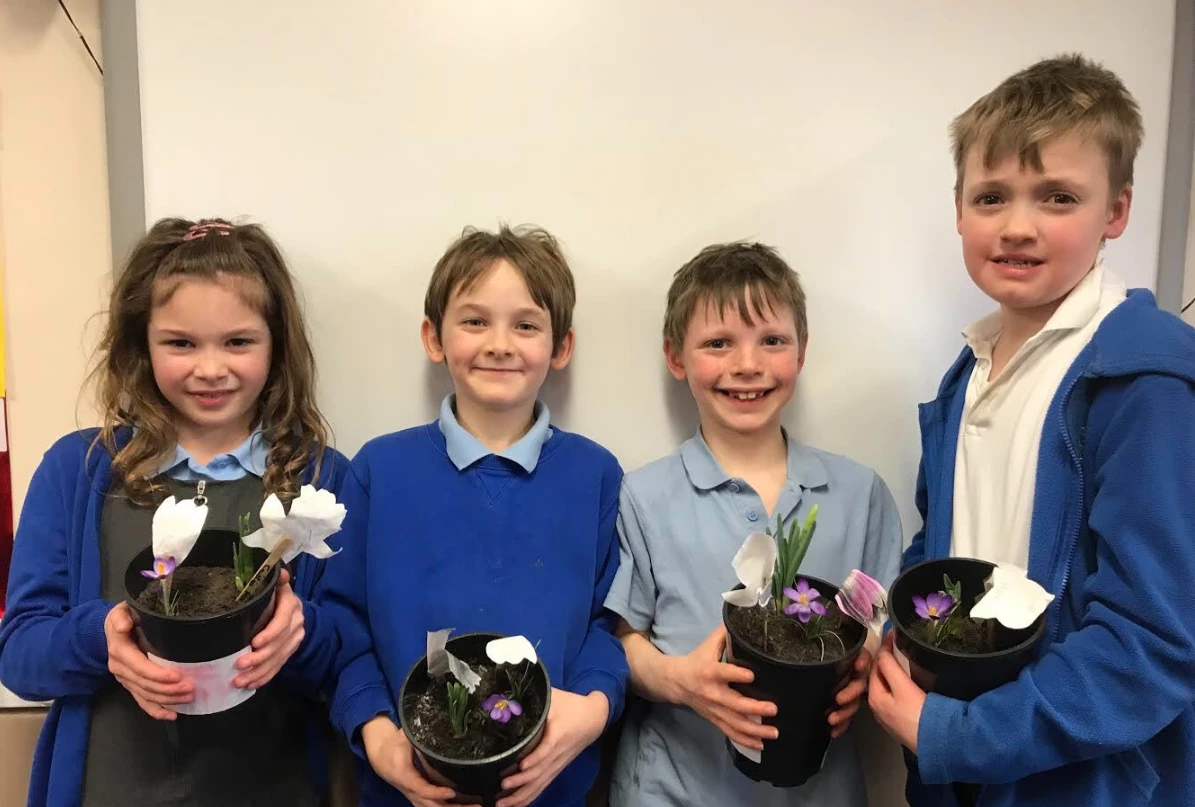
Hello Bulb Buddies,

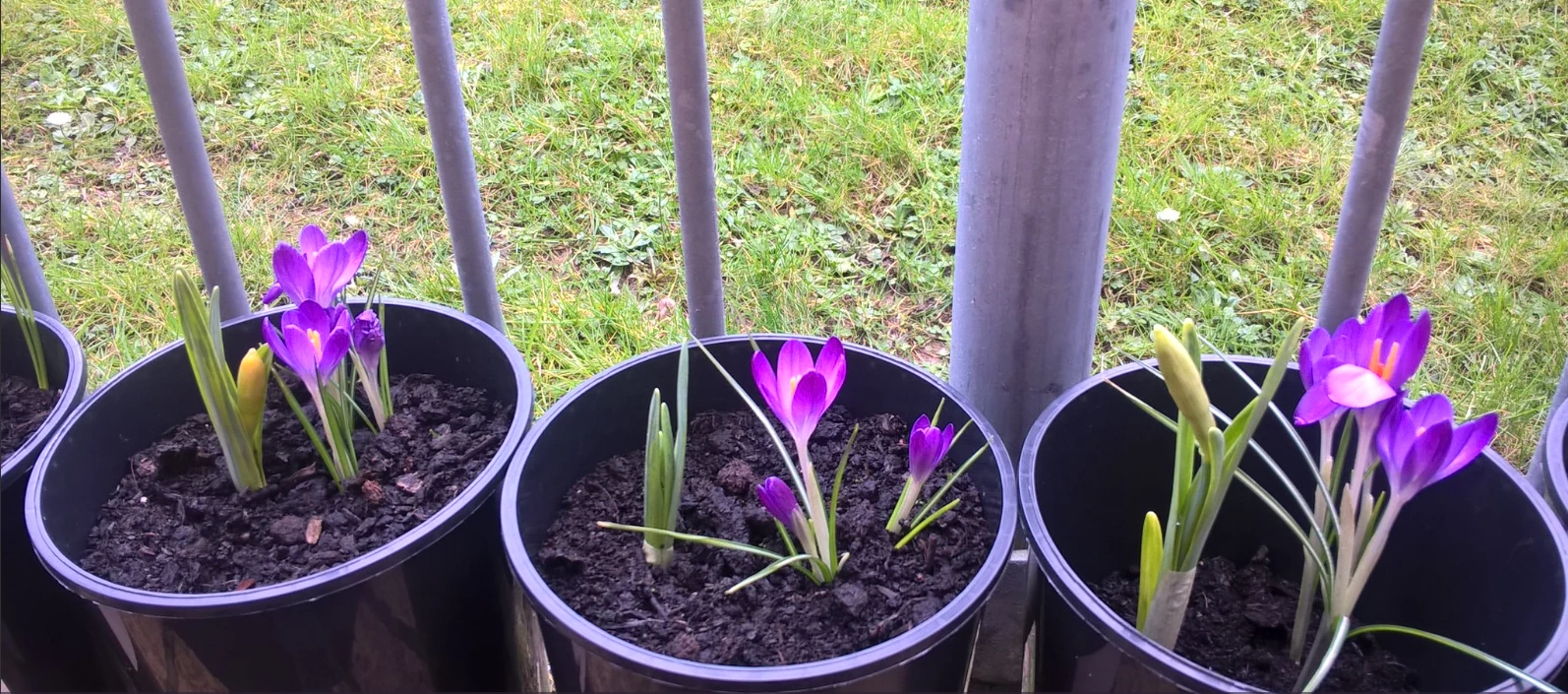
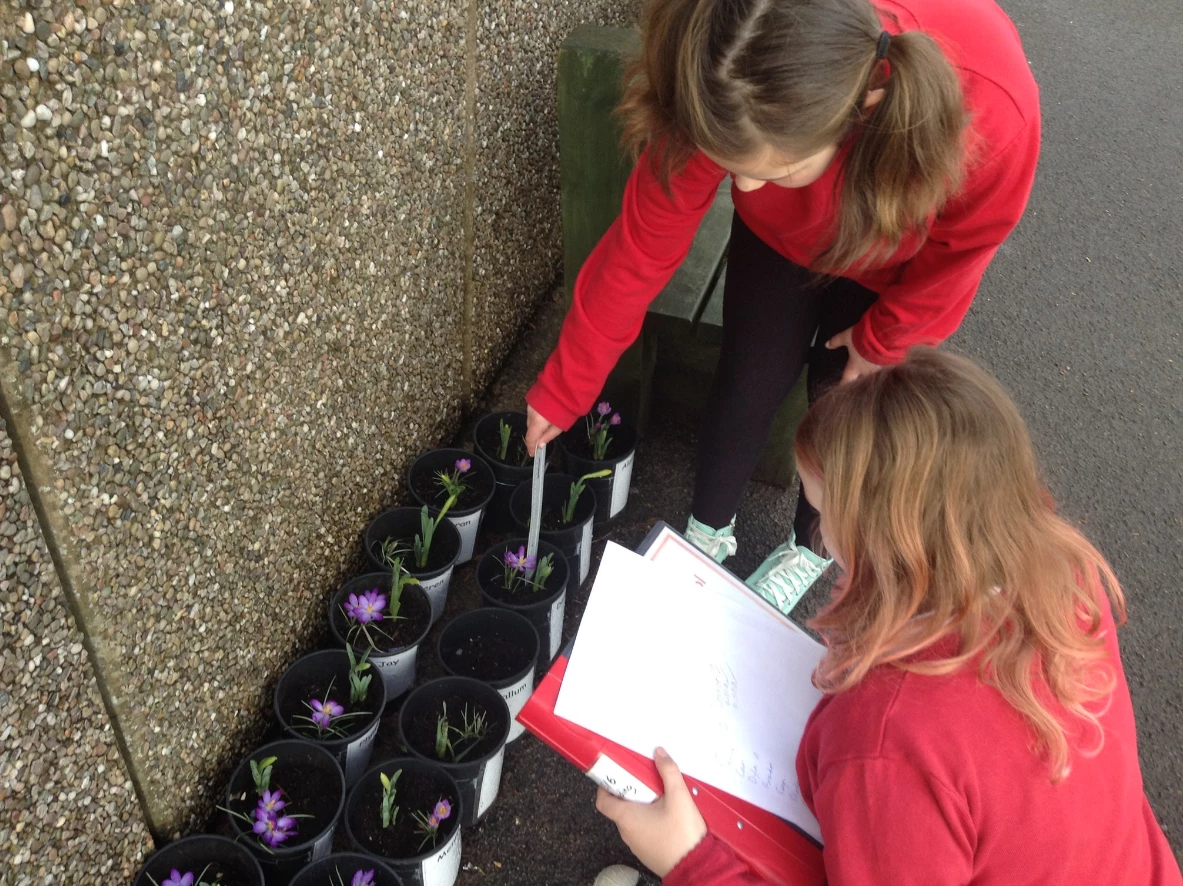
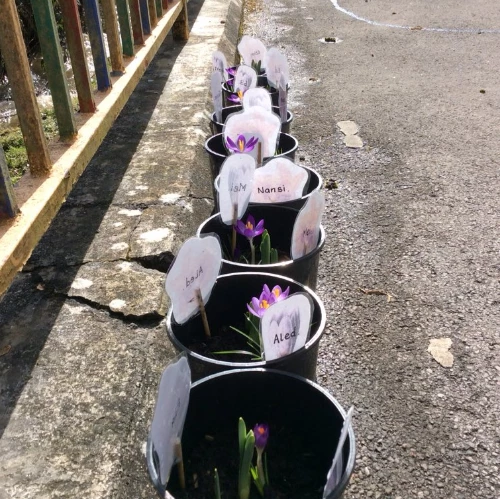
Thank you to all schools who have entered their flower data! Remember to make sure the dates entered are correct and that the height has been entered in millimetres! We have had a few flowers reported for April and lots of very short crocus and daffodils!

If you spot that your entries need amending, just re-enter them to the website with a comment to explain that the new entry is to replace a previous one.

I have enjoyed reading the comments that have been sent with the weather and flower data! I’ve attached some of these below.

Last year an interesting question was raised by Stanford in the Vale Primary, who asked whether they needed to enter multiple flower records if the height and flowering date were the same for each? It is still important to enter this flower data, as the number of flowers at a particular height and particular date will impact on the overall averages for the project.

To work out your schools mean flowering height for the crocus and daffodil, add all of your crocus or daffodil heights together and divide by the number of entries for that flower.

If you have one flower at 200mm and one at 350mm the mean would be 275mm. If you have one flower at 200mm and ten flowers at 350mm your mean flower height would be 336mm. This is why it is important that you enter all of your flower records.

Every flower record is important and impacts on the overall results. If your plant hasn’t grown by the end of March, please send in a flower record without a date or height and explain this in the comment section. If your plant has grown but hasn’t produced a flower by the end of March please enter the height without a date and explain this in the comments section.

Keep the questions coming Bulb Buddies! There are resources and activities on the website to help you. Once your plant has flowered, why not draw it and label the different parts of the plant? I would love to see photos of your drawings and will post any that are sent in on my next Blog!

Keep up the good work Bulb Buddies!

Professor Plant

Missing in Action: Wellesley's story

Richard Edwards, 28 March 2018

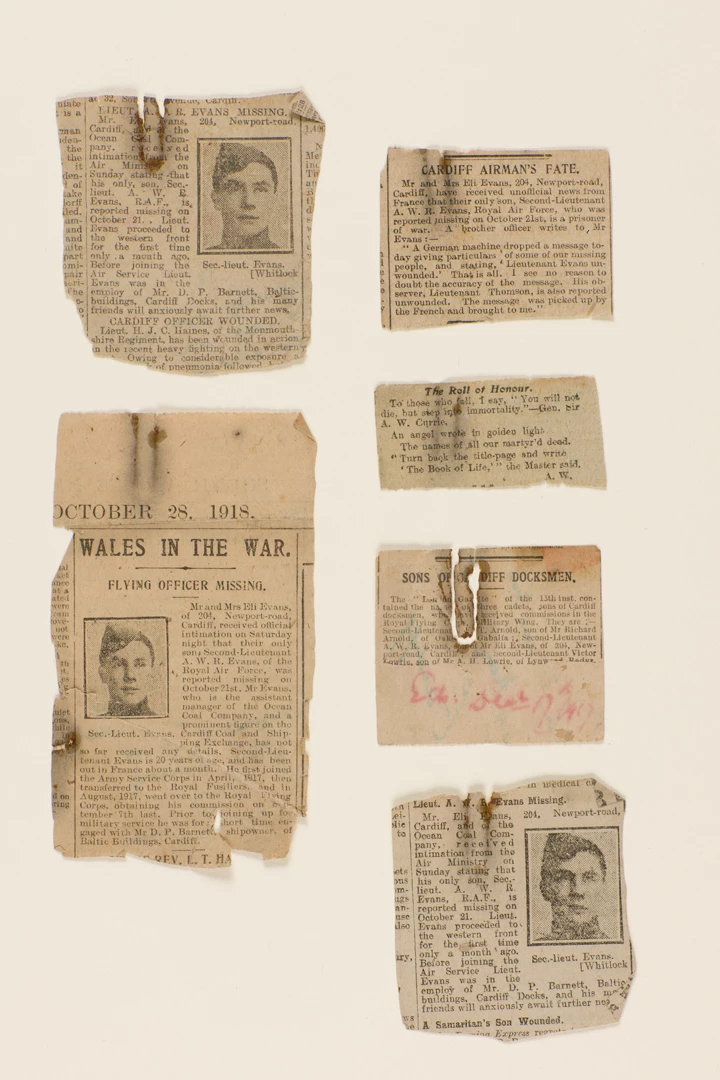
April 1st 2018 marks the centenary of the formation of the Royal Air Force, and to coincide with this anniversary I’d like to share with you a remarkable story from the collection. Here at St Fagans, we have a collection of letters and telegrams sent to and from Eli Evans of Cardiff. They relate to the wartime experiences of his son, Arthur Wellesley Rees Evans, and it’s from these correspondence that I have managed to piece together their story.

Arthur Wellesley Rees Evans was born on 18 June 1898 in St Mellons, Cardiff. He lived with his parents – Eli and Laura Evans – at 204 Newport Road, Cardiff and was employed by Mr D. P. Barnett, a ship owner, based at the Baltic Buildings, Cardiff Docks.

In December 1916 Wellesley was accepted for the Officers Training Course, but was medically rejected at Whitehall due to Tuberculosis in both lungs. He was eventually accepted into the British Army and was passed fit for the Royal Flying Corps on 22 August 1917. A week later he was posted to the R.F.C. no 2 Cadet Wing in Winchester, before being transferred to no 25 Training Squadron in Thetford, Norfolk.

On 9 January 1918, Wellesley began his basic flying and fighter training at Old Sarum Training Base in Salisbury and graduated with the 103rd Squadron Royal Air Force on 5 April 1918, four days after the formation of the RAF. He was then transferred to No 1 School of Aerial Navigation and Bomb Dropping in Stonehenge, before leaving for London on 24 September to embark on his journey to France.

Wellesley arrived in Paris on 28 September 1918, and from there transferred to ‘somewhere in France’ where he joined up with the 110th Squadron RAF on 15 October. He took part in his first mission six days later on 21 October when his squadron flew to bomb Cologne, but Wellesley did not return. He and his observer, Lieutenant Thompson, had been shot down.

Eli and Laura Evans received official information from the Air Ministry that their son had been reported missing on 21 October. Eli sent letters and telegrams to the Air Ministry and the International Prisoner's Agency in Geneva requesting news of his son. To their relief, they finally received word that Wellesley was alive and well and being held as a prisoner of war in Limburg, Germany. 

Luckily for Wellesley his time as a prisoner of war was brief. The armistice signed on 11 November effectively brought the First World War to an end. He’d been a prisoner for less than a month. On 3 December, he left Germany for home via Switzerland and France and finally to Dover on 10 December. On 7 February 1919, Wellesley went to the Air Ministry to be demobilized, and a week later he resumed work with Mr D. P. Barnett in Cardiff Docks. A few months after his son returned from the war, Eli Evans passed away at the age of 52. Perhaps the stress and anxiety suffered by him during those weeks may have contributed to his early death.

After the war Wellesley remained in Cardiff working as a Marketing Officer for the National Coal Board. He married Gladys Gwendolyn Mitchell and they had a daughter. Arthur Wellesley Rees Evans died on the 5 January 1965 aged 66 in Cyncoed, Cardiff. He is buried alongside his wife at St Edeyrns Parish Church in Llanedeyrn, Cardiff.

This project is supported by the Armed Forces Community Covenant

Voices from the Archives: Lambing in the Black Mountains

Gareth Beech, Curator: Rural Economy, 26 March 2018

As Lambcam comes to a close for another year, we look back at the history of lambing in Wales.


Voices from the Archives is a series of articles with sound clips based on recordings in the Oral History Archive of St Fagans National Museum of History. They accompany agricultural activities and events at the Museum. The speakers were farmers who had usually lived all their lives in the same locality as where they had been born and grown up. Their descriptions, experiences, recollections, voices, accents were authentic and distinctive, from different parts of Wales, and from different times.


March is lambing time at the Museum’s working farm, Llwyn-yr-eos. Lambing time on a farm at the foot of the Black Mountains, south east Wales was described by William Powell when interviewed in 1978. He farmed Gellywellteg, near the village of Forest Coal Pit, a few miles north east of Abergavenny. To the north of the farm were the Black Mountains, and Sugar Loaf mountain to the south.


He kept 140 ewes, home-bred Hill Radnor sheep, the predominant breed in the area during his farming life. They had brown-grey faces, no wool on their heads, convex noses, sturdy legs, and were compact and hardy. Two or three Hill Radnor rams were also kept, brought in, and changed every two years.


In the first selection of clips from the interview, William Powell describes when lambing took place and how:

The ewes about to give birth had to be checked regularly in case they had any difficulties. Ideally lambs would be born by their two front legs and head coming out first. There could be complications if one or both front legs were pointing backwards, or if the two legs were coming out but not the head. William Powell gained a reputation locally for his expertise:

Sometimes a weak lamb could be adopted by a ewe whose own lamb had died using an age-old method:


Young lambs could be vulnerable to illnesses and diseases, such as running noses, known locally as ‘snuff’:


And finally, how many lambs could be produced from a flock of 140 ewes:


Uncovering our Collections: Half a Million Records now Online

26 March 2018

As we reveal half a million collection records for the first time, we look at some of the strangest and most fascinating objects from National Museum Wales Collections Online.

This article contains photos of human skeletal fragments.

The Biggest

We have some real whoppers in our collections - including a full-size Cardiff Tram and a sea rescue helicopter - but the biggest item in our collection is actually Oakdale Workmen's Institute.

Built in 1917, the Institute features a billiard room, dance hall and library - and is nowadays found in St Fagans National Museum of History.

Photograph from 1908 showing Horace Watkins in a very early, precarious-looking monoplane

Horace Watkins testing his monoplane in 1908

Many of the buildings in St Fagans are part of the national collection - meaning they have the same legal status as one of our masterpiece Monets or this coin hoard. The buildings are dismantled, moved, rebuilt - and cared for using traditional techniques, by the museum's legendary Historic Buildings Unit.
 

The Oldest


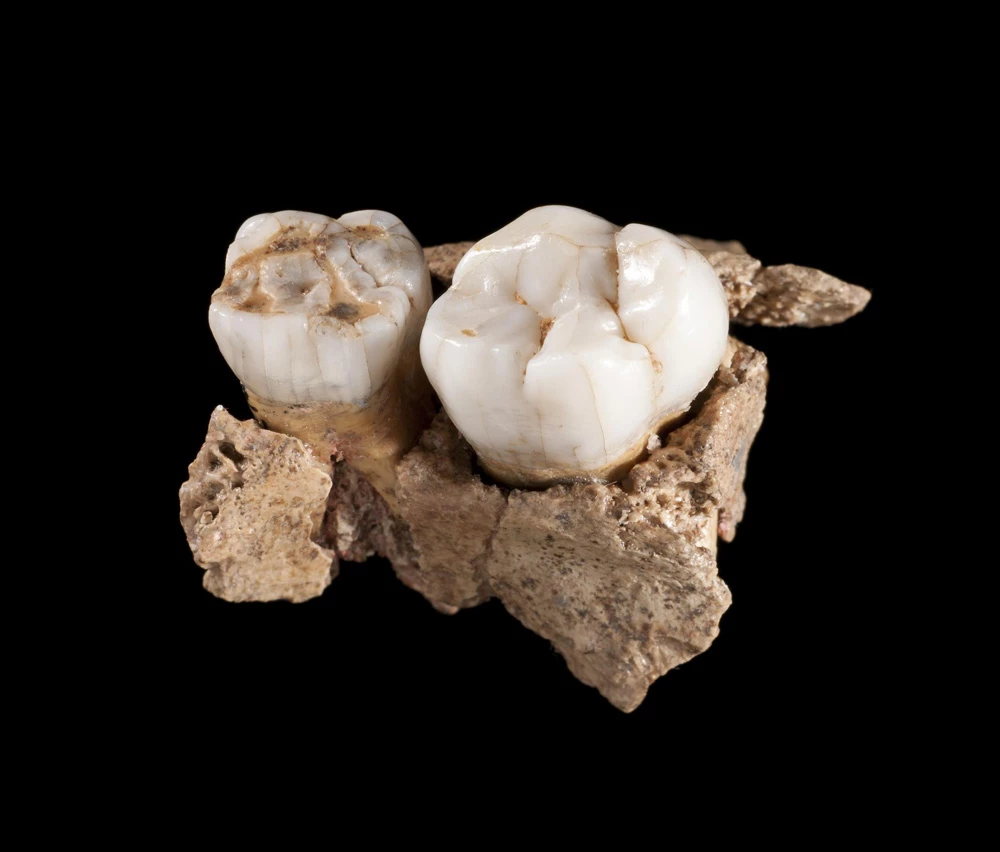
photograph of two teeth, belonging to a Neanderthal boy aged 8

The oldest human remains ever discovered in Wales

These teeth belonged to an eight year-old Neanderthal boy - and at 230,000 years old, they are the oldest human remains in Wales.

They were discovered in a cave near Cefn Meiriadog in Denbighshire, along with a trove of other prehistoric finds, including stone tools and the remains of a bear, a lion, a leopard and a rhinocerous tooth.

These teeth are among some of the incredible objects on display at St Fagans National Museum of History
 

The Shiniest

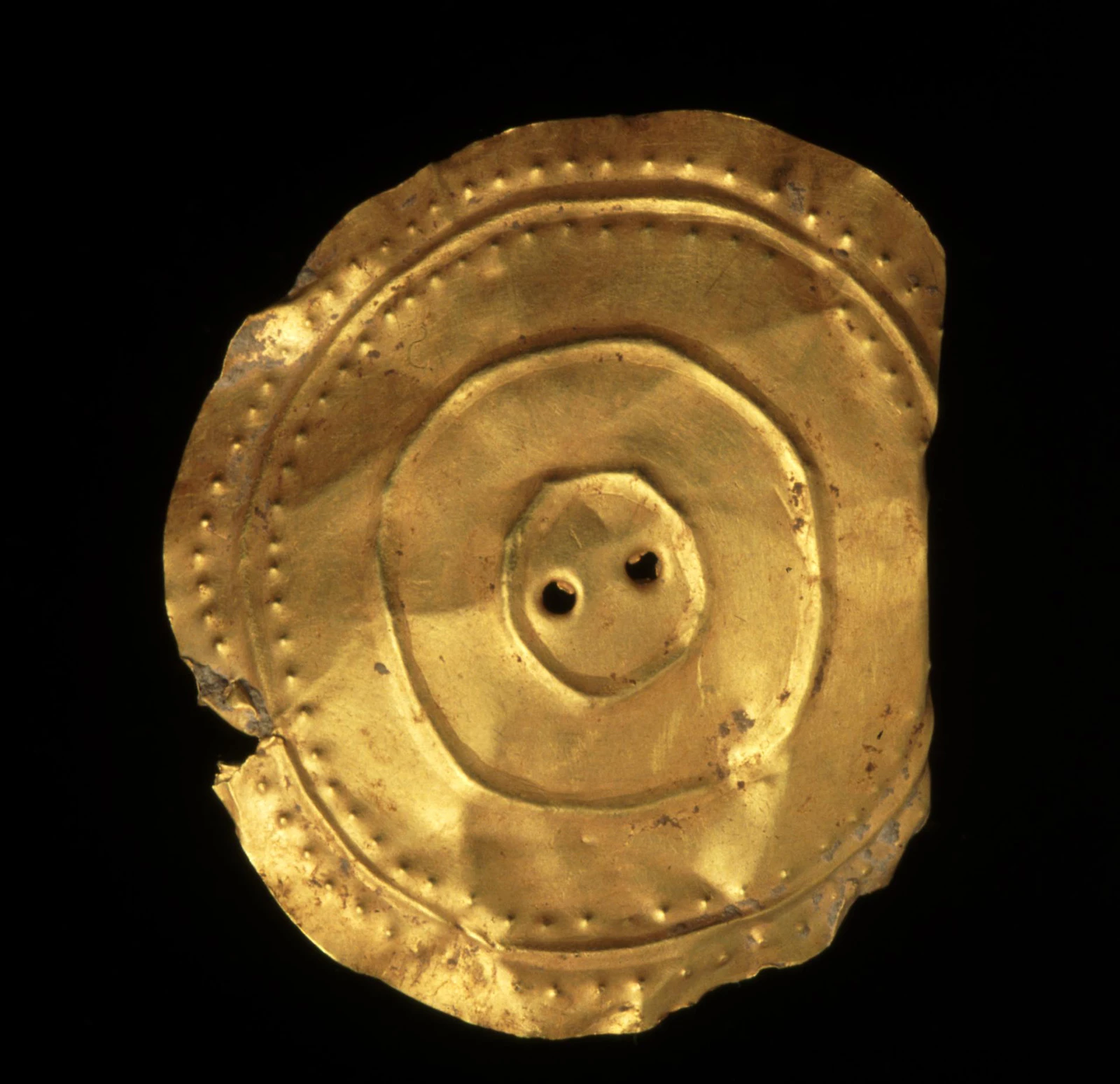
People in Wales have been making, trading and wearing beautiful treasures from gold for thousands of years - like this Bronze Age hair ornament and this extremely blingy Medieval signet.


photograph of gold disc with repousse design

At around 4000 years old, this sun disc is one of the earliest and rarest examples of Welsh bling

One of the earliest examples of Welsh bling is this so-called 'sun disc', found near Cwmystwyth in Ceredigion.

Current research suggests that these 'sun discs' were part of ancient funeral practice, most likely sewn onto the clothes of the dead before their funerals. Only six have ever been found in the UK.
 

Most Controversial

At first glance, an ordinary Chapel tea service - used by congregations as they enjoyed a 'paned o de' after a service. A closer look reveals the words - 'Capel Celyn'. The chapel, its graveyard and surrounding village are now under water.


Photograph showing a cup and saucer with 'Capel Celyn' and a ribbon scroll design

Capel Celyn, in the Tryweryn Valley, is now underwater

Flooded in 1965 by the Liverpool Corporation, the Tryweryn valley became a flashpoint for Welsh political activism - creating a new generation of campaigners who pushed for change in how Welsh communities were treated by government and corporations.

Curators from St Fagans collected these as an example of life in Capel Celyn - to serve as a poignant reminder of a displaced community, and to commemorate one of the most politically charged moments of the 20th century in Wales.
 

Honourable Mention: an Airplane made from a Dining Room Chair

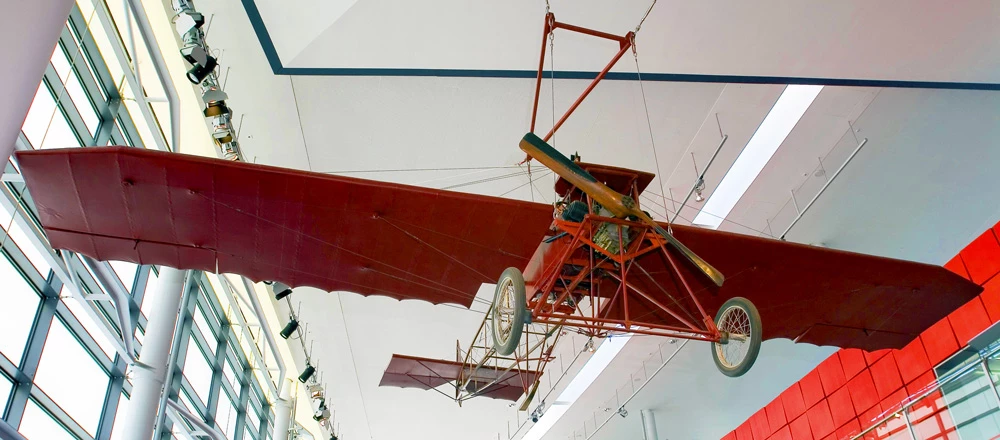
Made from a dining room chair, piano wire and a 40 horsepower engine, the Robin Goch (Red Robin) was built in 1909 - and also features a fuel gauge made from an egg timer.


photograph of a small, early twentieth century airplane with red wings

The Robin Goch (Red Robin) on display at the National Waterfront Museum

Its builder, Horace Watkins, was the son of a Cardiff printer - here he is pictured with an earlier, even more rickety version of his famous monoplane.
 

Photograph from 1908 showing Horace Watkins in a very early, precarious-looking monoplane

Horace Watkins testing his monoplane in 1908

Our collections are full of stories which reflect Wales' unique character and history. The Robin Goch is one of the treasures of the collection, and is an example of Welsh ingenuity at its best.

Half a Million Searchable Items

The launch of Collections Online uncovers half a million records, which are now searchable online for the first time.

“Collections Online represents a huge milestone in our work, to bring more of our collections online and to reach the widest possible audience.

It’s also just the beginning. It’s exciting to think how people in Wales and beyond will explore these objects, form connections, build stories around them, and add to our store of knowledge." – Chris Owen, Web Manager
 

Search Collections Online

Plans for the future

Our next project will be to work through these 500,000 records, adding information and images as we go.

We'll be measuring how people use the collections, to see which objects provoke debate or are popular with our visitors. That way, we can work out what items to photograph next, or which items to consider for display in our seven national museums.

Preparing and photographing the collections can take time, as some items are very fragile and sensitive to light. If you would like to support us as we bring the nation's collections online, please donate today - every donation counts.


Donate Today


We are incredibly grateful to the People's Postcode Lottery for their support in making this collection available online.